
“What does it mean to be truly free?”: High School Class Inquiry
By Emily Erickson and Anthony Tamez
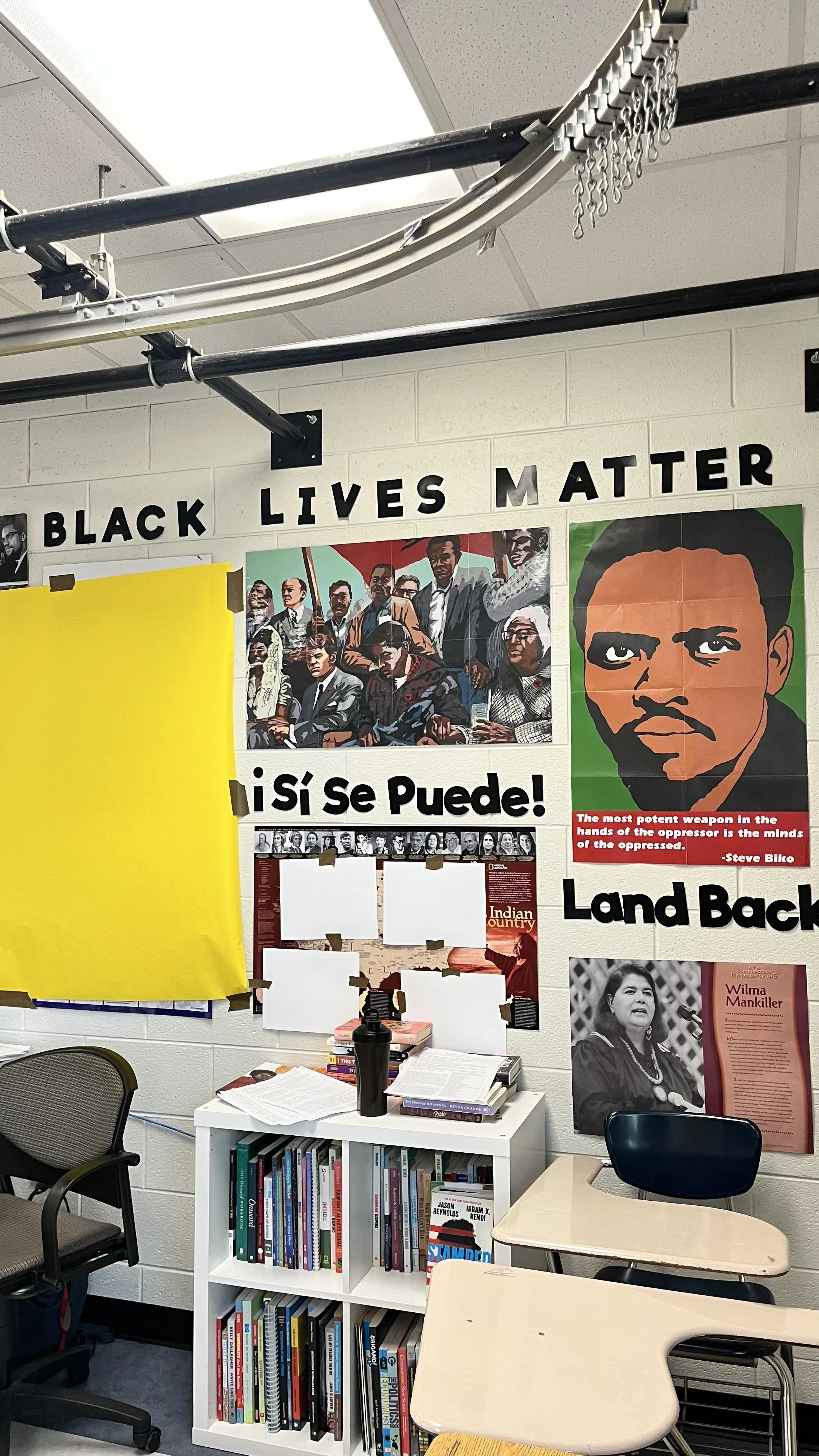
In high school classrooms across the country, teachers and students navigate conversations about students’ individual futures at the same time as they try to resist end-of-year fatigue. Zack Wilson’s class of sophomore English students at Columbia Heights Educational Campus (CHEC) in Washington, D.C., is no different. Students applied what they learned about practical writing by working on resumes and scholarship essays that would help them not just this summer with finding work, but also with preparing for success in their college and career.
Wilson (a Prentiss Charney Fellow) noted a twist in his curriculum,
We tried to temper that prevailing, overriding instinct to focus on securing individualistic, future success by returning to driving questions about how we can work together as people of color to ensure our collective wealth and stand in solidarity with one another. Students spent one of the final weeks of the school year engaging with a question that has shaped U.S. history for generations: What does it mean to be truly free?
While interning for Teaching for Change in June of 2026, we both had a chance to visit Zachary Wilson’s classroom, Emily one day and Anthony the next. Here is what we observed and reflected.
As an entry point into this essential conversation, Wilson’s class explored the state of criminal justice in the United States and how the law is upheld (or not) based on race. The class examined two similar recent murder trials where both defendants claimed self-defense but had very different outcomes and a clear racial divide.
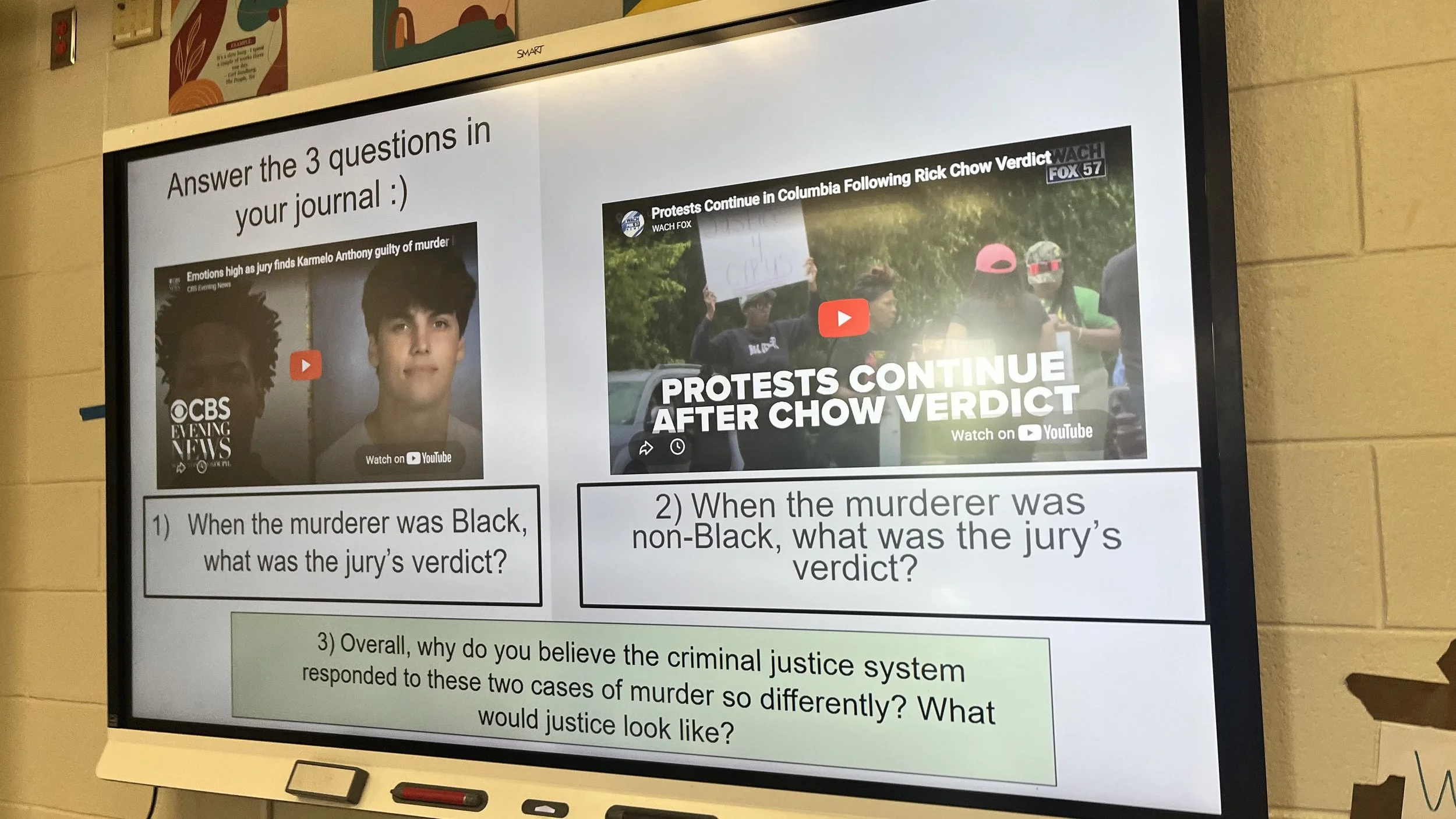
The first case was that of a Black teenager, Karmelo Anthony, charged with the murder of a white teenager, and the second was an Asian American man, Rick Chow, charged with the murder of a Black 14-year-old. The class watched news reports on both cases to establish context, and then watched the convictions and sentences of both defendants.
The class reacted with a mix of horror and shock at Anthony’s 35-year sentence and Chow’s not guilty verdict. They discussed the factors involved in these two outcomes, emphasizing the blatant racism in both cases and the injustice of this discrepancy. They also debated appropriate public responses to these injustices.
For Wilson, these two cases were a means to spark conversation with his students about the profound racism of the purportedly fair U.S. court system. He aimed to highlight the pervasive nature of racism across every system as a segue to his next lesson comparing W. E. B. Du Bois’s and Booker T. Washington’s differing philosophies about how best to gain freedom, either through economic opportunity or by attaining political power and civic engagement.
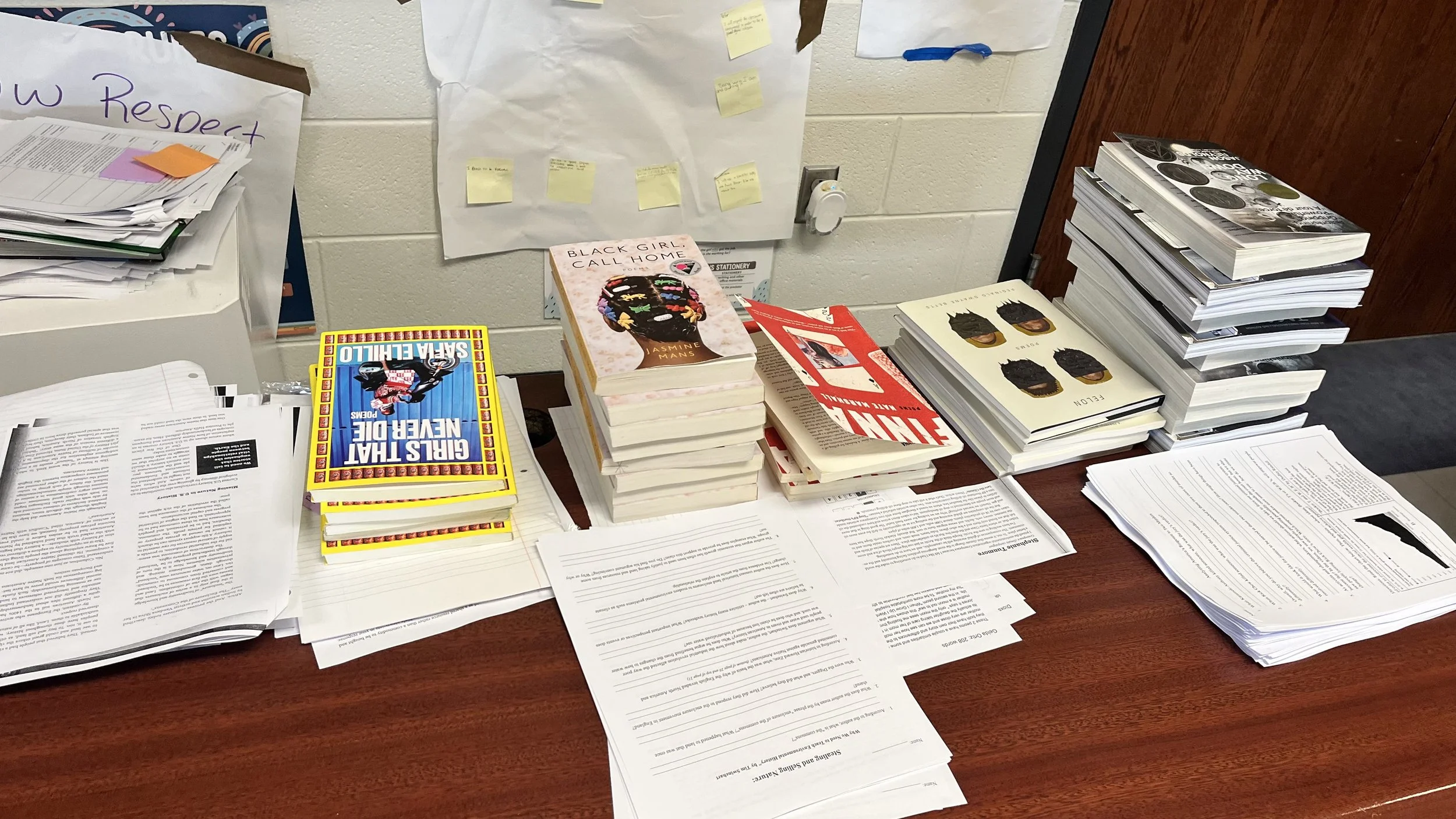
If the supposedly just systems of U.S. society are so entrenched with racial discrimination, can equal political power ever be achieved? Is it more effective to prioritize the economic growth of Black and Brown people over the political? Or, do the injustices of these systems make it that much more imperative to focus on advancing equal political rights before advancing economically? These are the questions that led into the second day of lessons in Wilson’s classroom.
Using Dudley Randall's 1969 poem “Booker T. and W. E. B.” as a foundation, students examined competing visions of freedom, citizenship, and social progress. Students considered whether freedom is primarily defined by economic opportunity or by political power and civic participation while considering the criminal cases from the prior day.
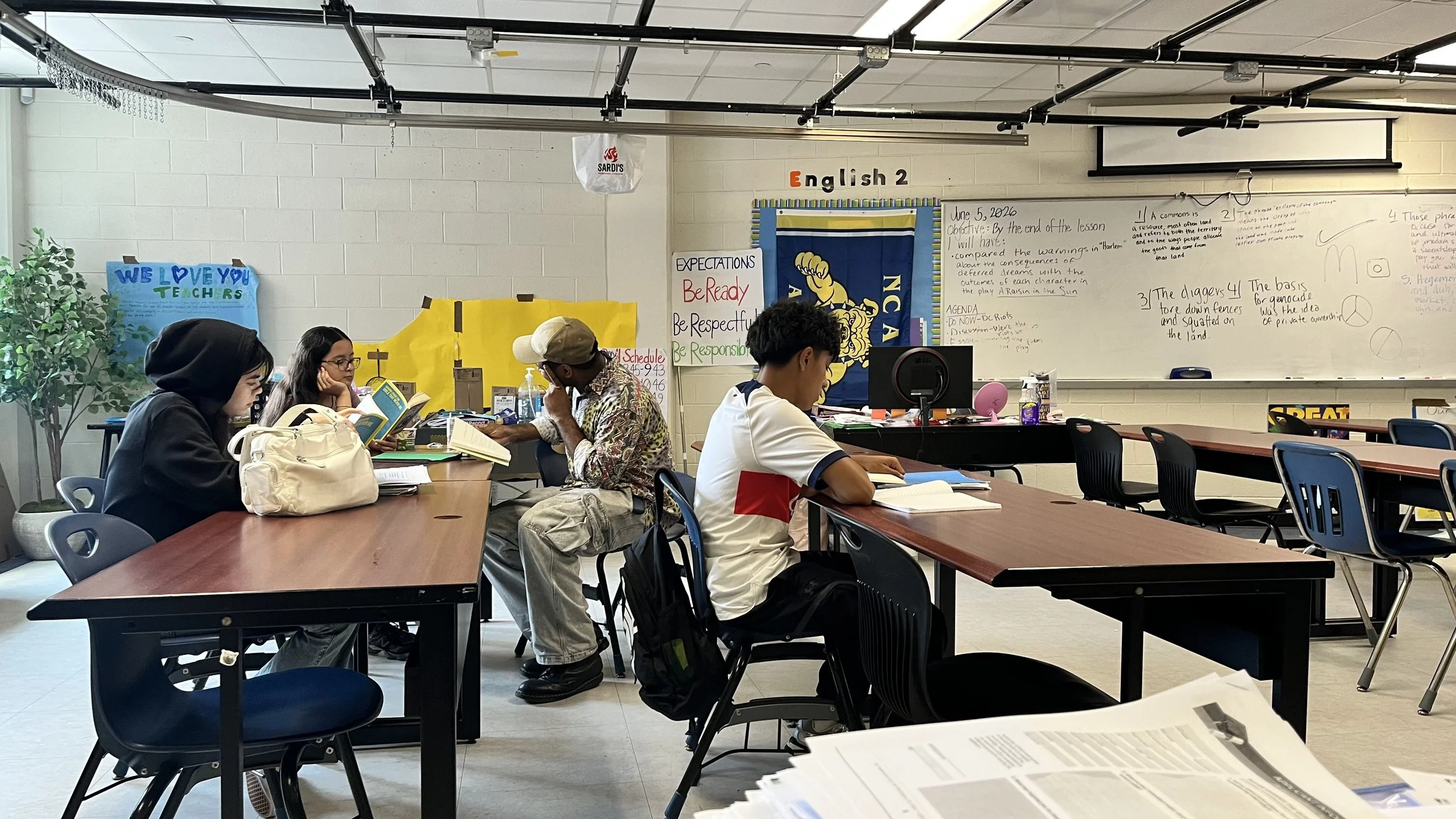
They responded to the question: In your own life, will you prioritize getting paid or standing up for what’s right, even if you lose money because of it? Here are some of their comments:
In my own life, I will prioritize standing up for what’s right because I think no one can decide for you and say you aren’t enough to do something. — Cristoffer P.
In my own life, I will stand up for what’s right because who cares about the money as long as we’re not dead inside? — Axel R.
I’ll always prioritize standing up for what’s right, even if I myself lose money or opportunities. Standing up for what’s right won’t always get you far, but it will give you pride and a better conscience.
— Kennedy R.
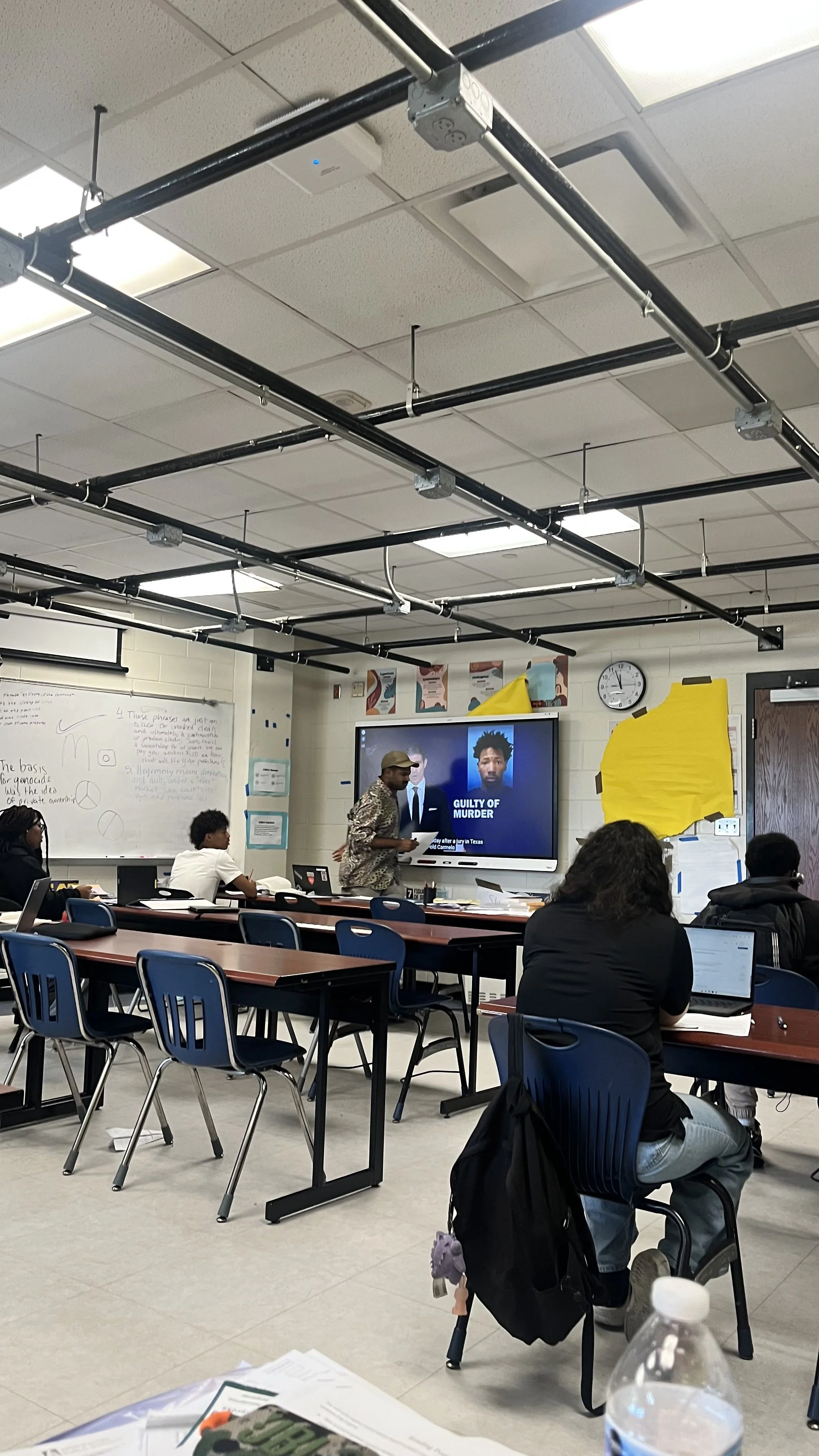
Through classroom discussion and debate, students grappled with Du Bois's argument that freedom requires more than access to work and wealth. They analyzed passages emphasizing the importance of political representation and participation in democratic institutions, discussing how laws and public policy shape the lives of individuals and communities.
The conversation encouraged students to connect historical debates to contemporary issues, demonstrating how questions of citizenship, representation, and equality remain relevant today. By engaging directly with primary source material, students developed a deeper understanding of the ongoing struggle to define and achieve freedom in U.S. society.
Here are some of the students' comments:
“Unless you help to make the laws, / They’ll steal your house with trumped-up clause.” W. E. B. Du Bois’s ideas empower people of color to overcome the racial wealth gap and achieve equality because by staying quiet and not fighting, your voice will never be heard and everything will be taken from you. — Kelly M.
W. E. B. Du Bois’s idea is better because it explains that even if people work tirelessly, without the right to vote or equality, they would lose their dignity and property would be worthless. If the world is rife with injustice and discrimination, it wouldn’t be a beautiful life, but one of torment, dedicated to voiceless labor. — Angela M.
Our Reflections
It was incredible to witness this work being done in classrooms and to see how receptive the students were to these conversations about injustice, even at the tail-end of the school year. As a hopeful future educator, observing the profound and necessary conversations about injustice, racial discrimination, and protest in the CHEC class was incredibly inspiring and moving. I hope to navigate these essential conversations with Wilson’s grace when I lead my own classroom someday. — Emily
As a Native American social worker, I left this classroom visit feeling hopeful. It was powerful to see students wrestling with difficult questions about history, justice, and their role in shaping the future. The experience reminded me of the importance of Social Work Competency 3 — advancing human rights and social, racial, and economic justice, and how classrooms can be spaces where young people learn about the world and how to change it. — Anthony
Emily Erickson and Anthony Tamez interned with Teaching for Change during the summer of 2026. Erickson was studying English and Education at Wellesley College and Tamez was a Truman Scholar from Chicago.