
2026 BLM at School Resource Exchange – A Morning of Community and Collaboration
By Lamoussa Tapsoba
On a rainy Saturday, 35 educators from across the DMV area gathered for a morning of activities, resource and lesson planning, and community at the historic Thurgood Marshall Center. During a time of increased federal violence and censorship, the D.C. area Black Lives Matter at School Resource Exchange served as a safe space for educators to plan for Black Lives Matter at School Week of Action (February 2-6) and to think of ways to include this year’s principles of Globalism and Loving Engagement in their school communities and classrooms.
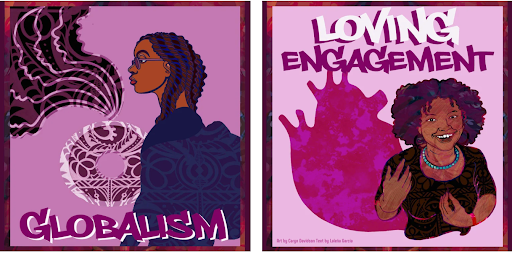
Before breaking into the day’s activities, participants were reminded of the Guiding Principles and National Demands of Black Lives Matter at School and were shown a list of resources developed and vetted by educators. This grounding served as an opportunity for participants to ask questions and think about ways they can uplift this national movement in their school buildings and beyond.
After the opening session, participants engaged in an activity led by Makai Kellogg, early childhood educator and working group teacher facilitator. Through a gallery walk, attendees were asked to respond to prompts such as: “How do you embed empathy building in the curriculum?” “How do you encourage healthy classroom discussion?” and “How do you respond to conflicts when students work in groups?”
Participants were later split into groups to discuss their ideas. Educators emphasized the importance of “modeling the language, behavior, and sentiment we want to encourage and establishing clear classroom structures.” As one participant noted, “We have norms, agreements, and a process to identify points of conflict. Students generally use restorative justice practices to discuss and come to an agreement or a peaceful disagreement with acknowledgment.” Another educator offered a critical reminder: “If empathy isn't inherent in the curriculum, take a closer look.”

Resource Exchange collaborating for the Gallery Walk activity
Building on these classroom practices, middle and high school educators and working group teacher facilitators, Raphael and Mollie, asked participants to contribute resources to help students understand Black experiences and contributions across global contexts. Participants selected an area on a digital world map and linked a lesson idea, book recommendation, historical event, STEM contribution, literary text, or other culturally relevant resource. Groups came together to look through the resources, talk about what they added to the digital map, and how they can embed what they have into their curriculum.
The room was filled with energy as educators, eager to support their students, came together in solidarity. The Resource Exchange ended with a giveaway of books and gifts. Participants came away with concrete strategies and steps they can take for the Week of Action and the Year of Purpose, with some people staying to collaborate and continue conversations. Reflecting on the morning, participants shared:
”I gained important tools to develop student leadership.”
“Designated time for reflection that I don't get during school.”
“I learned a lot from what other educators had to say about the role that empathy and conflict play in the classroom.”

Resource Exchange participants leaving the event with books.
If you missed this event, it is not too late! Sign up for the Black Lives Matter at School for updates, opportunities, and events. Check out the DC Area Educators for Social Justice calendar of events to stay up to date on ways to get involved.