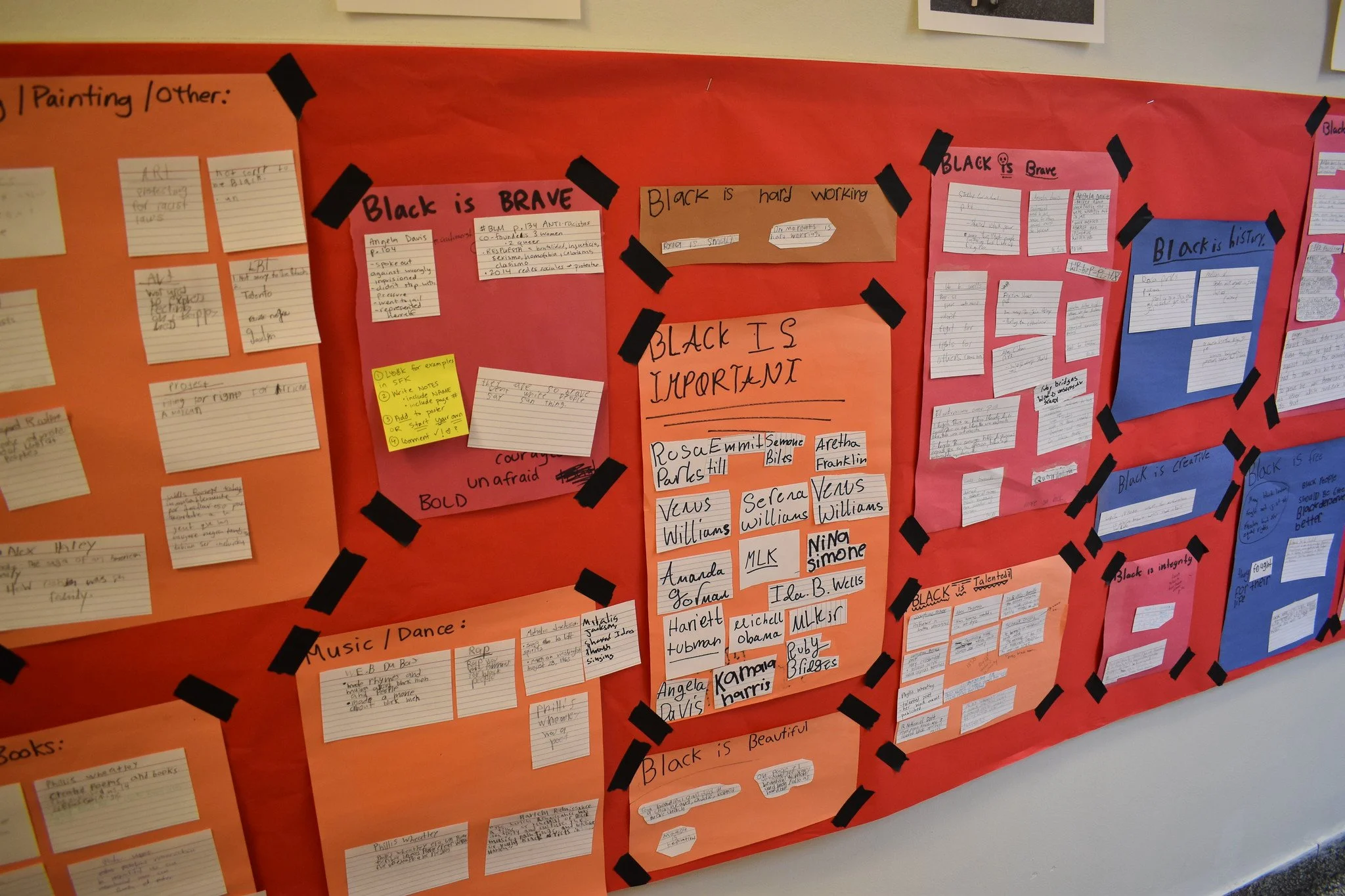
2026 Black Lives Matter at School Marketplace of Knowledge
Bruce-Monroe at Park View ES
Bruce-Monroe at Park View’s (BMPV’s_ participation in the Black Lives Matter at School Week of Action began in 2018, when a small group of teachers first engaged students in learning around the principles. By 2021, the school shifted from a week-long event to a quarter-long interdisciplinary study that engages students in sustained, developmentally appropriate study of the Black Lives Matter at School principles from early childhood (three-year-olds) through fifth grade.
The design of the scope and sequence ensures that by the time students graduate from fifth grade, they have engaged in deep, sustained study of at least seven of the principles. In this way, students revisit core ideas across multiple years and contexts, allowing their understanding to deepen as they grow academically and developmentally.
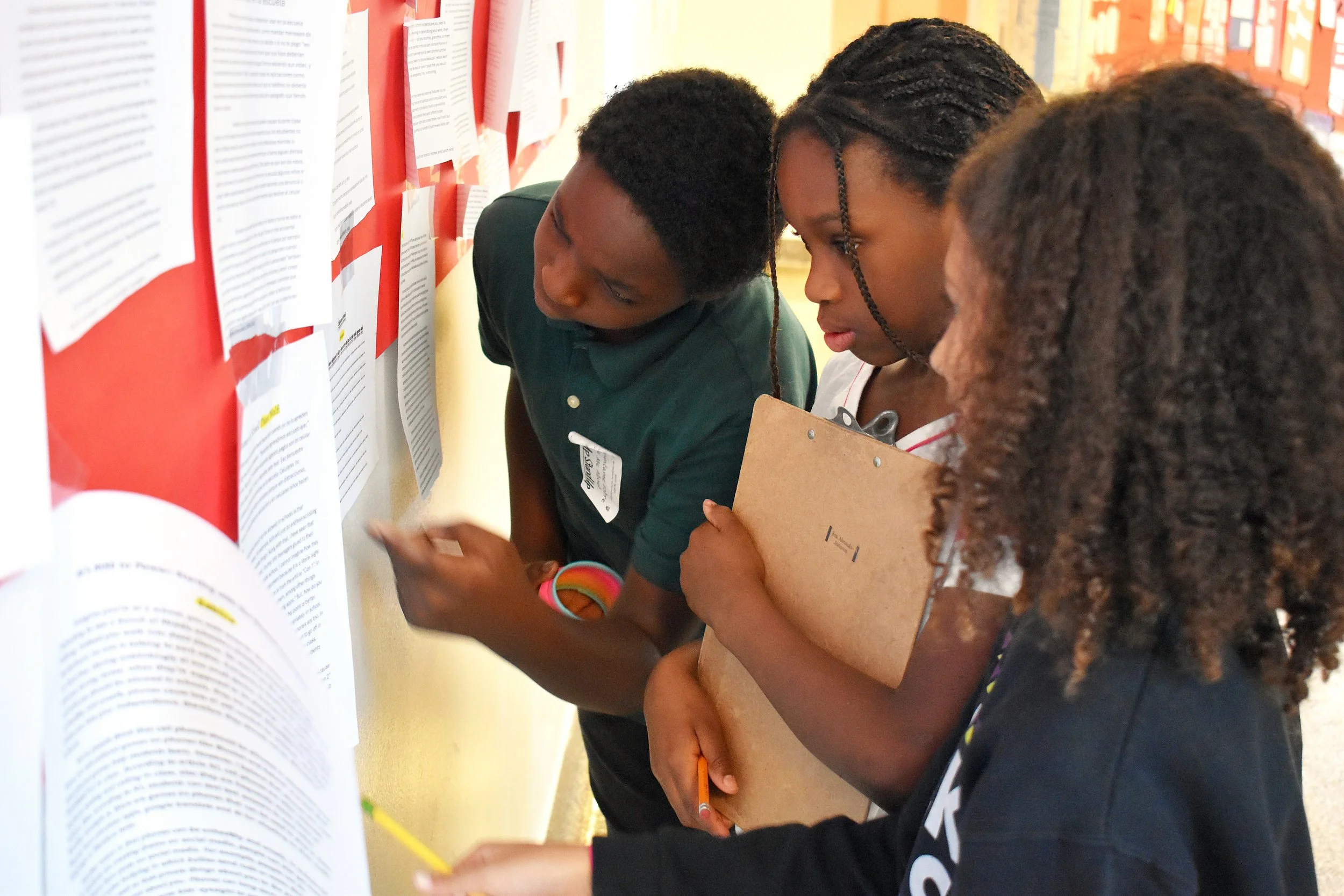
The culmination of this work is the Black Lives Matter at School Marketplace of Learning, framed as a Celebration of Learning day. During this event, each class showcases its learning through exhibitions and interactive presentations. Students visit other grade-level exhibits as a class, like an in-school field trip, studying how other principles are understood and enacted across the school community. They participate in structured reflection protocols that invite them to learn from the work, perspectives, and experiences of other grade levels, reinforcing the understanding that this learning is both individual and collective. Through guided reflection activities and a culminating survey, students synthesize what they learned about their own principle as well as the principles explored by their peers.
In the evening, families and community members are invited to experience the student exhibitions. Visitors gain insight into both what students learned and how the school approaches teaching, inquiry, and community responsibility. The day concludes with a shared meal, where students, families, and educators celebrate student learning and collective accomplishment together.
Below, read descriptions of each grade level’s exploration of the principles written by partners of BPMV at the National Gallery of Art.
Early Childhood
Diversity
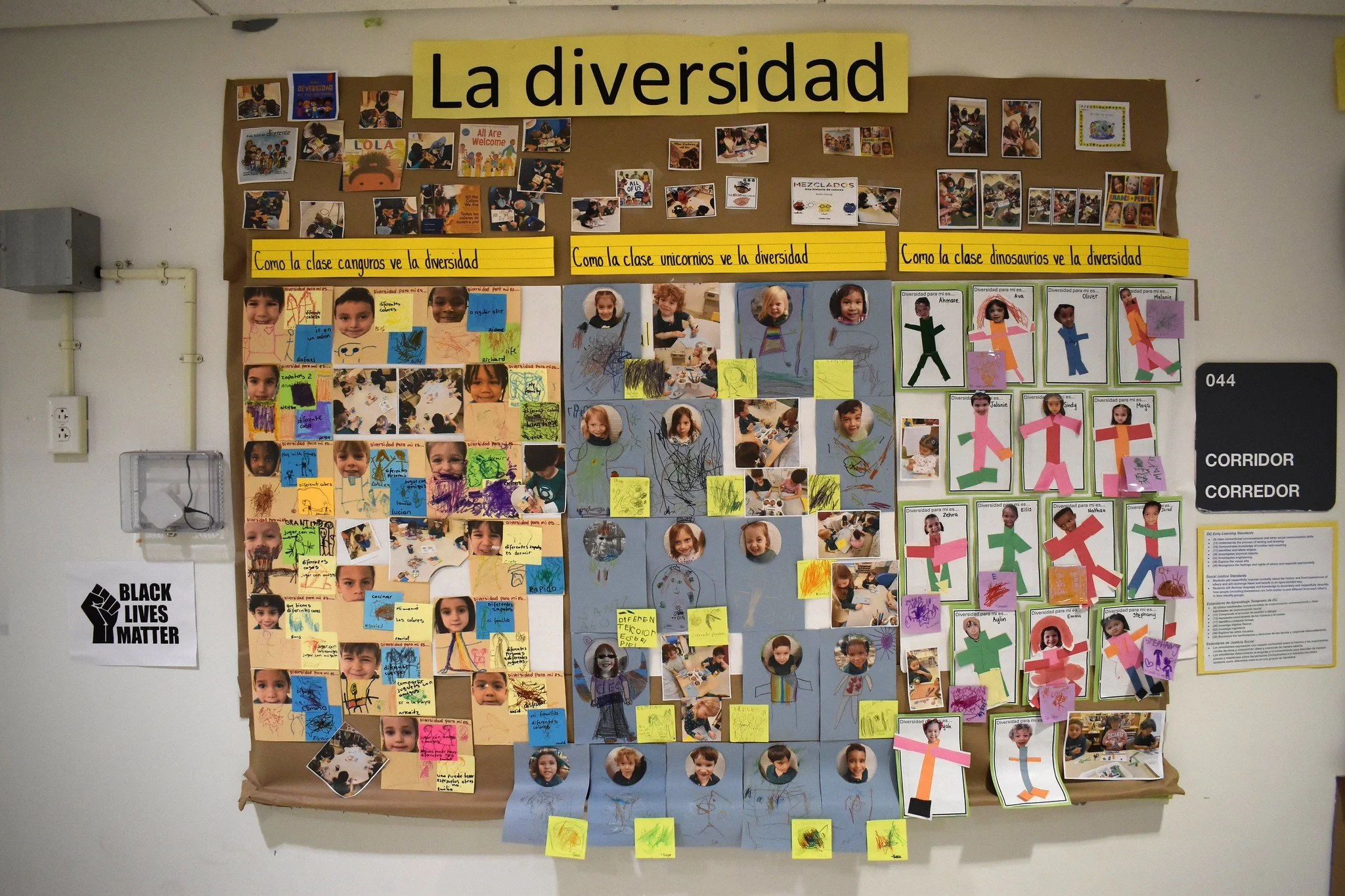
Our exploration of diversity began with a hands-on activity with eggs. Students observed three eggs with different colored shells and described how they looked different on the outside. When we cracked them open, students discovered that the eggs were the same on the inside. This activity helped students begin to define diversity: things can look different, but still share important similarities.
Next, we read All Are Welcome by Alexandra Penfold. Through the story, we discussed how people can have different skin colors, cultures, languages, and traditions. This teaches us that everyone is special and unique, and therefore everyone deserves kindness and respect.
Finally, students drew pictures of their families and shared what diversity means to them. Through exploration, storytelling, and art, students learned that our differences make our classroom community strong, beautiful, and welcoming for everyone.
African American Inventors
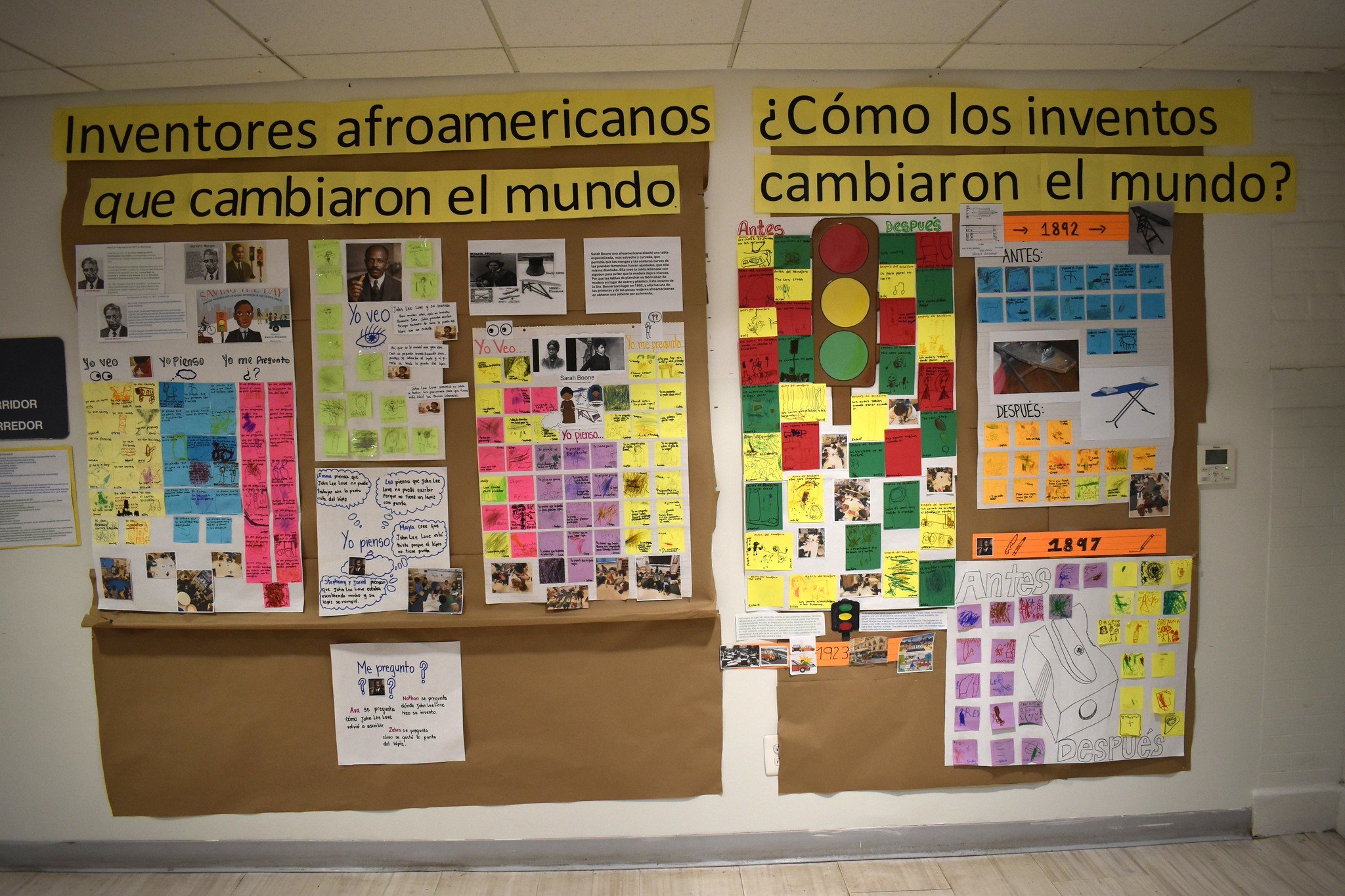
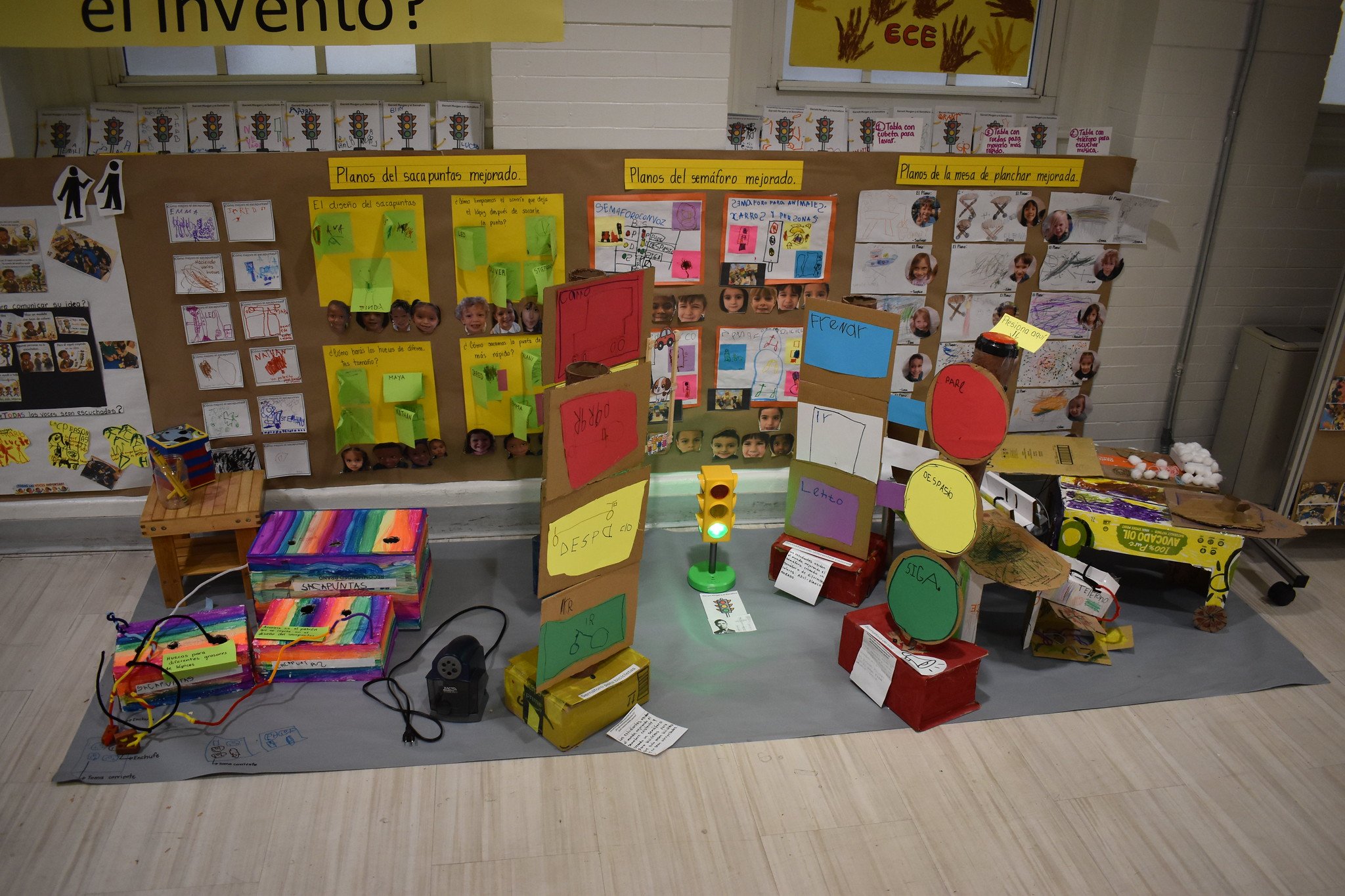
Students learned about inventions made by African Americans. Then students, working in groups, thought of problems and solutions. They then made plans to improve ironing boards, stop lights, and pencil sharpeners, and created models of their inventions.
Kindergarten
Black Villages
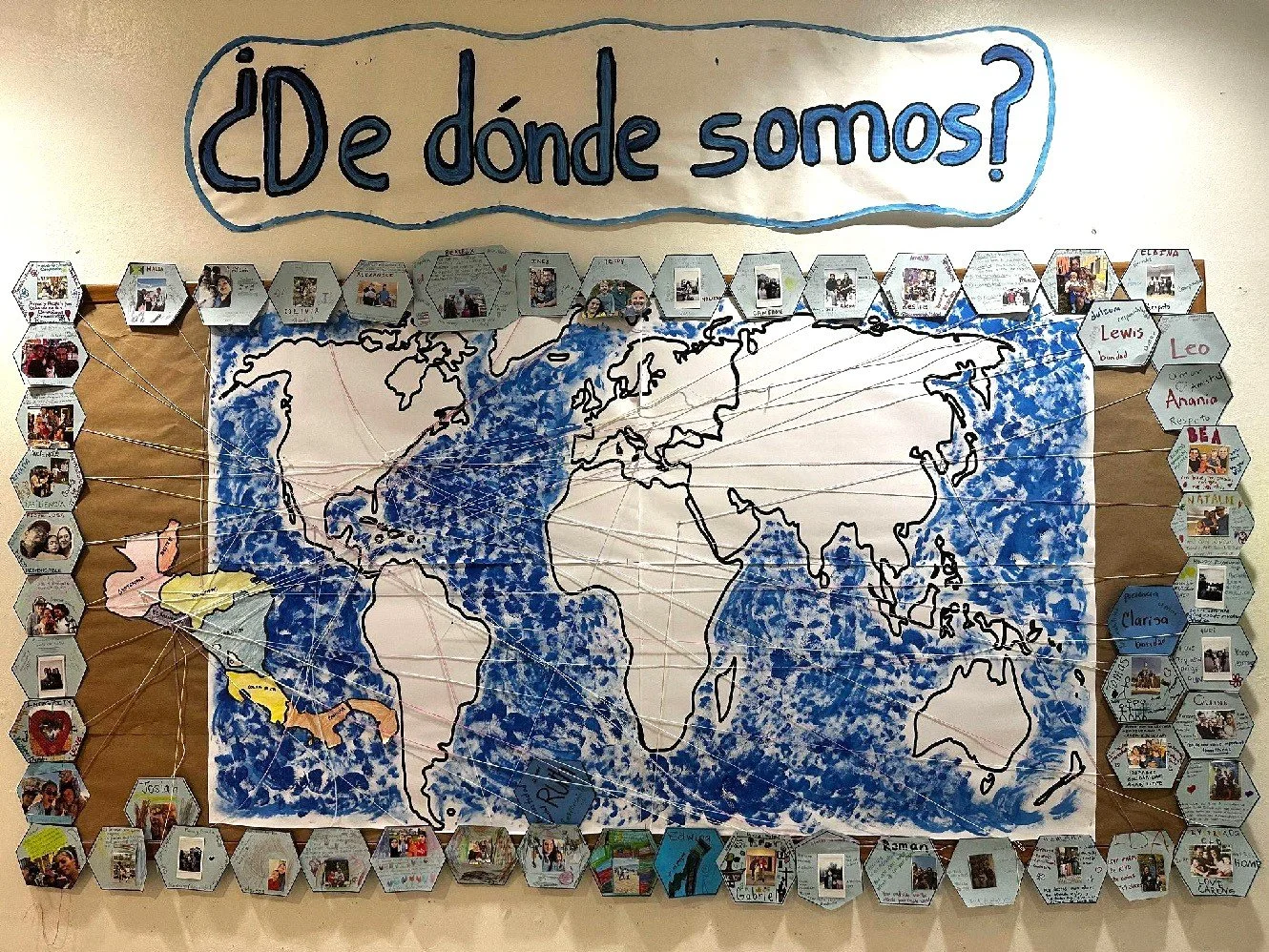
Week 1: What is family and what is your family like?
Students learned that a family is a group of people who love, care for, and support one another. They discussed who is part of their own families, such as parents, siblings, and other relatives. Students also talked about what families do together, like helping each other, spending time together, and celebrating special occasions. They shared what family means to them and expressed their understanding by drawing pictures of their nuclear families.
Week 2: How do families grow?
Students learned about how families grow and change over time by exploring extended families. They discussed how extended family members — such as grandparents, aunts, uncles, and cousins — are important parts of their families, even if they do not live in the same home.
Students learned that families can be connected across different places and generations. To show their understanding, students created their own family trees, identifying and organizing members of their extended families.
Week 3: What is a Black Village? Who is part of your Black Village/support system?
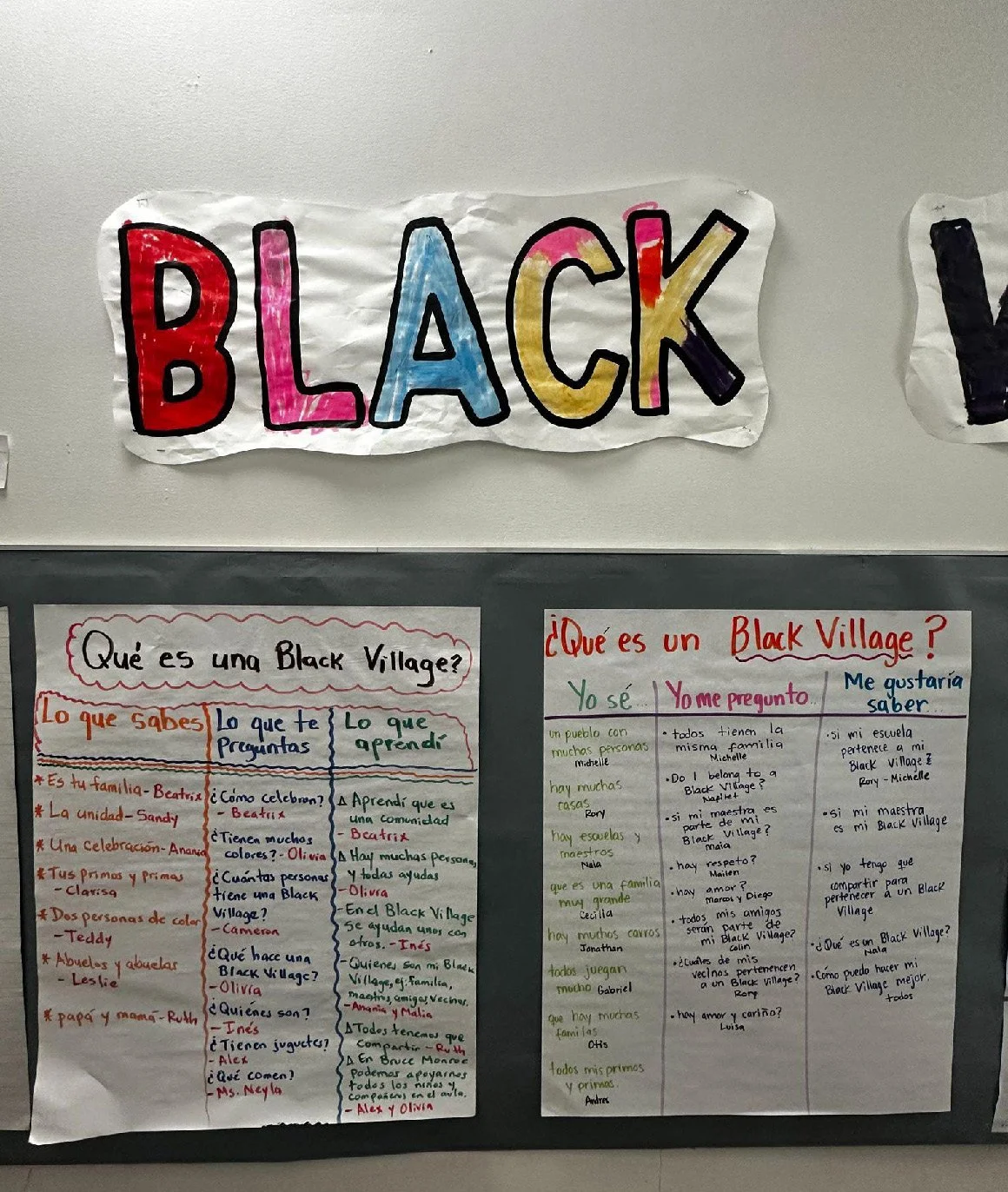
Students learned about the concept of a Black Village, including its origin, meaning, and the important parts that support this idea. They explored the three main principles: many helpers, share and care, and strong community. Students understood that when people work together collectively, tasks become easier, are completed more quickly, and are more effective. As a class, students used a thinking routine to create a KWL chart (What they Know, Want to know, and Learned) to organize and reflect on their understanding of the Black Village. Through discussions, students recognized that their “village” is not limited to their nuclear family, but also includes people who support and care for them—such as classmates, teachers, friends, neighbors, and teammates. Students also learned about important figures such as Dr. Martin Luther King Jr., Rosa Parks, and Ruby Bridges.
Week 4: Why is it important to keep and strengthen your Black Village? In writing, students wrote personal narratives using parts of a story.
Students told and wrote about a moment when they experienced or recognized a principle of the Black Village in their own lives. They reflected on situations where ideas like helping others, sharing and caring, or being part of a strong community were present. Students also practiced using sequencing words such as one day, then, after, and finally to clearly organize the events in their stories. This helped them understand the structure of a story and describe their experiences in logical order.
Essential question: Why is it important to apply the “Black Village” principle in our daily lives?
Take action project summary: After generating many ideas, students chose actions they could practice to strengthen the Black Village at BMPV, such as helping classmates, welcoming new students, caring for shared spaces, and recognizing people who help our community. Students then created a list of actions to share with BMPV students to apply in their classrooms and school.
First Grade
Intergenerational
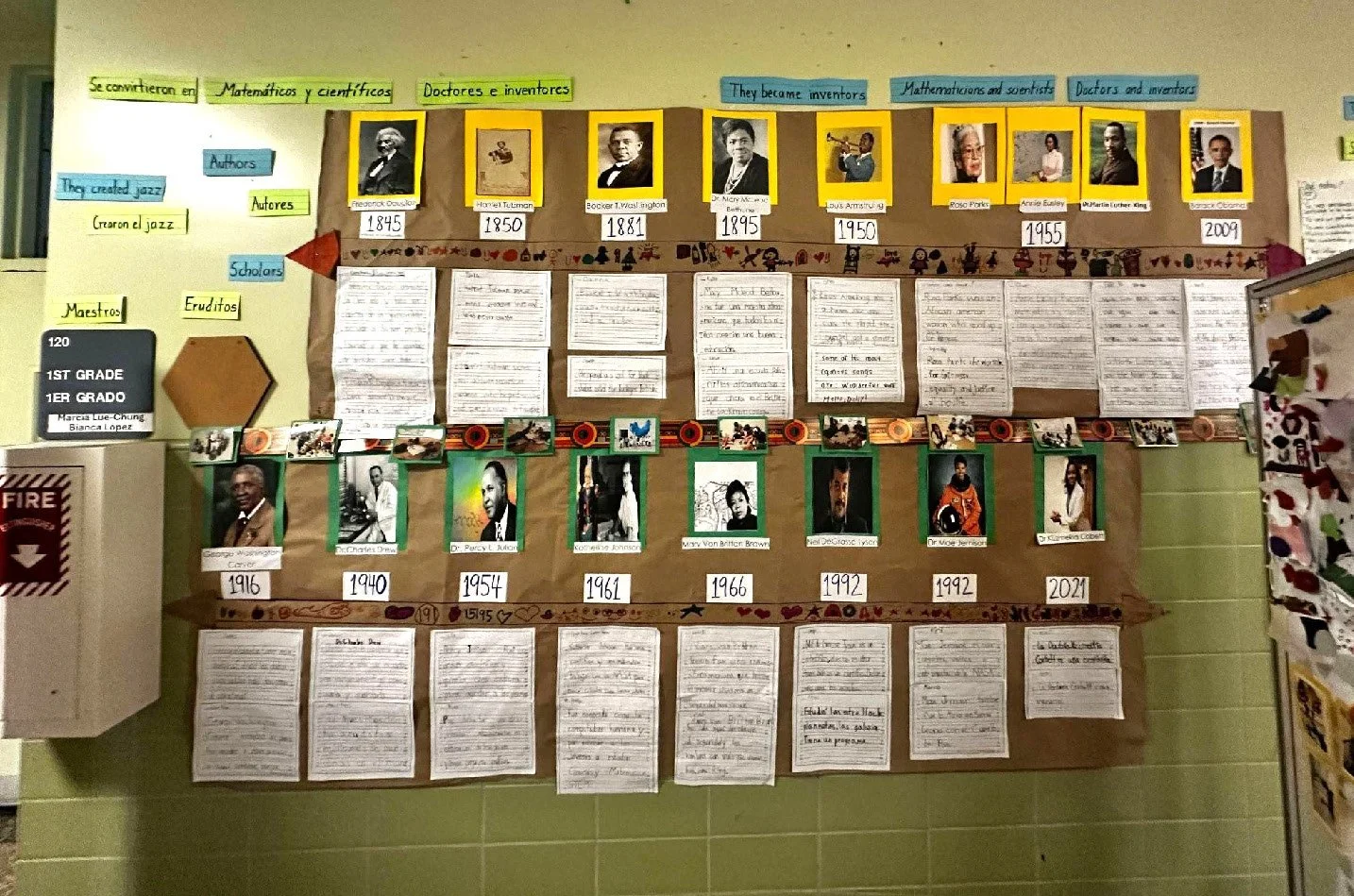
Week 1: Learning from the Past
What is intergenerational?
Who are people in our generation?
What traditions have been passed down to us?
We introduced the word intergenerational and created a KWL chart to track what we know, wonder, and want to learn. We explored our families by creating family trees to identify different generations. We shared traditions and stories from home.
Week 2: Learning Across Generations
How does learning about older generations helps us understand our world today?
What can we learn from people who are older than us?
How do stories from the past help us understand the present?
We explored stories, articles, and posters about important Black figures across generations in social justice, sports, and science. We used thinking routines to reflect on their impact and created a timeline to show how change happens over time. We also connected our learning to art through a museum quilt activity.
Week 3: Listening to All Ages
Why is it important to listen to everyone, no matter their age?
What can older people learn from kids?
Why should we treat people of all ages with kindness and respect?
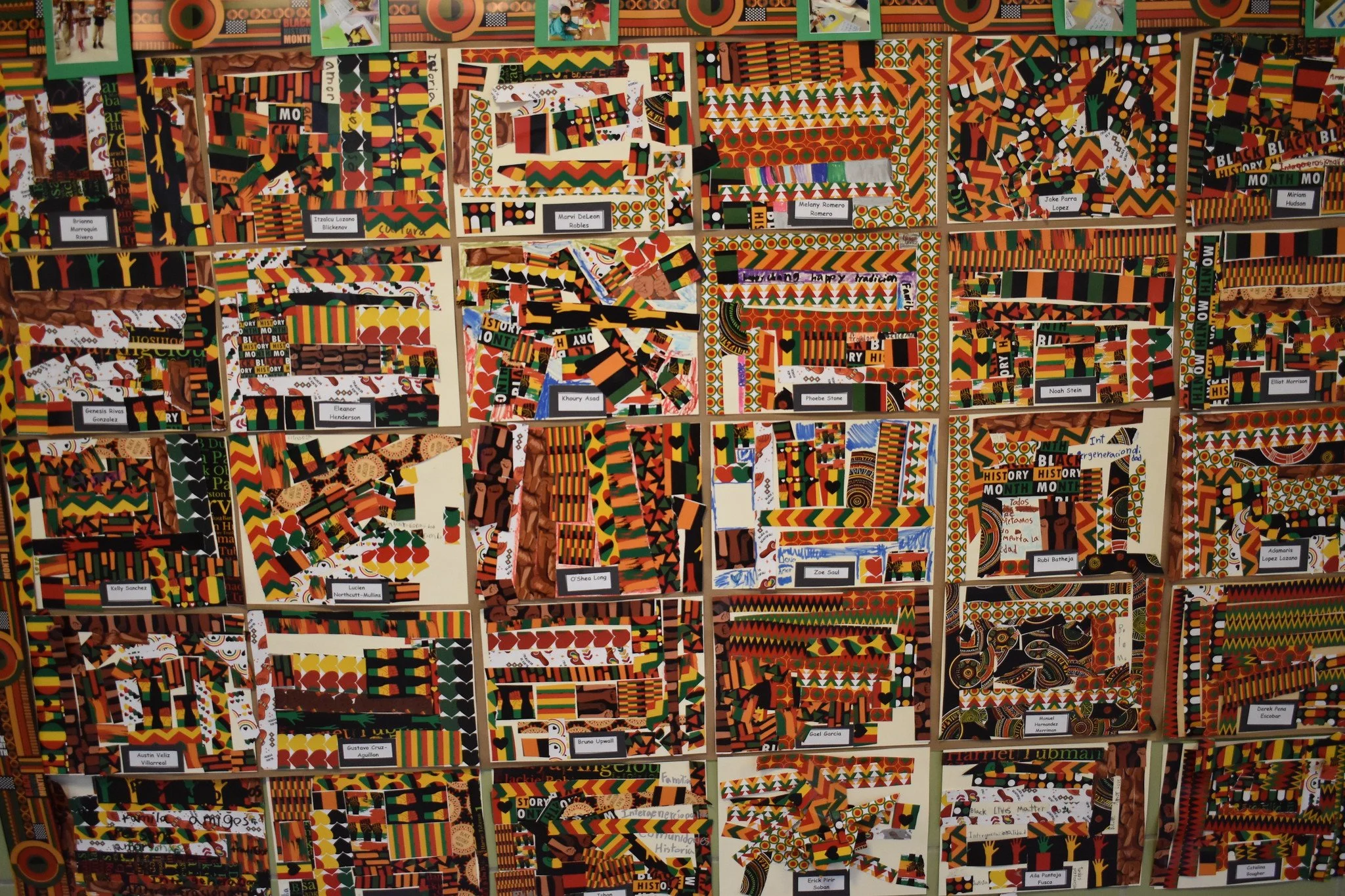
We wrote interview questions and practiced asking thoughtful questions. We interviewed visitors from the Wellness Center who came to spend time with us, learning from their experiences and stories. Together, we added a square to our community quilt. We also visited the National Gallery of Art and collaborated to create a quilt inspired by our shared learning. Throughout the week, we discussed fairness and why every voice matters.
Week 4: Families, Stories, and Traditions
How do families share stories and traditions over time?
How do quilts tell stories about families and communities?
How does learning about people’s experiences help us understand the world?
We explored how quilts tell stories and represent history. We created quilt pieces and worked with clay as symbols to represent our own stories and traditions.
Week 5: Working Together for Fairness
How can people of all ages work together to make the world fairer and kinder?
How can kids help make their communities better?
We reflected on everything we learned and worked on a Quilt of Kindness as our PLAN OF ACTION. Families, elders from the Wellness Center, and students were invited to join us to create quilt squares that celebrate kindness, inclusion, love, and fairness. We shared our learning and discussed how we can continue to make a difference in our communities.
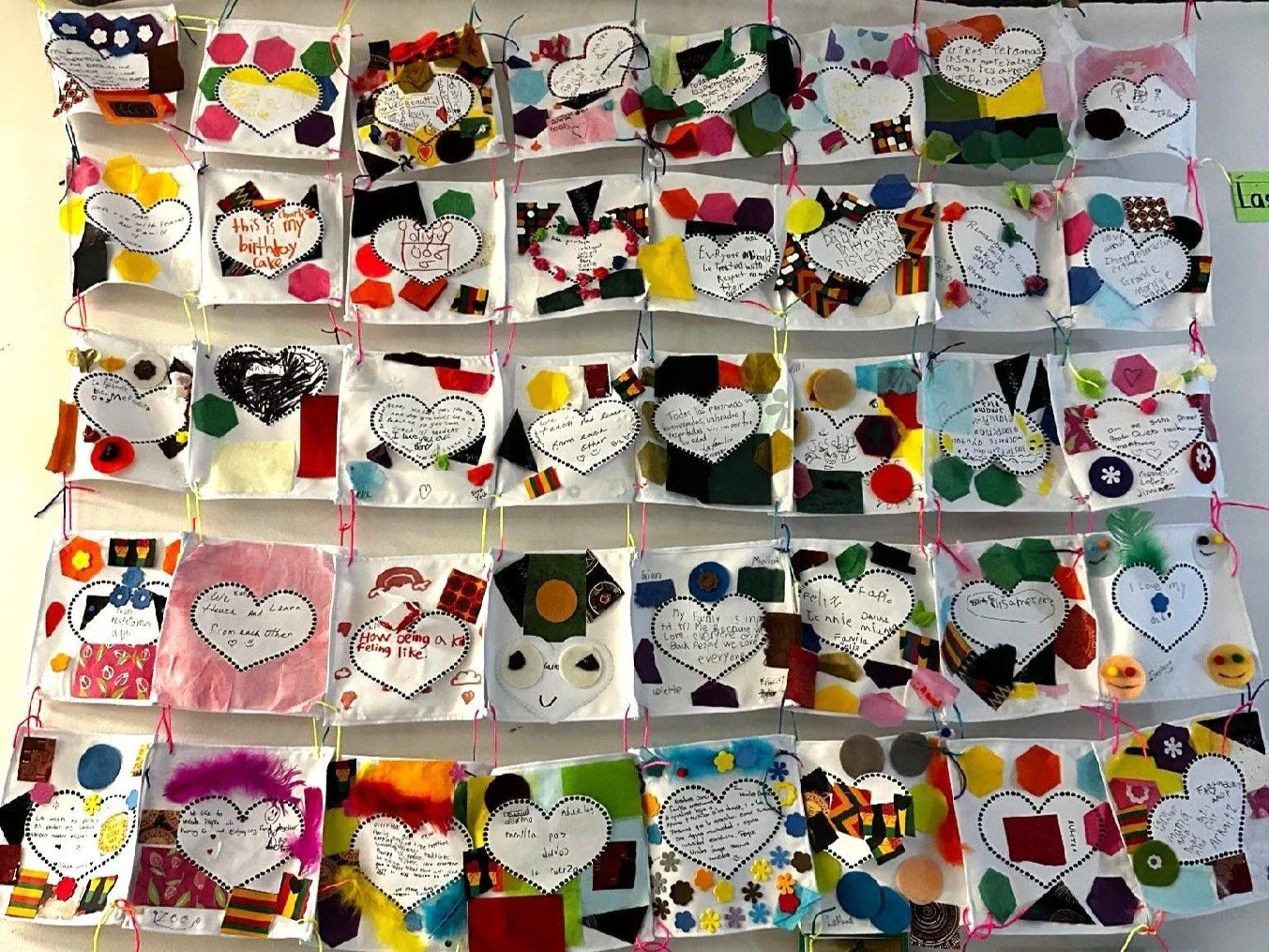
Second Grade
Loving Engagement
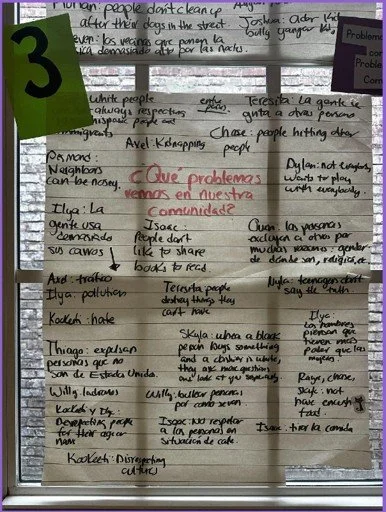
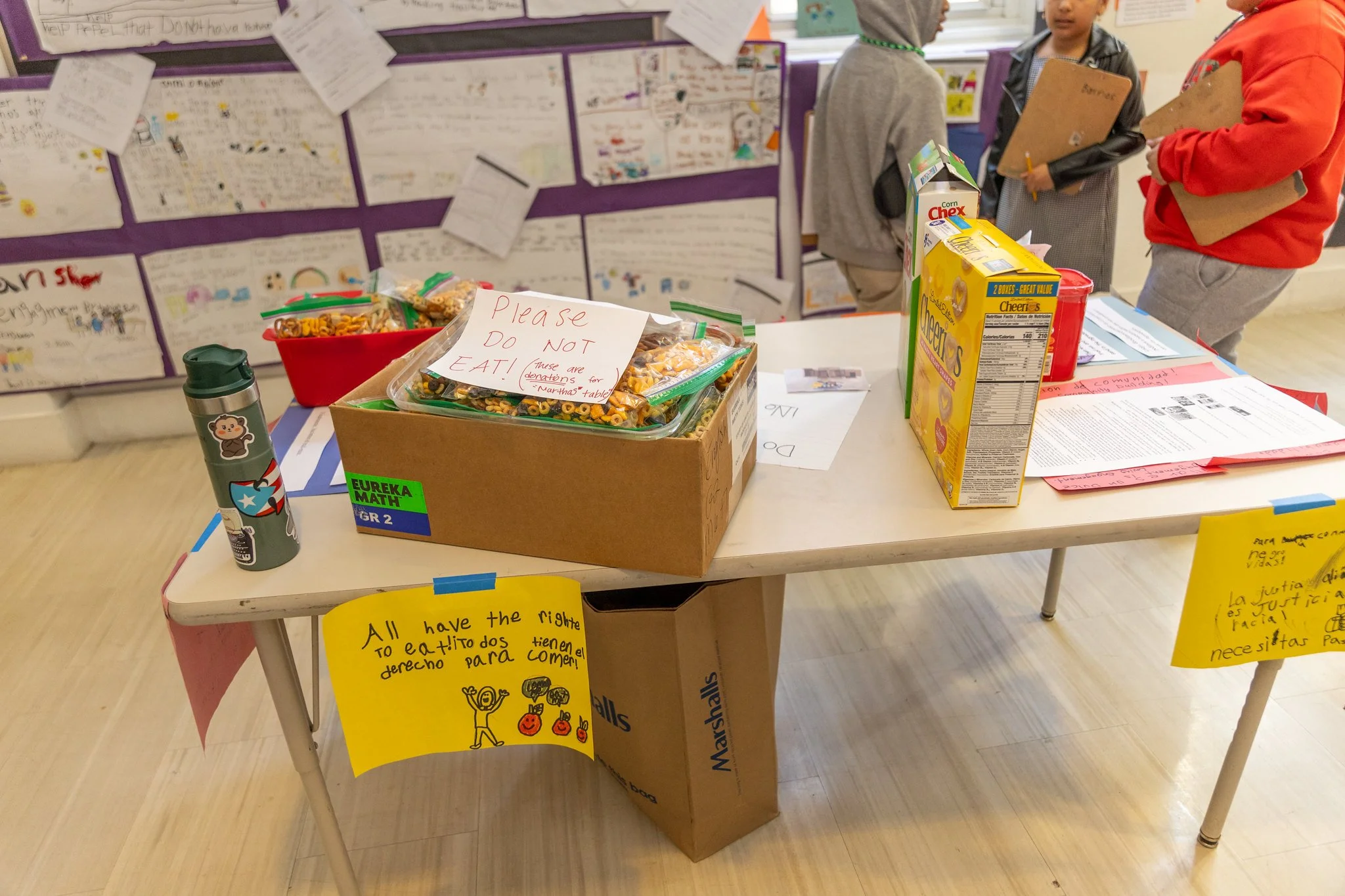
Students read Each Kindness and Sit-In: How Four Friends Stood Up by Sitting Down. They talked about what kinds of problems they see in their community, then came up with plans for how to lovingly engage solutions for those problems using their voice (educating their community), hands (community clean up, letters to people in government), and heart (donating to their community).
Third Grade
Black Women
Essential Questions:
How have Black women rebelled against and thrived within systems of oppression including racism and patriarchy?
How can we honor Black women in our everyday lives?
How can we continue to increase representation of Black women and help our community learn more about the contributions of Black women in our own school and city?
What can we learn from Black women in our community about being anti-racist agents of change?
How can we use what I learned to disrupt the patriarchy to help create a more just society?
Students unpacked the principle of Black Women and analyzed key vocabulary, using a Frayer model to show the meaning of key words of the principle. Students participated in several activities to develop vocabulary and oracy skills. In small groups, students did an activity to match key vocabulary words with their definition and picture. Students explained why they thought specific images represented the word and other students used specific language to agree, disagree, or add on. In a large group, students engaged in a four corners activity to explain why different situations were examples of sexism, racism, anti-racism, or gender equality/feminism.
Students read articles about historical challenges Black women have overcome in areas such as civil rights, equal access to sports and education, and various professional fields. Students discussed how women rebelled against and thrived within systems of oppression including racism, sexism, and patriarchy. Students also participated in a summary of bullseye vocabulary activity. The objective was to correctly use as many words as possible from the bullseye to summarize their learning this unit.
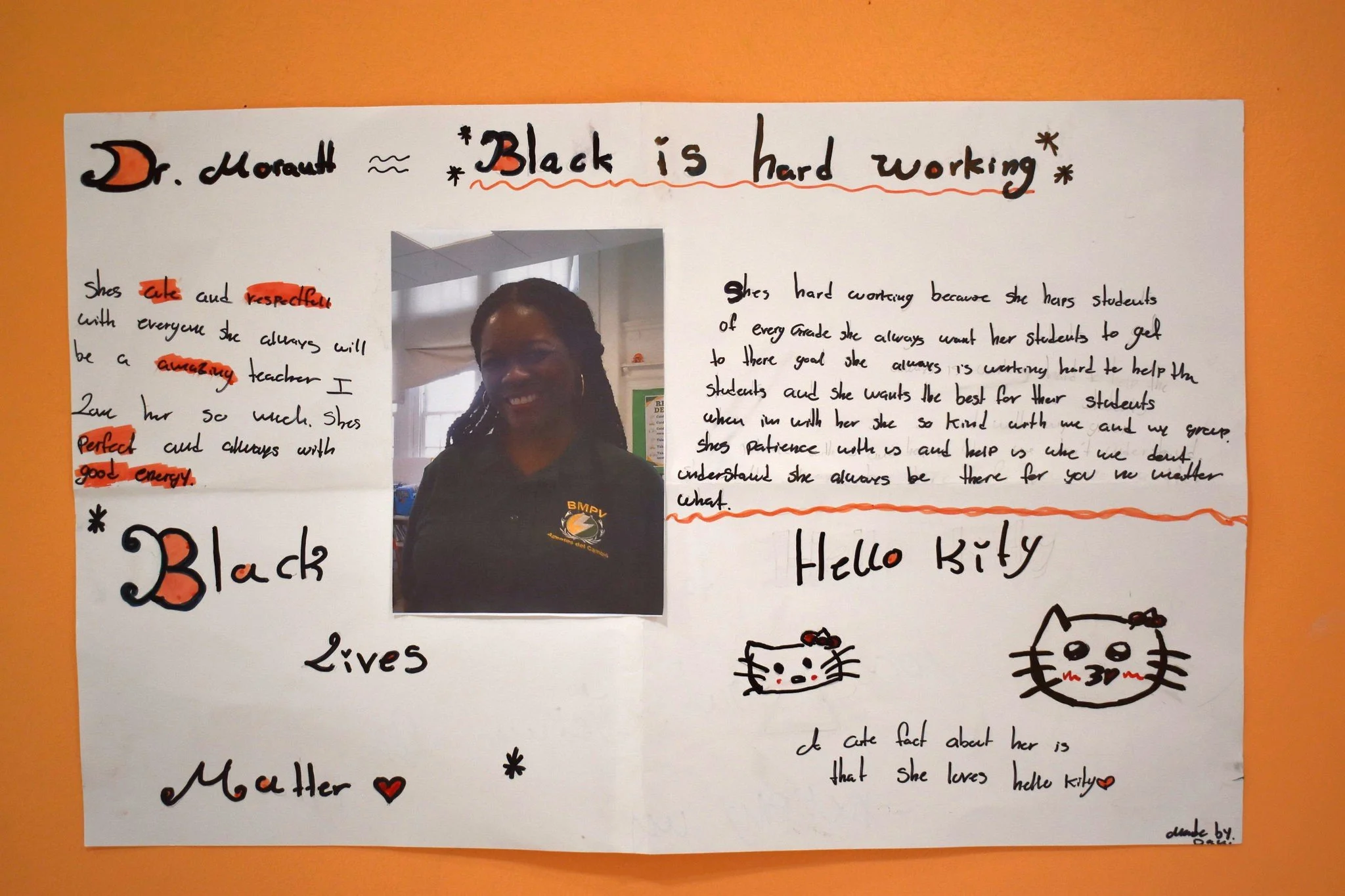
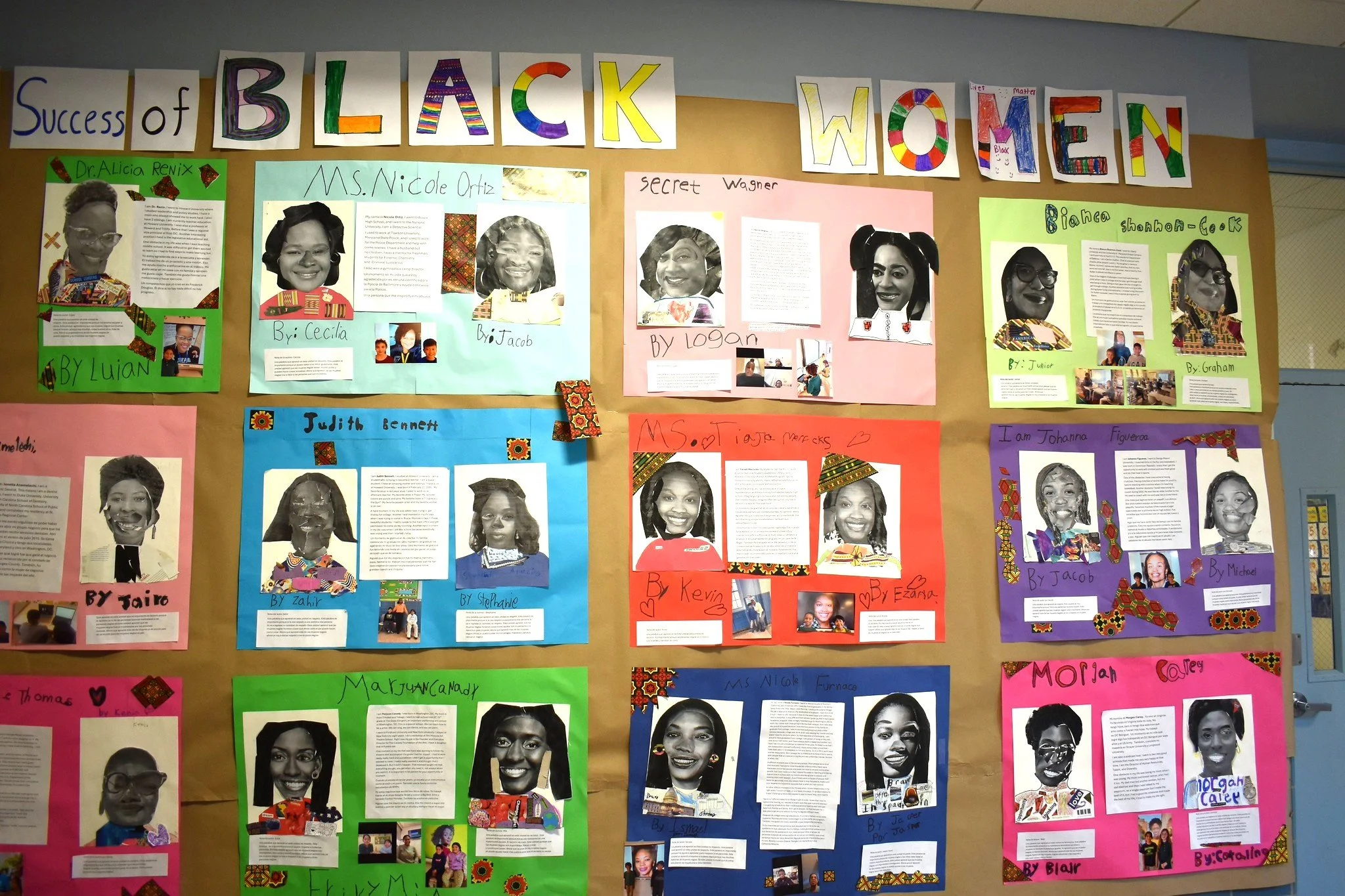
Students then selected a Black woman in our own community to research and interview. Students began collecting information by reviewing their woman’s resume. Then, students planned interview questions and conducted in-person and virtual interviews.
Students used the information they learned in their interview to write a narrative nonfiction piece using the first-person voice about their woman’s early life, challenges, accomplishments, and sources of gratitude and inspiration. Students also added an author’s note to capture their own reflections on their learning.
Students also created a collage portrait to represent the woman they researched.
The narrative nonfiction biographies written by students were combined into one anthology of biographies to highlight the brilliance and resilience of Black women in our community and to increase representation of Black women in our school library.
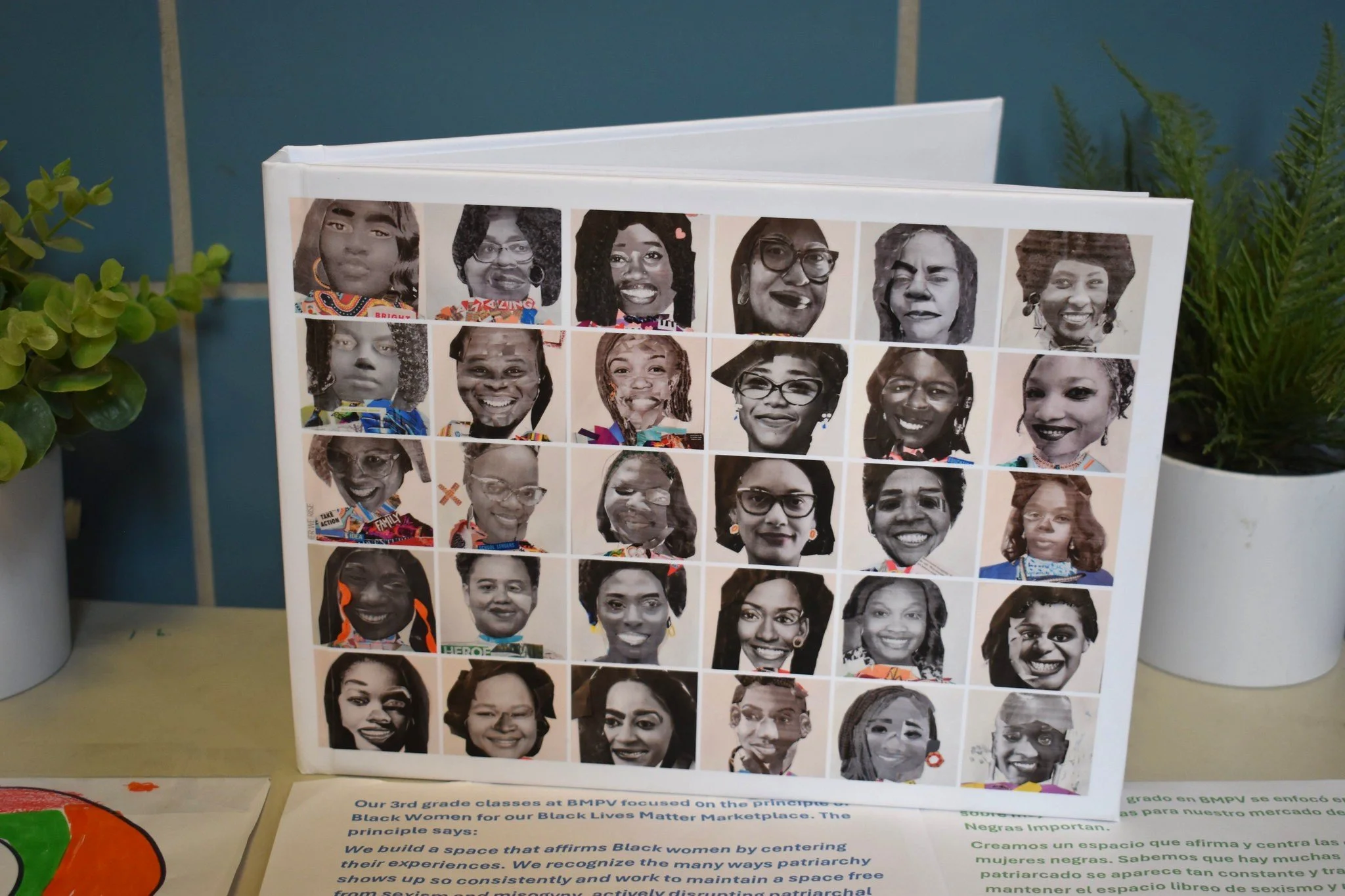
Below is the introduction to the students’ book.
Our 3rd grade classes at BMPV focused on the principle of Black Women for our Black Lives Matter Marketplace. The principle says:
We build a space that affirms Black women by centering their experiences. We recognize the many ways patriarchy shows up so consistently and work to maintain a space free from sexims and misogyny, actively disrupting patriarchal culture.
Last year, we recognized a need for more biographies about Black women in our school library. In the 2024–2025 school year, there were 606 biographies in English. 68% were of men and 37% were of women (16% were Black women). In Spanish, only 2% of the biographies were about Black women. This shows that there are not a lot of Black women that are represented in books. Our goal was to increase the number of books about Black women in both languages in our school library. We introduced 30 more Black women into our library by telling their stories.
This year, we decided to focus on Black women in our own community, and we are introducing 32 more Black women into our library! Students interviewed BMPV staff and caregivers and DC-area women in various fields to share information about their lives, experiences, moments of challenges and accomplishments, and to cultivate more resiliency and joy within our communities.
We hope you enjoy this book and celebrate Black joy, success, and determination!
Fourth Grade
Restorative Justice
Project 1: Literary Essay
“Then and Now: Analyzing Injustice Across Time”
In this project, students engaged in a close reading of Stamped (for Kids) to analyze how unjust words, behaviors, and laws have affected individuals and communities throughout history. Students examine how historical injustices (THEN) continue to shape contemporary experiences (NOW) through a comparative literary essay.
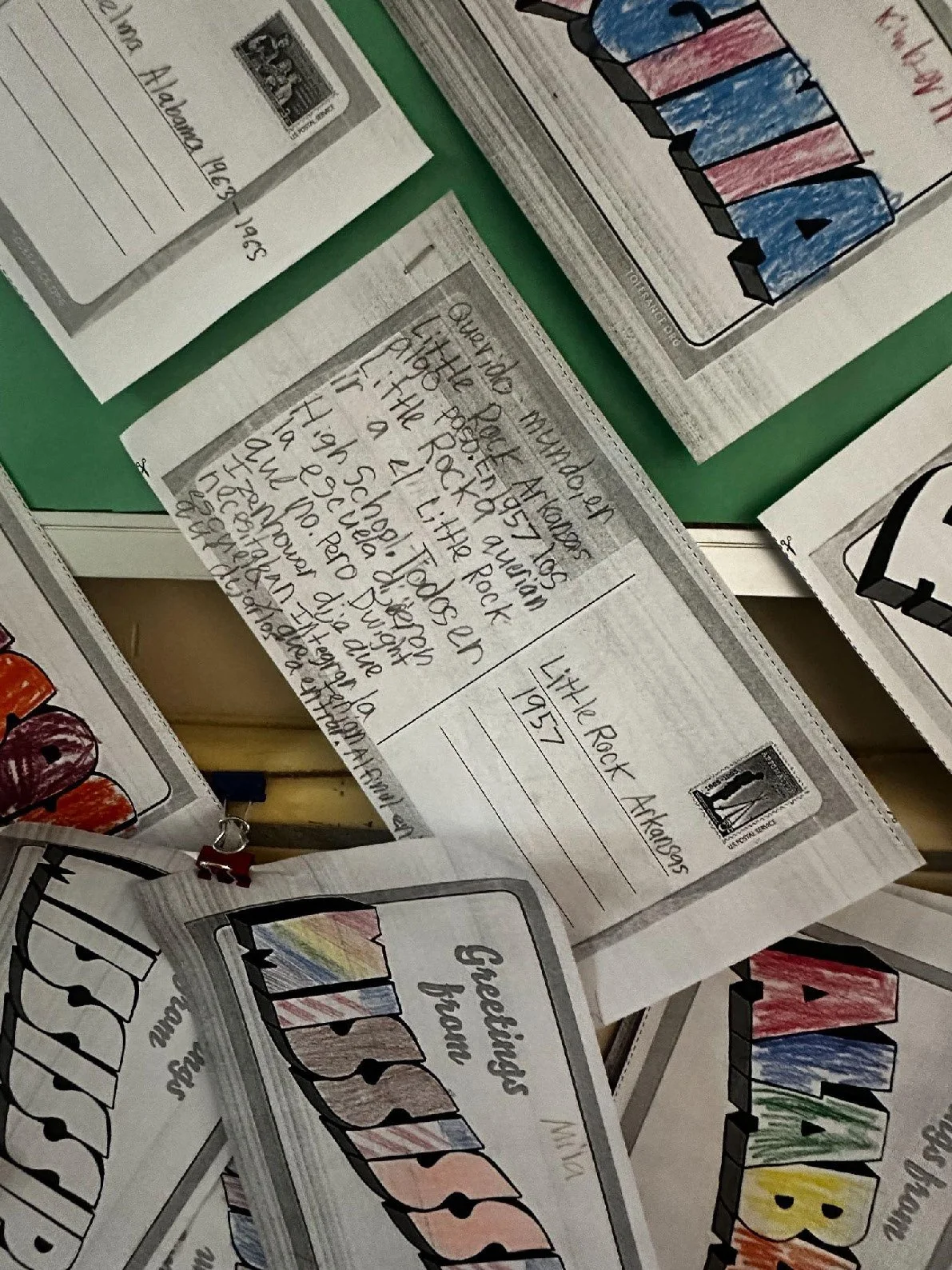
Project 2: Viaje a los Derechos Civiles
Students analyzed key events of the Civil Rights Movement across different locations in the United States including Brown v. Board of Education, The Children’s March, Little Rock 9, Ole Miss, Loving v. Virginia, and Selma, to explain how these actions challenged unfair treatment and promoted equality.
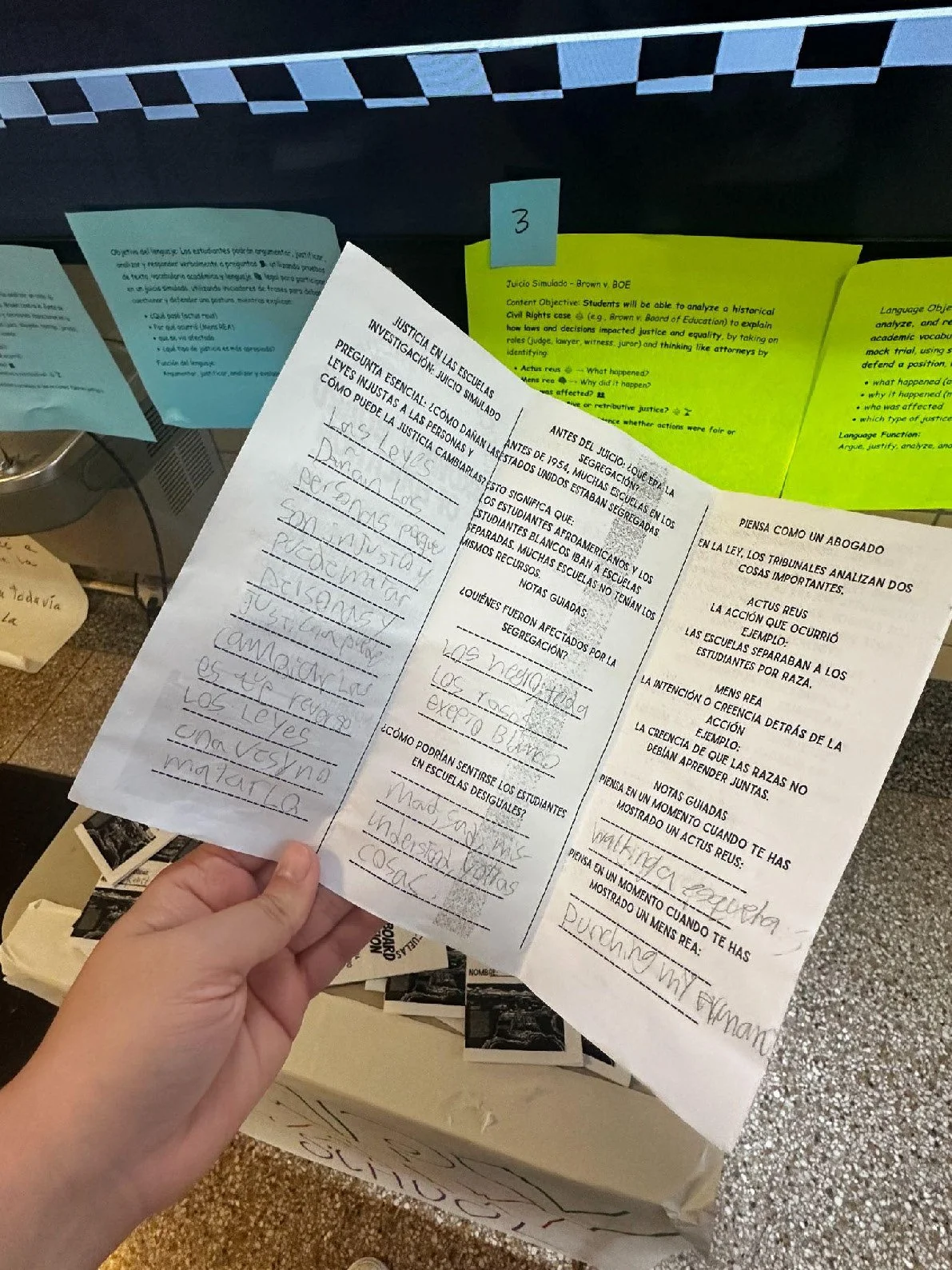
Project 3: Juicio Simulado – Brown v. Board of Education
Students analyzed a historical Civil Rights case to explain how laws and decisions impacted justice and equality, by taking on roles ( judge, lawyer, witness, juror) and thinking like attorneys by identifying:
Actus reus: what happened?
Mens rea: why did it happen?
Who was affected?
Is it restorative or retributive justice?
In order to argue using evidence whether actions were fair or unfair.
Fifth Grade
Unapologetically Black
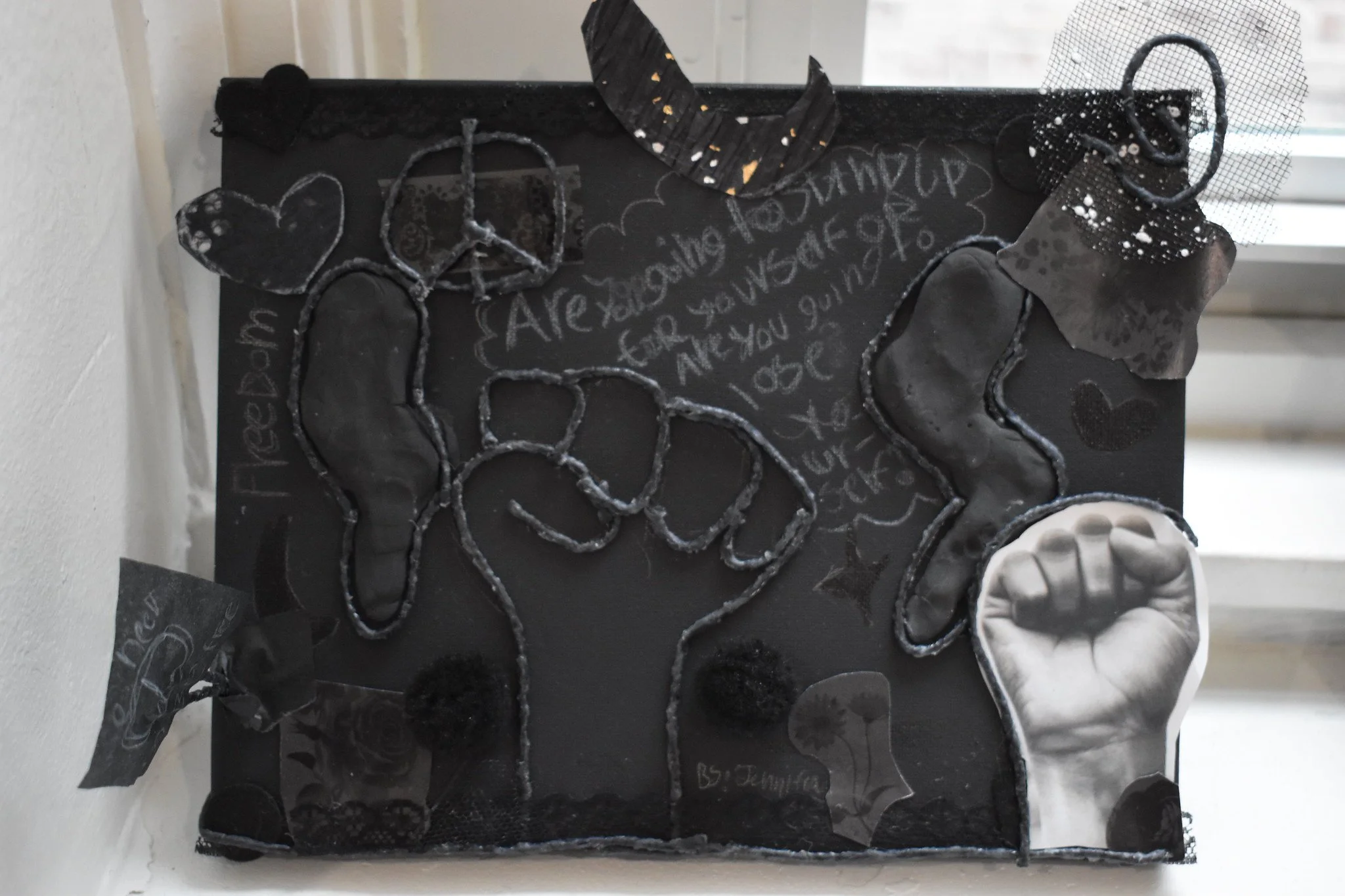
Students made collages and wrote about what it means to be unapologetically Black.