2026 Filmfest DC Classroom Visits
In late April 2026, Teaching for Change partnered with Filmfest DC: The Washington, DC International Film Festival for a 15th year to bring filmmakers into D.C. classrooms to share some of their films.
Students learned about filmmaking and social justice issues from viewing the films and participating in discussions with the filmmakers. (Read about prior year visits.)
See photos from all of this year’s visits.
Read about each visit below:
Baristas vs. Billionaires at School Without Walls HS | From the Hill to Horizon at Jackson-Reed HS | Sudakas at Capitol Hill Day School | Chocolate at Ballou HS | Everybody to Kenmure Street at Capital City PCS | People vs. Politics at School Without Walls HS | TCB - The Toni Cade Bambara School of Organizing at E.L. Haynes PCS | Beast of the Seine at John Francis Education Campus | Reading the World at Columbia Heights Education Campus
Baristas vs. Billionaires at School Without Walls HS
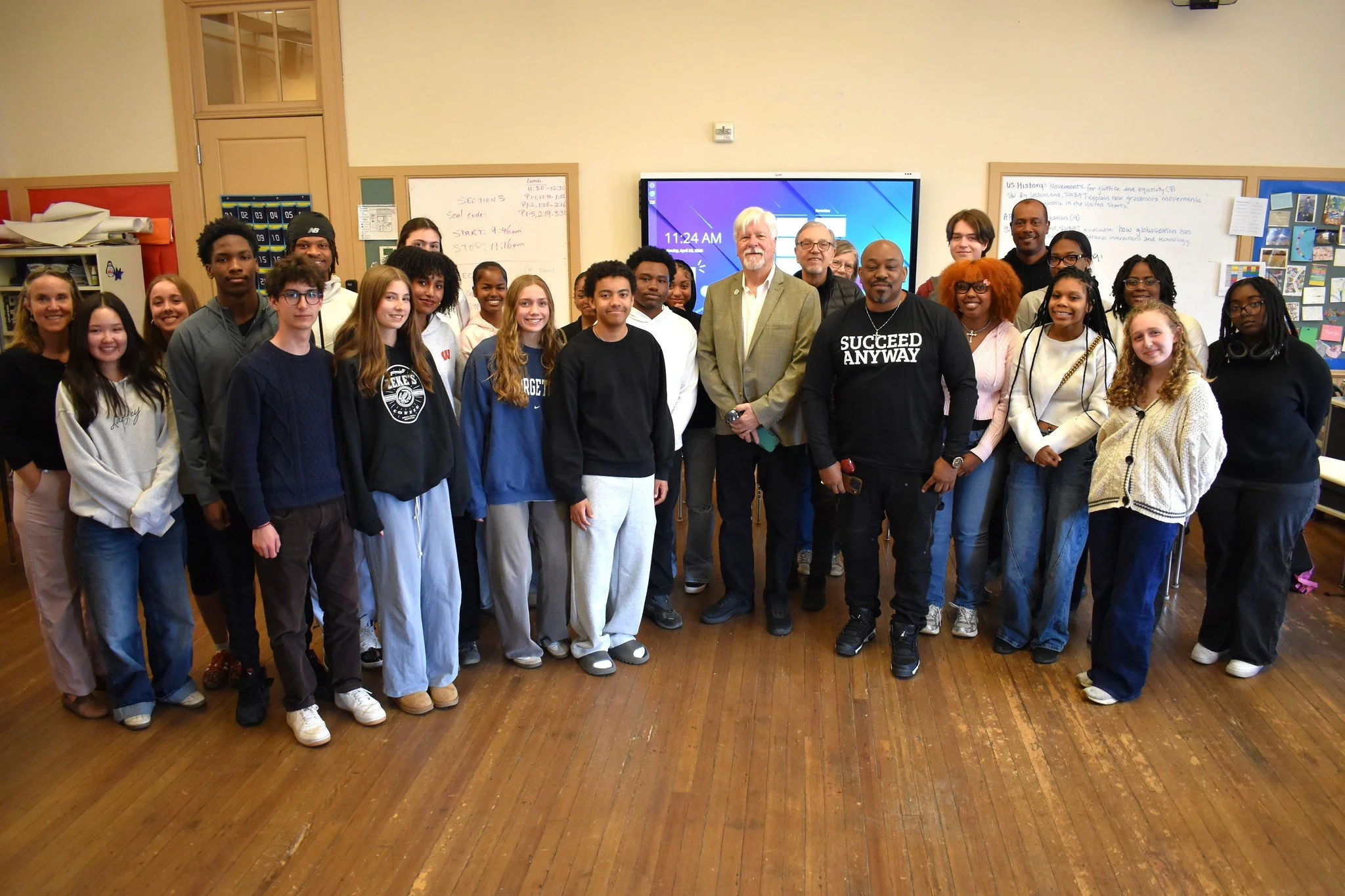
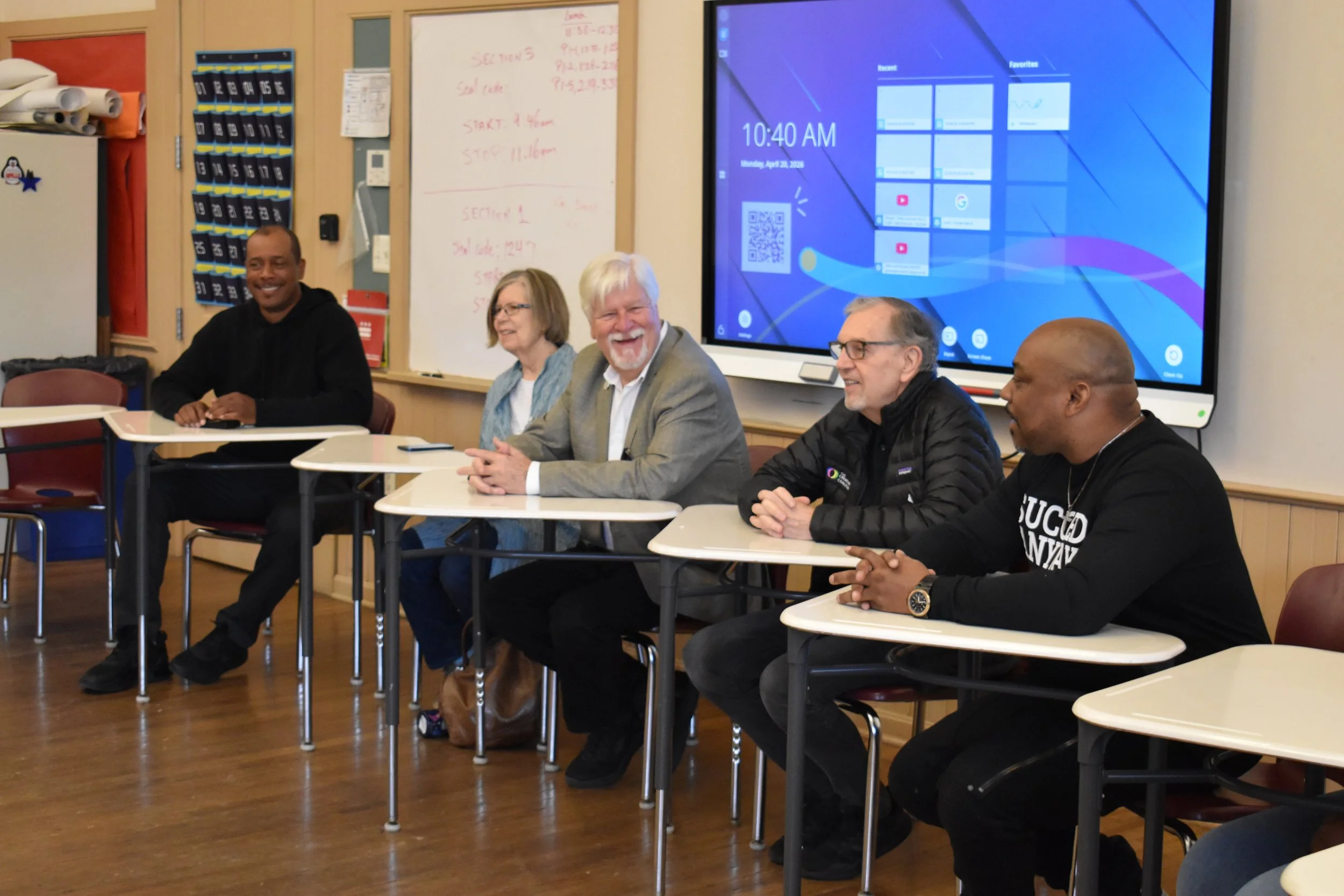
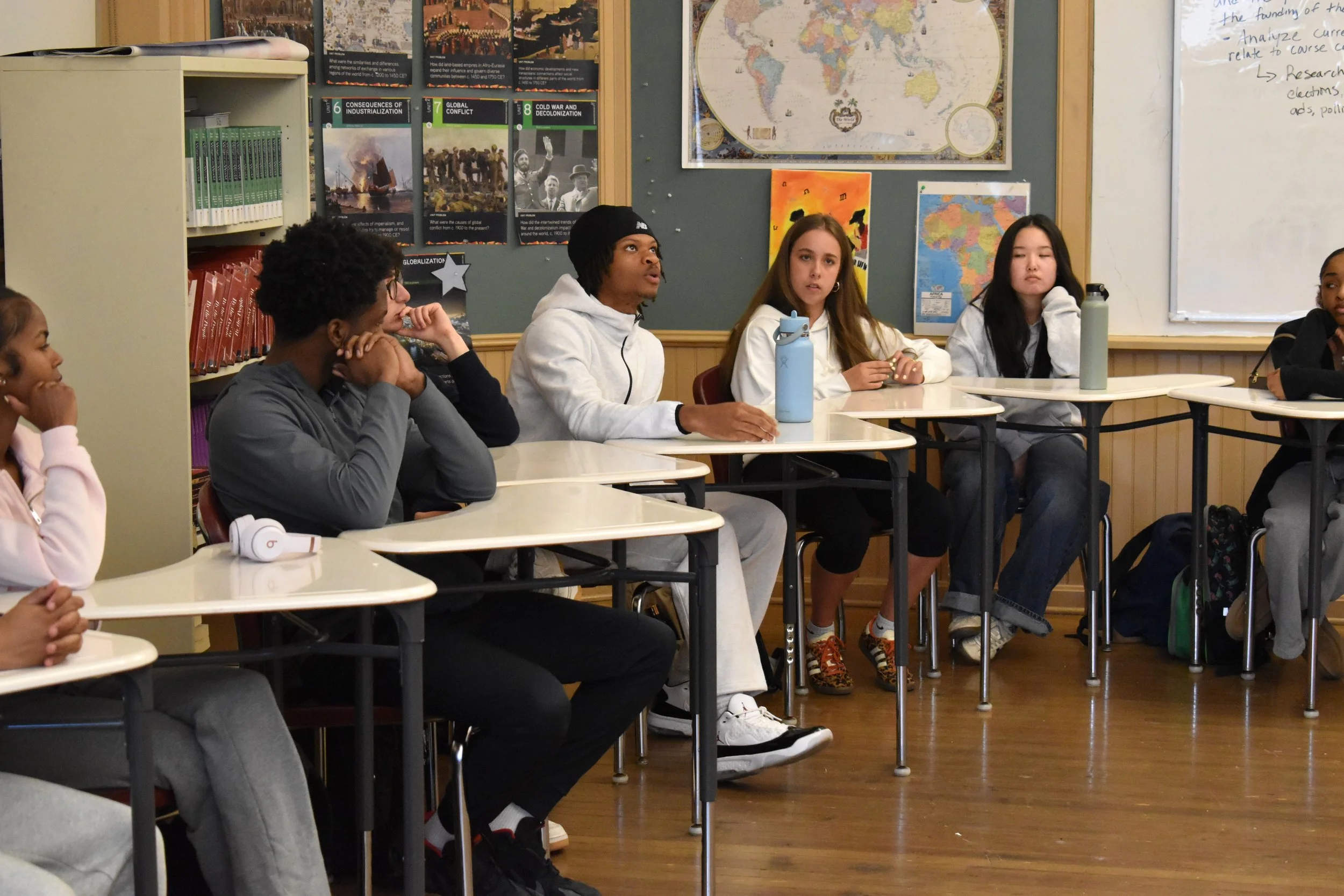
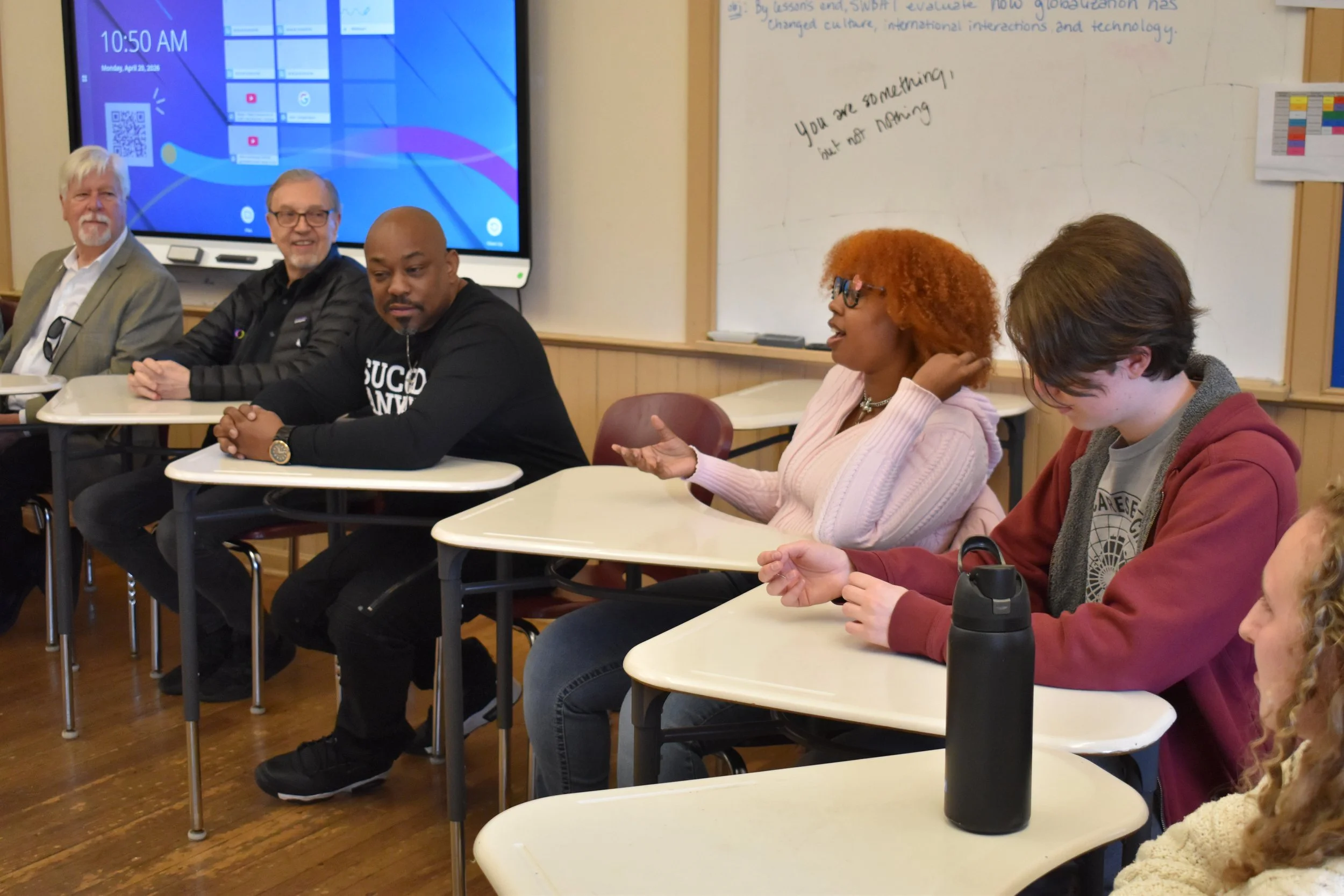
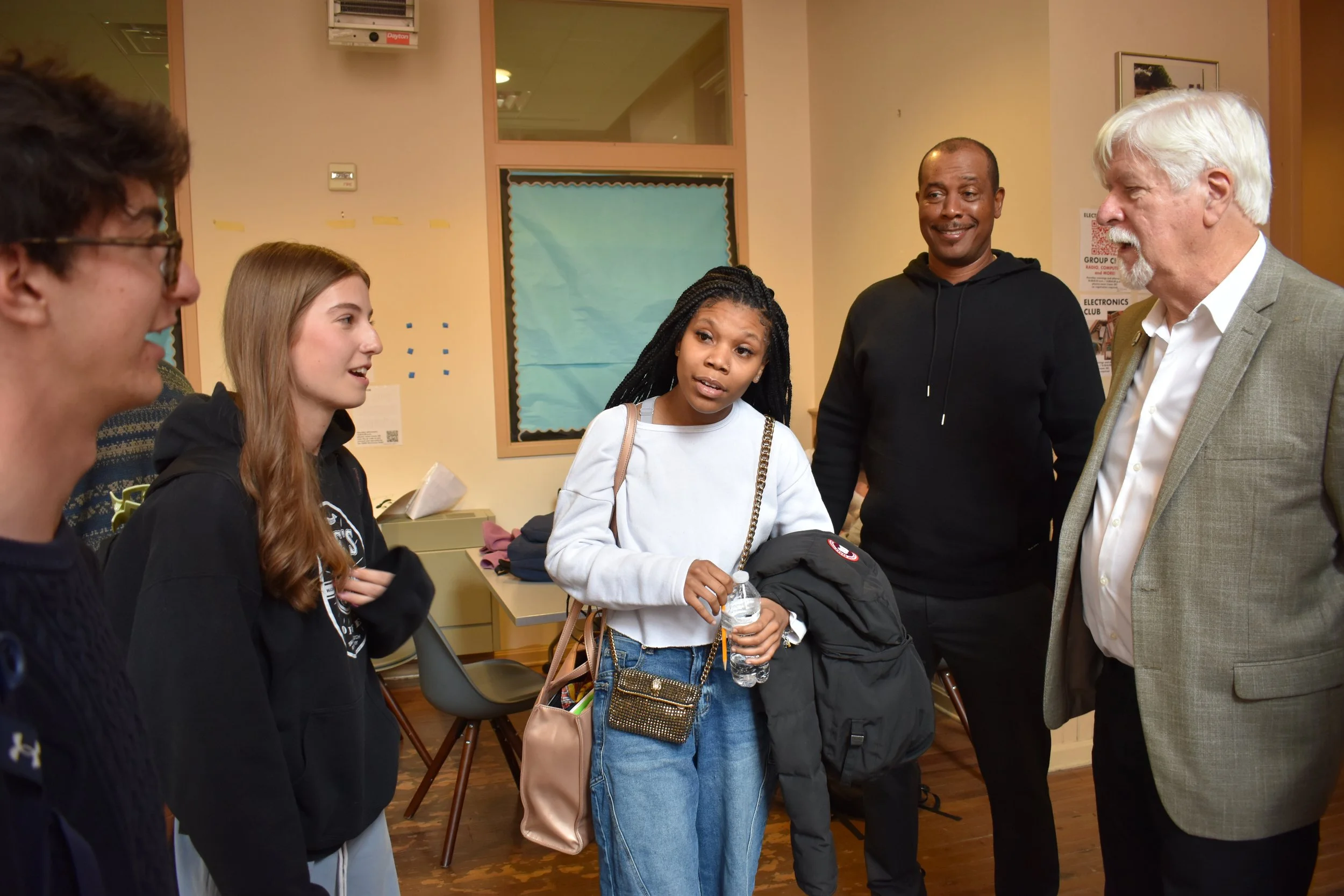
On April 20, students in Kerry Sylvia’s U.S. Government class welcomed director/producer Mark Mori, producer/editor Robert Judson, actor/co-producer Dennis LA White, and local entrepreneur Lavert Phillips for a lively discussion of the film Baristas vs. Billionaires. The film follows the lives of baristas at Starbucks in Buffalo, New York, highlighting their struggles and personal stories, as well as the challenges they face in their efforts to unionize.
Students watched the film before their spring break and were prepared with questions for the Baristas vs. Billionaires team. Students asked about the inspiration for the film and how they chose the Buffalo Starbucks workers as the subject. Mark Mori responded that he worked in a steel mill as a union steelworker as a young person. He was inspired to see young people standing up for their rights at Starbucks. Robert Judson shared that they went to several different cities to film before deciding to narrow the focus of the film to workers in Buffalo.
Students asked if there was any footage that they were not allowed to include in the film. The filmmakers shared that they asked to interview Starbucks CEO Howard Schultz, but he did not respond. Instead, they used footage from the Starbucks website of his visit to Buffalo. The footage from that video captured a lot of what they wanted to show about his being out of touch with his workers, but they felt a video with him could have shown more.
Students were discouraged that the workers were fired (although they all were fired illegally and won damages) and that the union workers had trouble getting a contract. Mori shared that Starbucks did, in fact, raise wages. He also encouraged students that sometimes you yourself don’t reap the benefits of the fights you begin; this is the early stages of a fight similar to the fight that began in the early 1930s to win labor rights.
He shared that you can find ways to support Starbucks workers, including supporting unionized stores, at the Starbucks Workers United website.
From the Hill to Horizon at Jackson-Reed HS
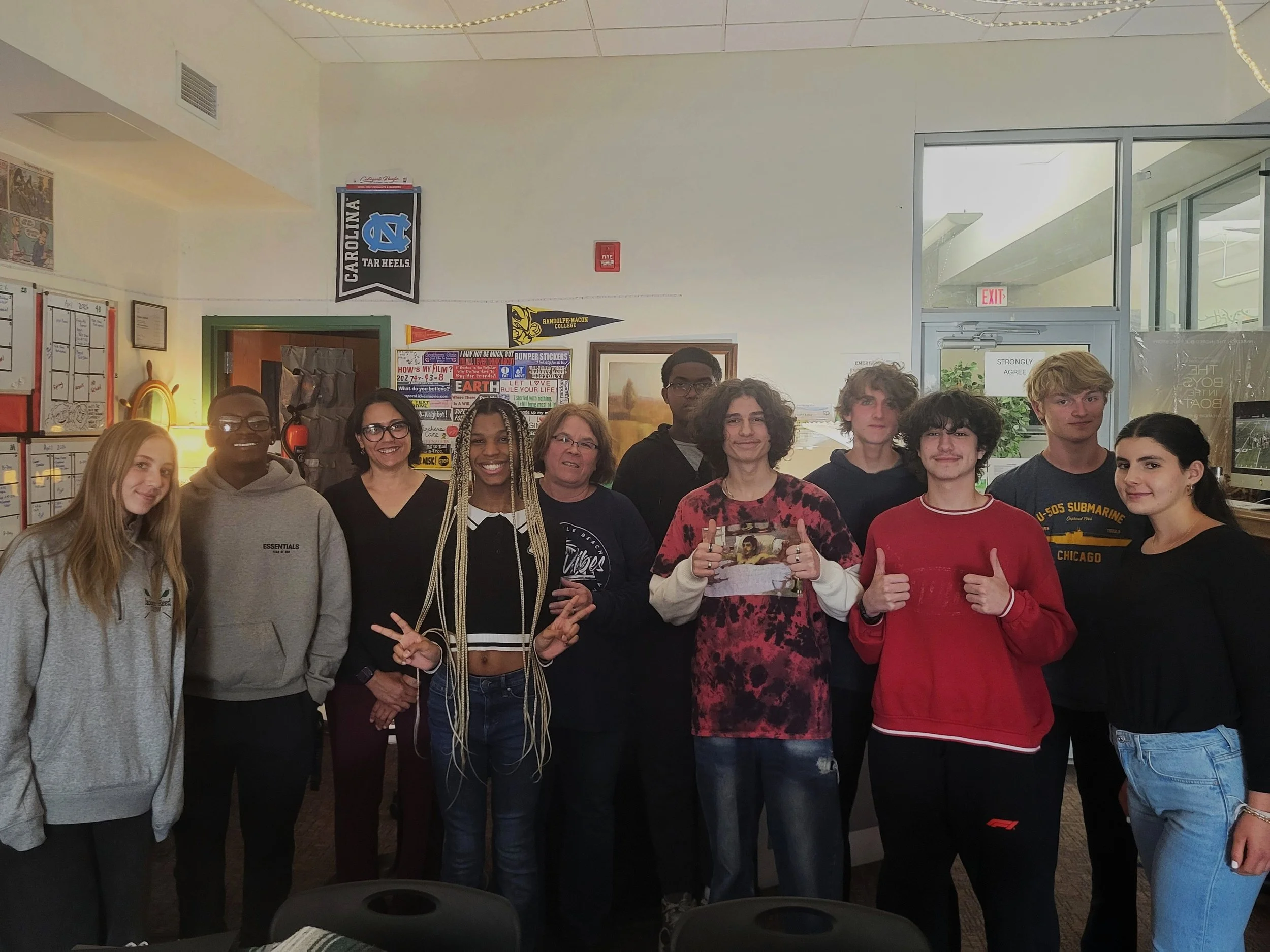
Students in Alison Raffaldt’s 2nd-year video production class at Jackson-Reed HS welcomed From the Hill to Horizondirector Rakhi Varma to their classroom on April 20.
The film follows former Maryland Congresswoman Donna Edwards in her quest to visit all 63 national parks in her RV named Lucille, despite the challenges of multiple sclerosis. Her travels reveal why public lands are for everyone, and why they matter now more than ever.
Raffaldt prepared her class ahead of spring break, sharing the film and working with students to draft questions they would ask Varma when she visited. During the open Q & A, students asked Varma why she chose to take on this project and what she had hoped others would take away from the film.
Varma shared that she and the production team approached her to support the project because of her experience making similar documentaries with National Geographic. The discussion went beyond the substantive themes of the film to focus on filmmaking itself, including story and values alignment, production resources and limitations, and the process of constructing a solid story.
Varma took advantage of the students’ skillset in video production and storytelling to engage them in a mini-workshop to develop a storyboard. Varma showcased a National Geographic segment that she had collaborated on. She first showed the segment with no sound and offered background information on the animals featured in the segment. Varma then invited students to suggest an opening narrative and soundtrack for the segment, and what continued story line might follow to expand the segment.
Students also had the opportunity to share their own shorts with Varma offering feedback to enhance their final projects.
Sudakas at Capitol Hill Day School
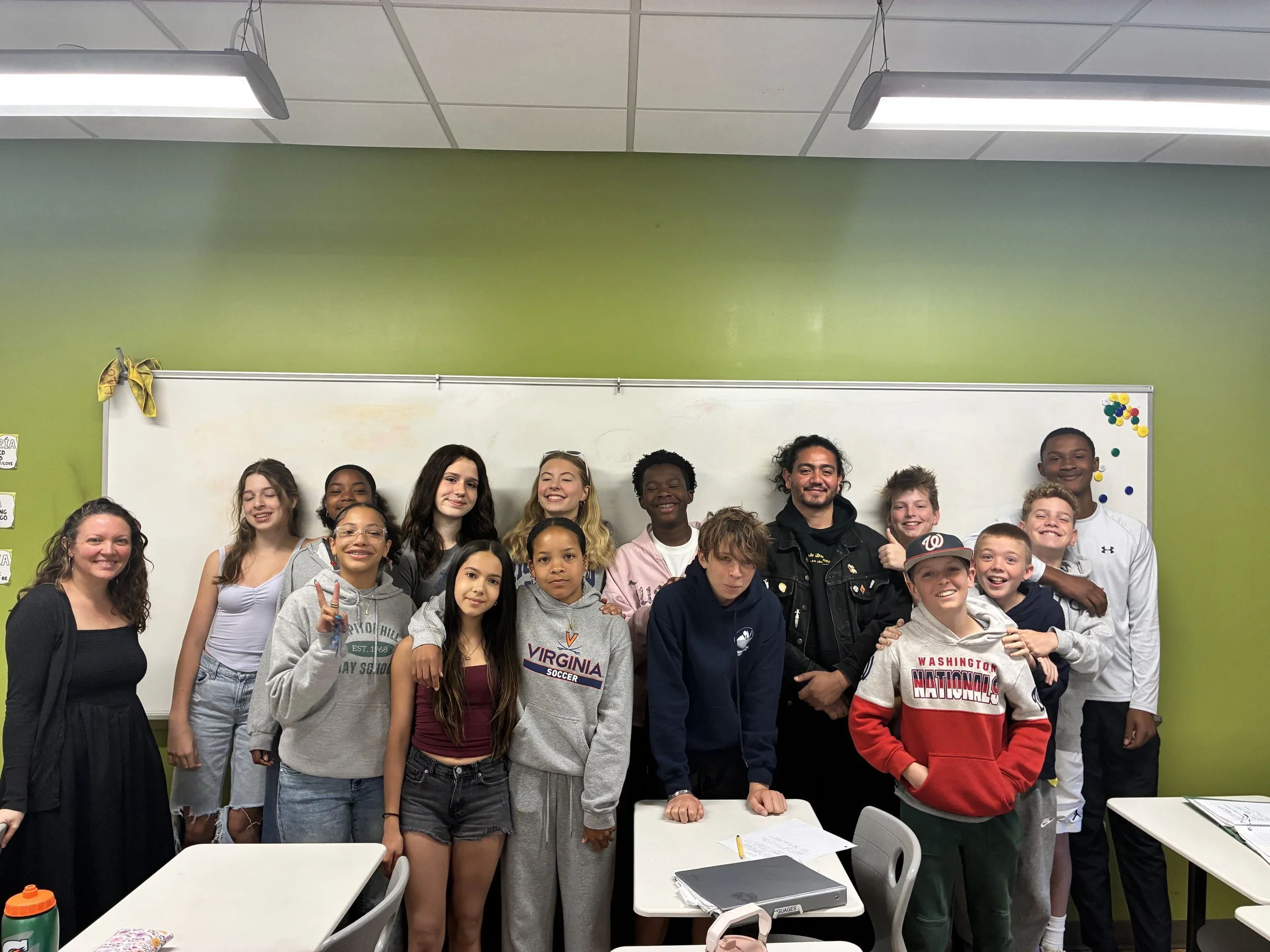
Each year, the 7th and 8th grade classes at Capitol Hill Day School discuss immigration stories and Latin America. A few years ago, they hosted the Filmfest DC filmmaker for Igualdada about Afro-Latina Francia Márquez who launched a historic presidential campaign in Columbia. This year, the 8th grade has focused on immigrants from Venezuela. So they were delighted to learn that this year's Filmfest DC included a short film by Ricardo Betancourt called Sudakas about his mother's immigration story.
In preparation for the visit, they watched the film, analyzed news articles, and read the book Arepa vs Arepa by a Venezuelan immigrant about why people have left Venezuela and their experience in Colombia.
When Betancourt arrived, these middle school students were ready with dozens of questions about the process of making the film and the filmmakers own experiences as an immigrant to the United States from Venezuela.
Betancourt shared that just by chance a friend invited him to a film set and his new passion took hold. He conducted interviews with his mother to make a film about her experience when her professional degrees from Venezuela were not accepted in the United States. She had to find work cleaning hotel rooms. He found the formal, in-person interviews never resulted in the same quality of responses as when he spoke with her by phone. So that is why the soundtrack for the short documentary is from the phone calls.
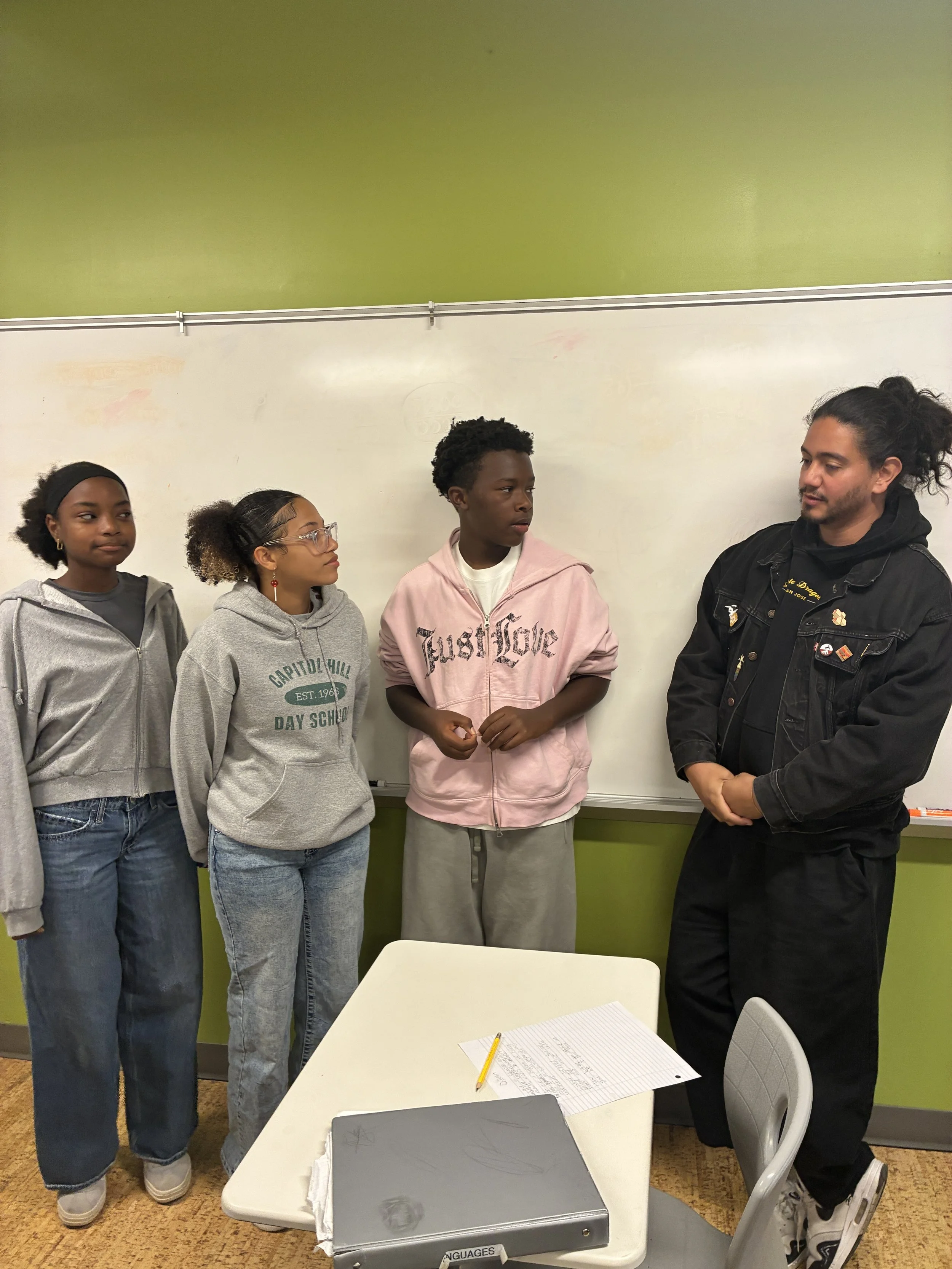
Students wanted to know about his life in Venezuela. Betancourt replied that he loved living there and that "it made me more human." It was in New Orleans that he first experienced segregation and isolation. They had a lot of barriers to overcome. Now his mother is painting again (a lifelong pursuit) and she received her certification to teach in early childhood classrooms.
"How long did the film take to make?" asked a student. Betancourt replied that while it took only two days of filming, the audio is the result of 170 hours of phone conversations and the film took six years to produce.
Teacher Maris Hawkins noted that watching the film prompted some of the students to share their own families’ immigration stories. They posed for group photos and then continued to engage with Betancourt until the bell rang.
Chocolate at Ballou HS
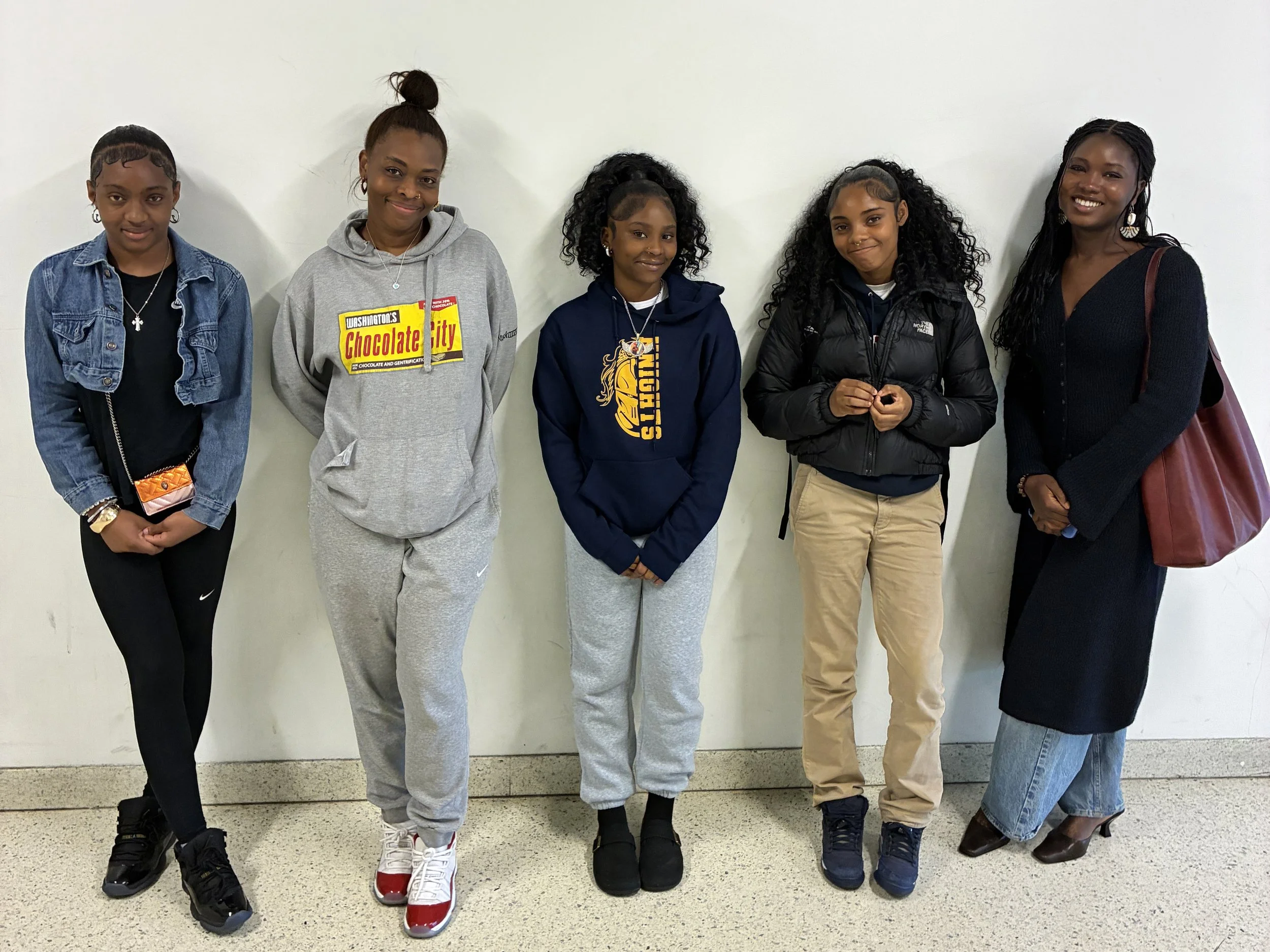
Filmmaker Eliamani Ismail produced the 8-minute film Chocolate as a cinematic love letter to Black Washington, D.C. As she explains:
It is a portrait of a city and culture at risk of erasure. Combining motion portraits with original poetry, still photography, and dance, the film operates as both a time capsule and a testimony. My intention was to capture the spirit of the city that raised me, and to preserve it’s essence as gentrification reshapes both it's landscape and memory.
In her visit to speak with students at Ballou High School, Ismail remembered having been a substitute teacher there a few times years ago. She now teaches at Fordham University and serves as a fiction editor for Lampblack Magazine.
Due to high-stakes, standardized testing in DCPS the week of the International Filmfest DC, the digital production class size was small. However, for the teacher and students who saw the film and talked with Ismail, the experience was rich.
The room was darkened so that the class could view the short film together. Then, arranging the chairs in a circle, Ismail asked the students about changes they have seen in their neighborhood. The teacher, Brandi Govan, raised the issue of gentrification. She explained that it is a critically important topic in D.C. and many other parts of the country. They also talked about an upcoming screening of the film at the new go-go museum.
Everybody to Kenmure Street at Capital City PCS
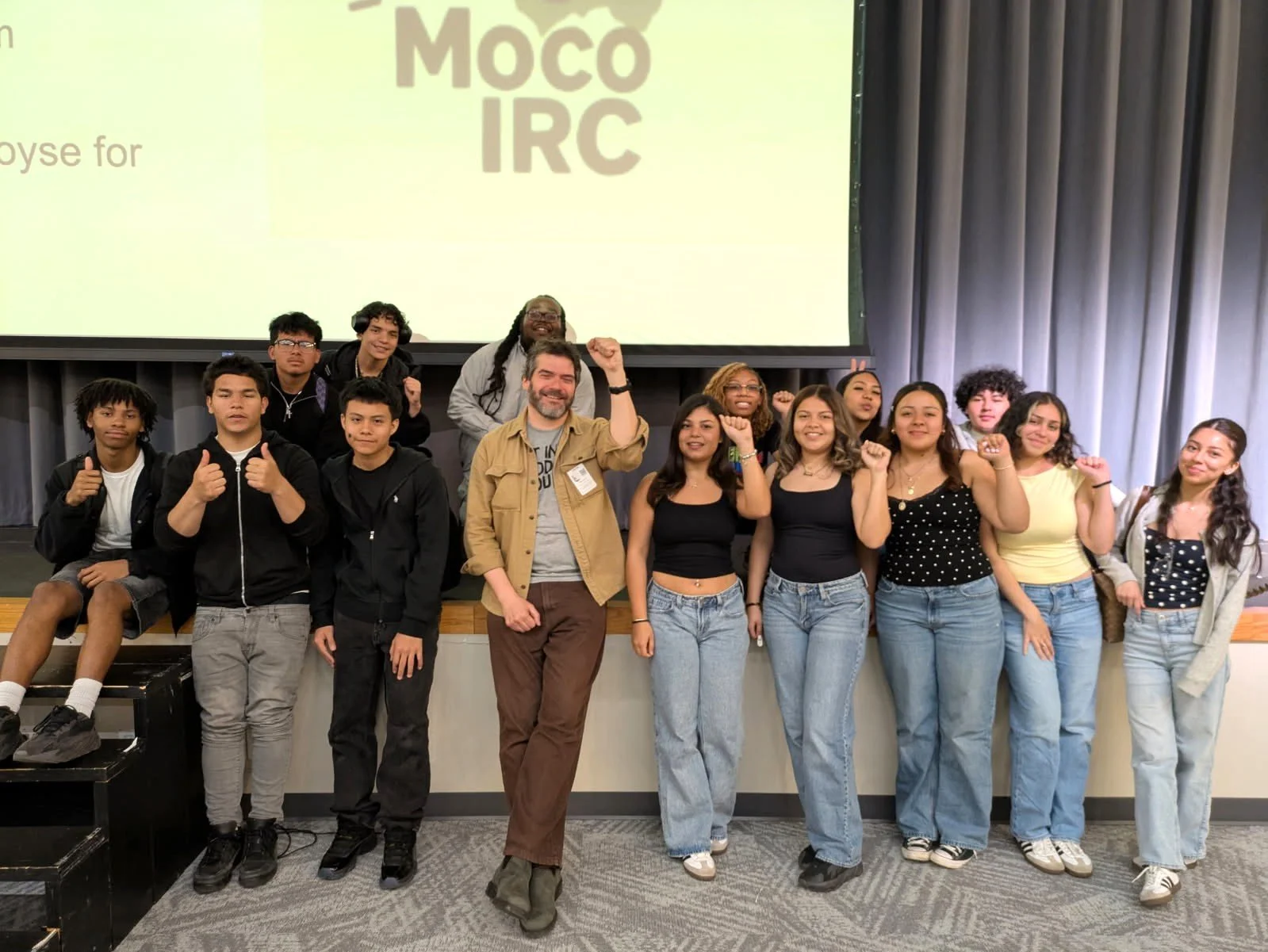
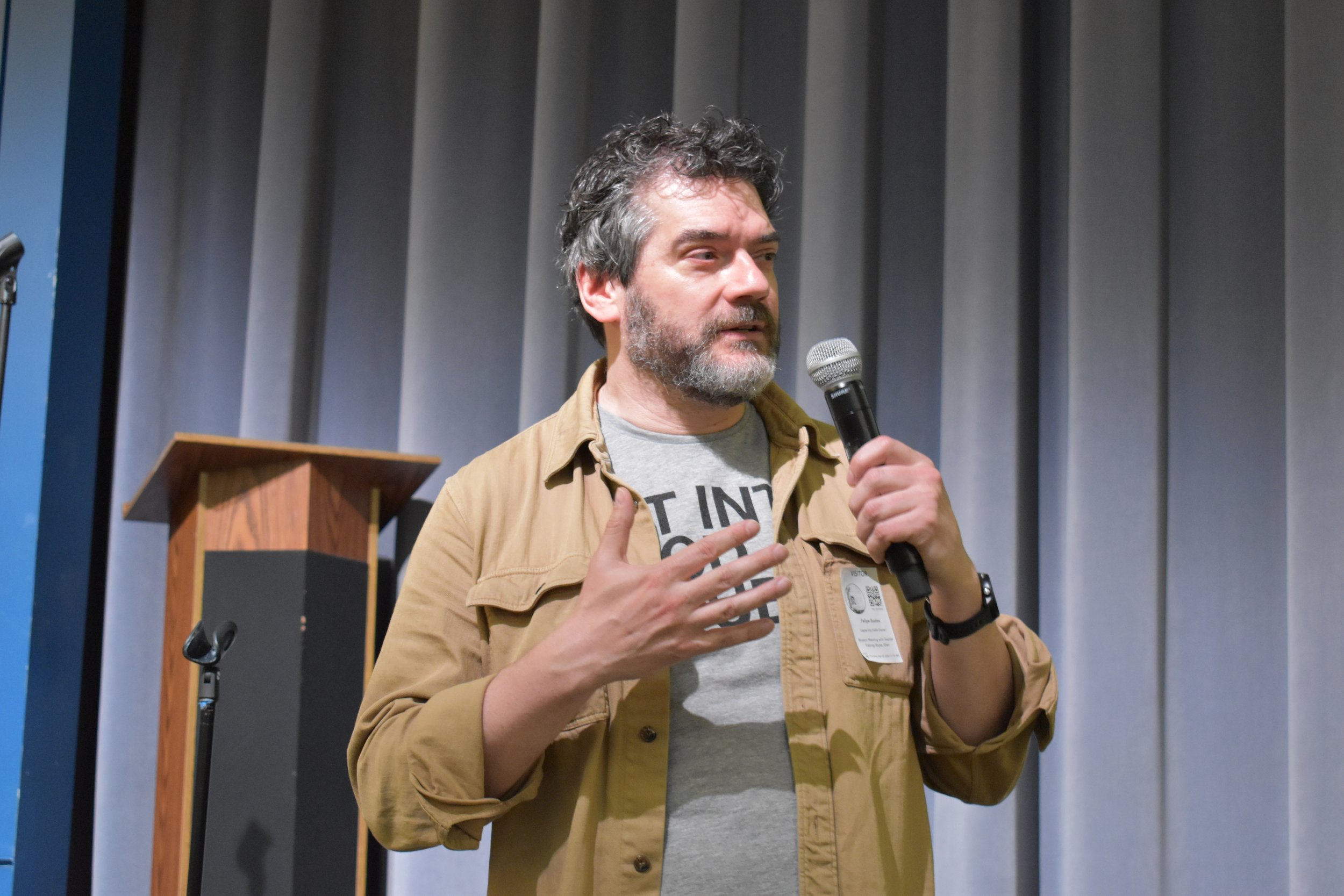
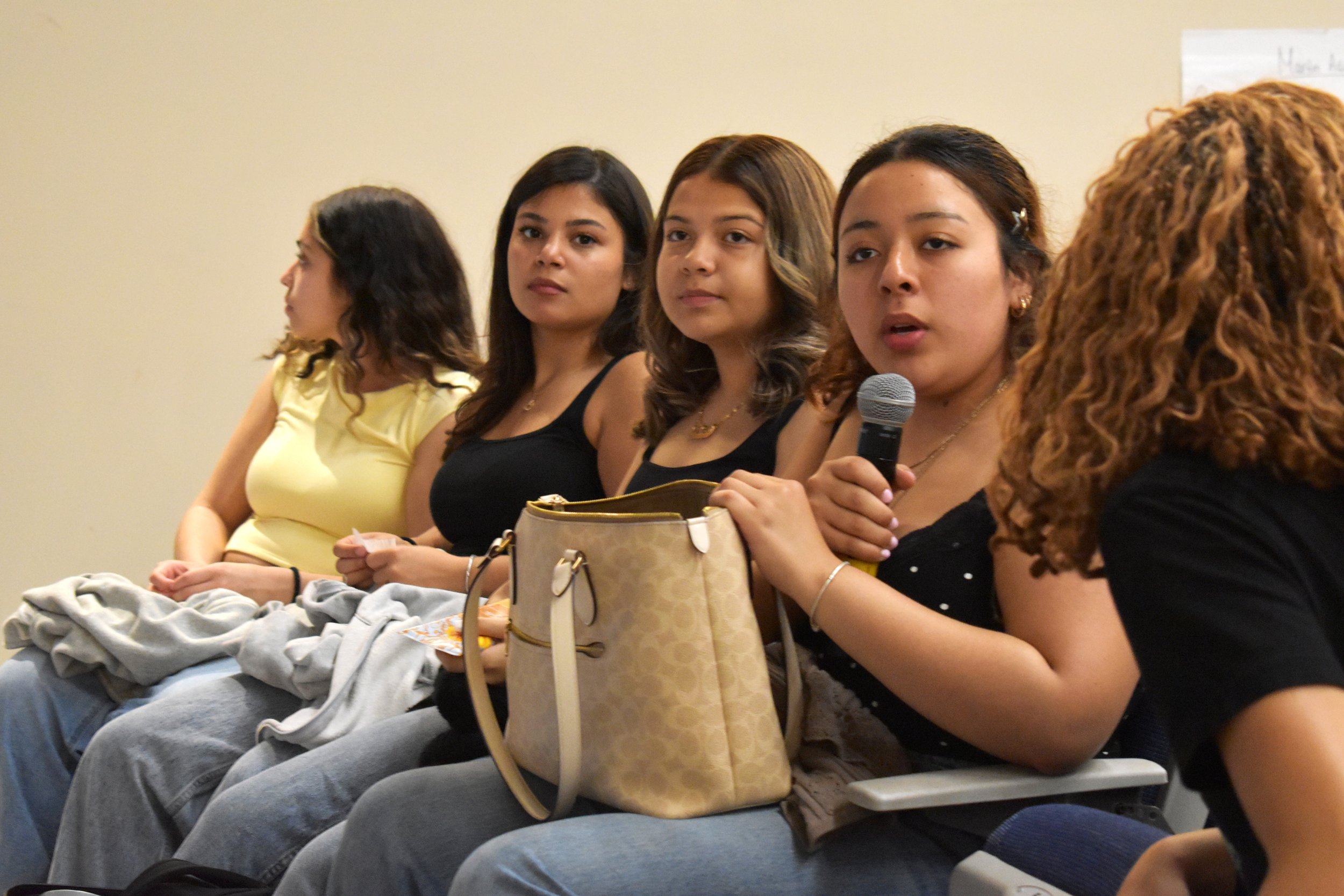
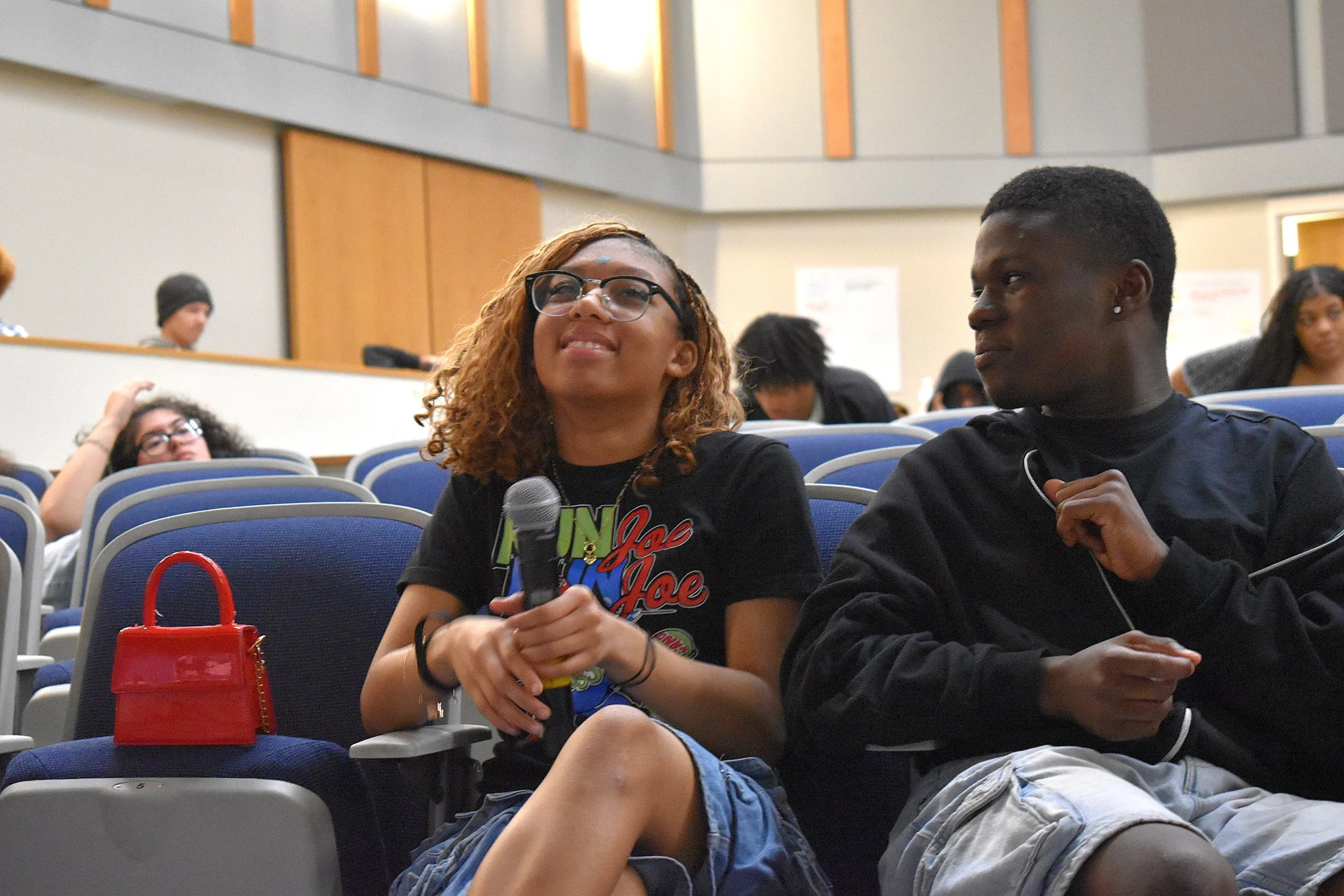
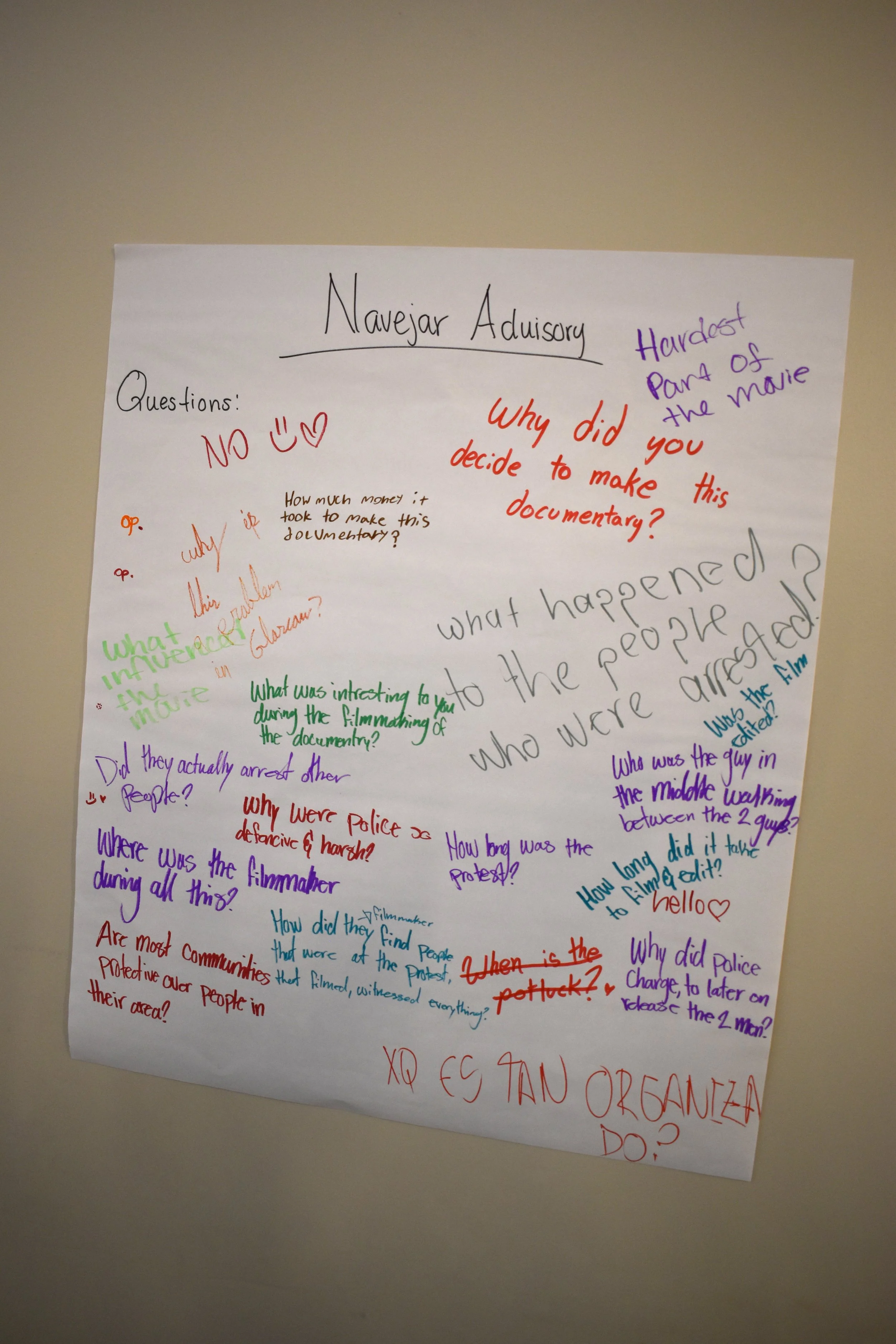
On April 23, juniors at Capital City PCS came together for a three-hour-long assembly. First, students viewed an hour long version of Everybody to Kenmure Street, which documents the story of how Glasgow, Scotland residents came together to protest after learning authorities planned to deport some of their neighbors. After viewing the film, complete with popcorn, students worked together in groups to come up with questions about the film on flip chart paper. Finally, they welcomed director Felipe Bustos Sierra for a Q&A session in the school’s theater.
First, students wanted to know why he chose to make the film. Bustos Sierra explained that he did not go to the protest even though he knew about it. He was inspired to see that the same kind of solidarity that saved his family in the 1970s when his father was a Chilean journalist still works today.
Bustos Sierra explained that the longer version of the film explains some of the unique history and culture of Scotland that made these protests possible. Scotland had some of the first anti-slavery societies, organized by women. These women then organized the suffragette movements and advocated for tenant’s rights. In 2005, a group of young activists known as the Glasgow girls led a successful campaign to end dawn raids and detention of minors.
Students wanted to know more about how the director made the film when he wasn’t there to shoot on the day of the protest. He explained that he used footage from people’s smartphones (he encouraged students to shoot in landscape if they are ever at a protest!) and did many interviews.
Many students wondered about the reactions of the police in Glasgow compared to what might have happened under similar circumstances in the United States. One student remarked, “Our police would not have been as chill.” Bustos Sierra noted that he reached out to the police for an interview, but they said they were merely following the directions of the Scottish home office (equivalent to ICE in the U.S.)
Bustos Sierra said he saw similarities between what took place in Glasgow and the people resisting ICE in Minneapolis. He wanted people to take away from the film that you should turn out, and that we have more in common with each other than our governments.
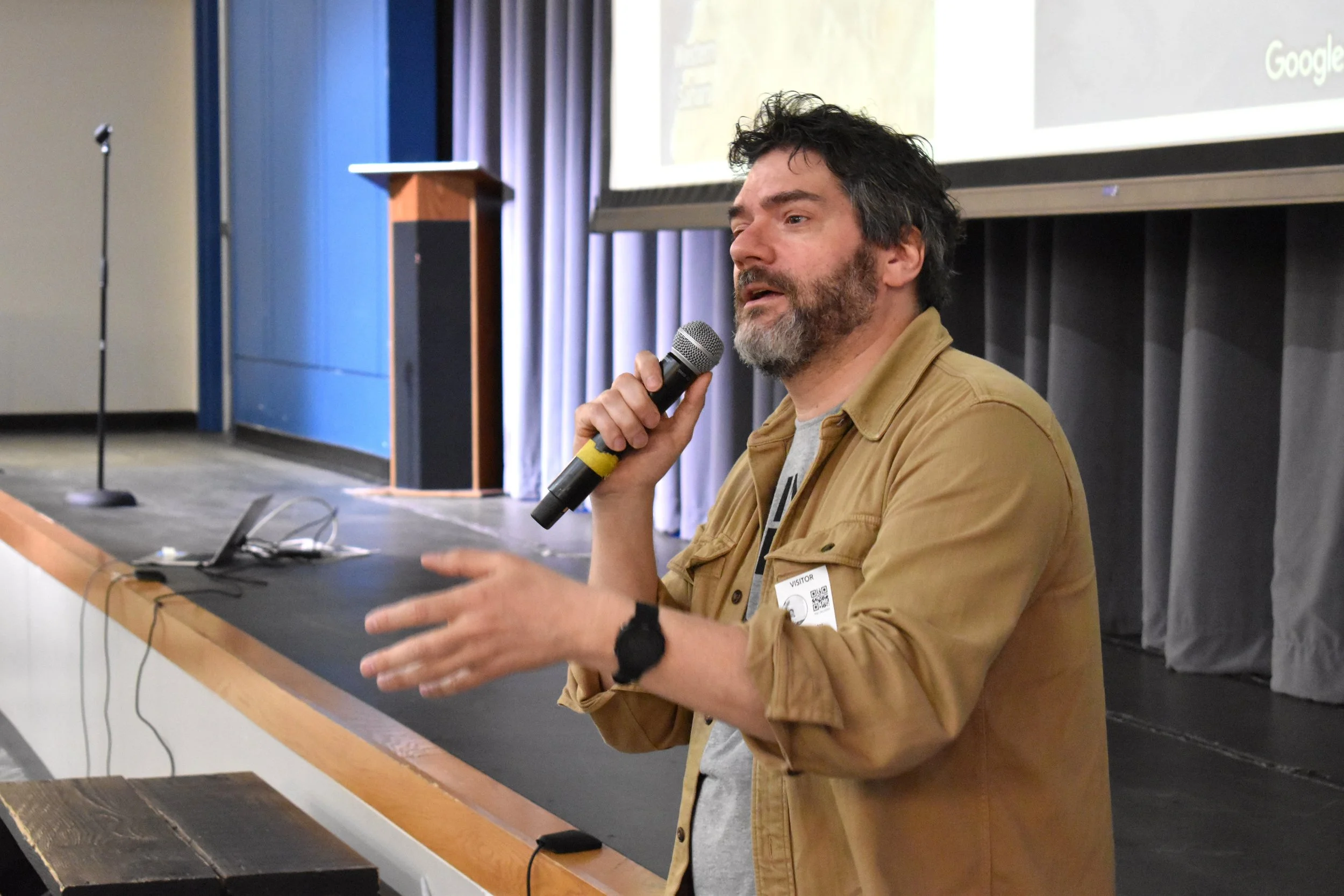
People vs. Politics at School Without Walls HS
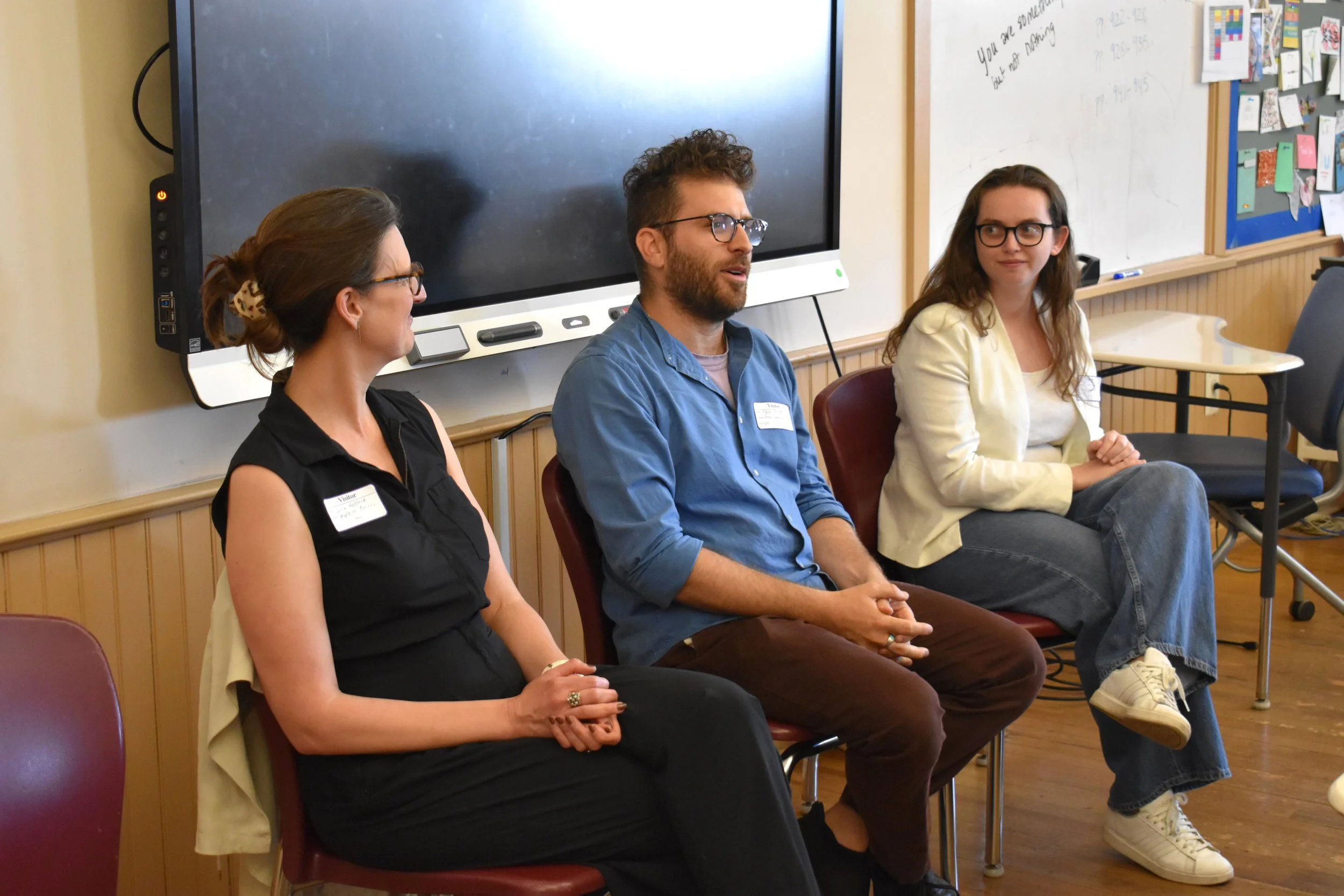
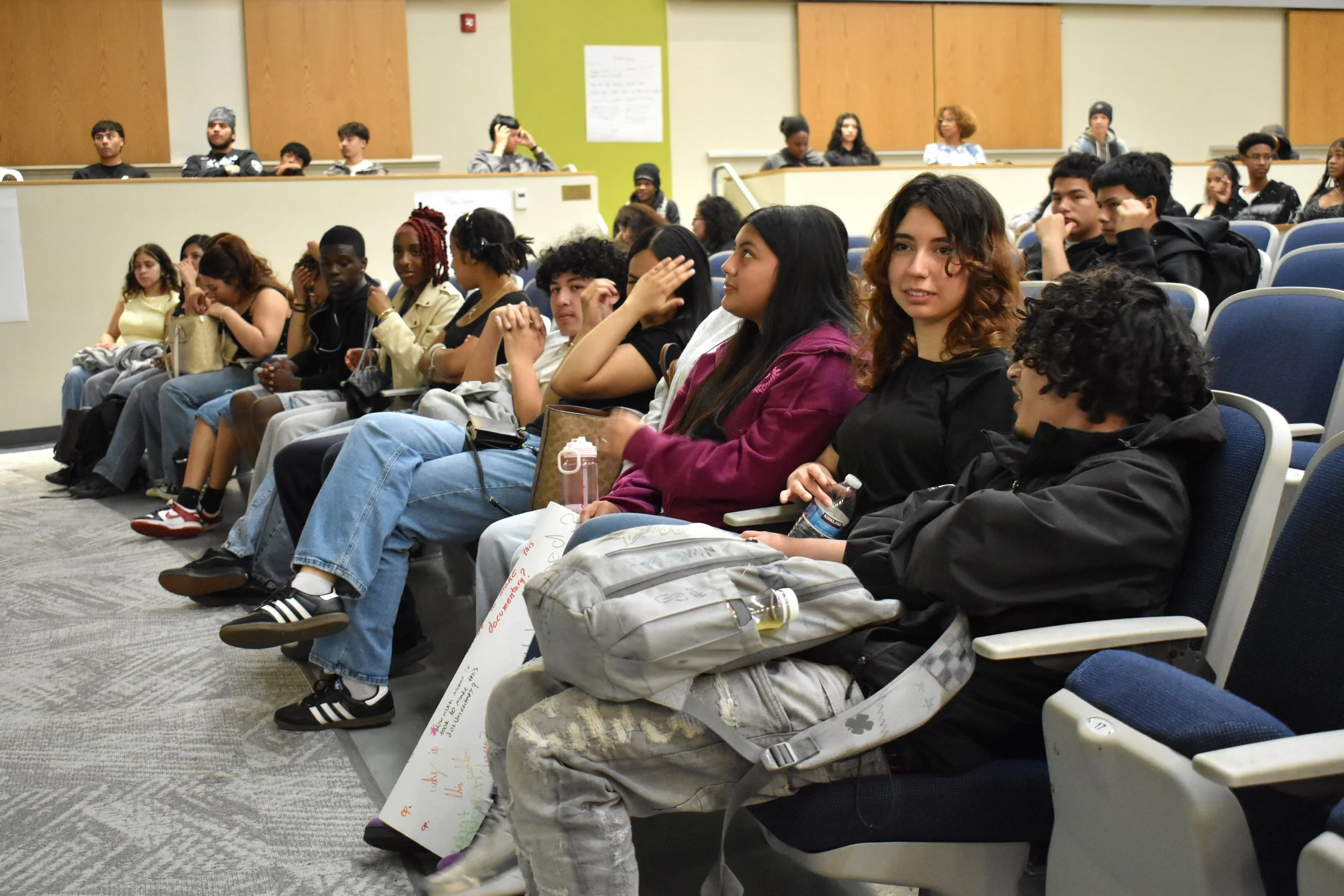
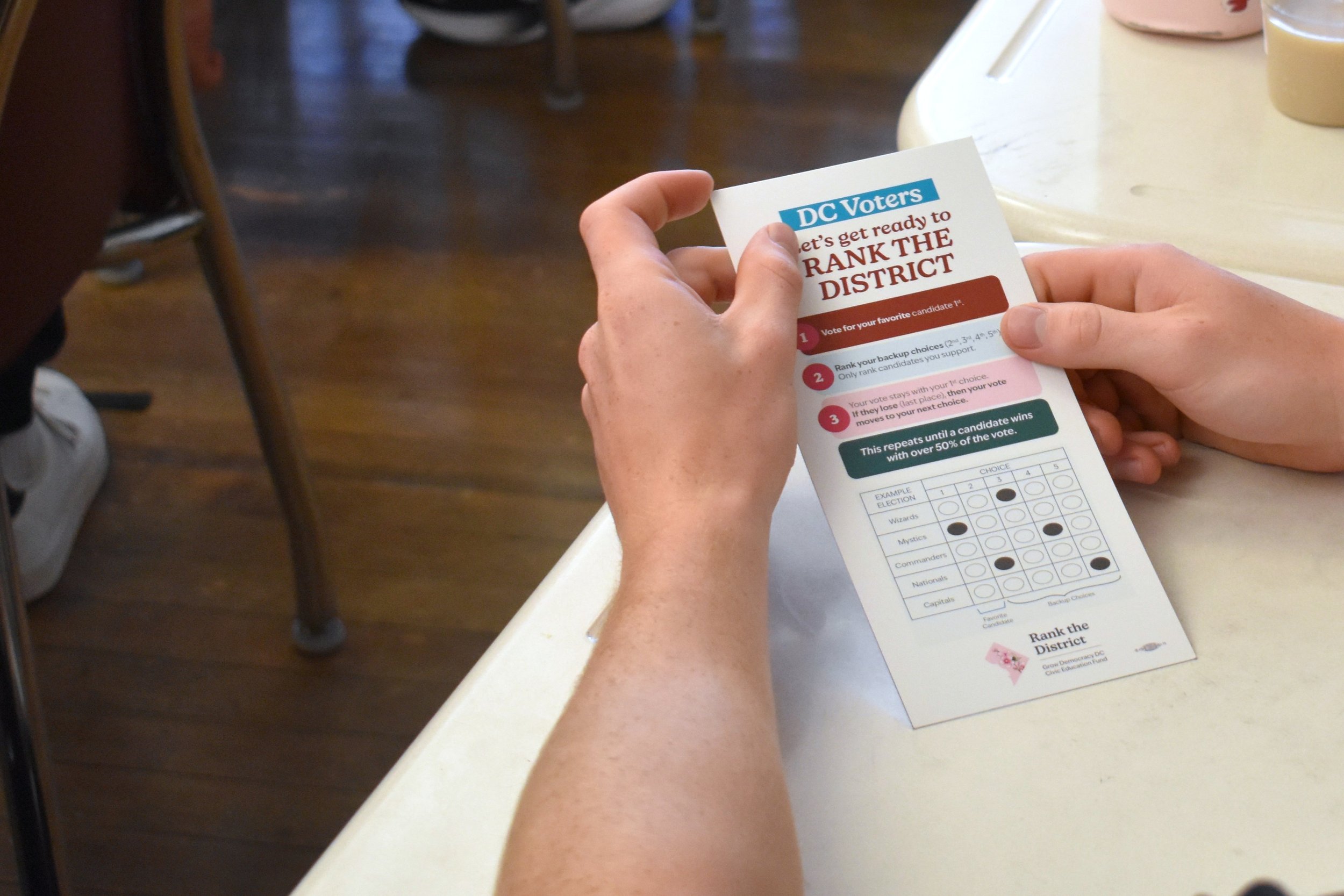
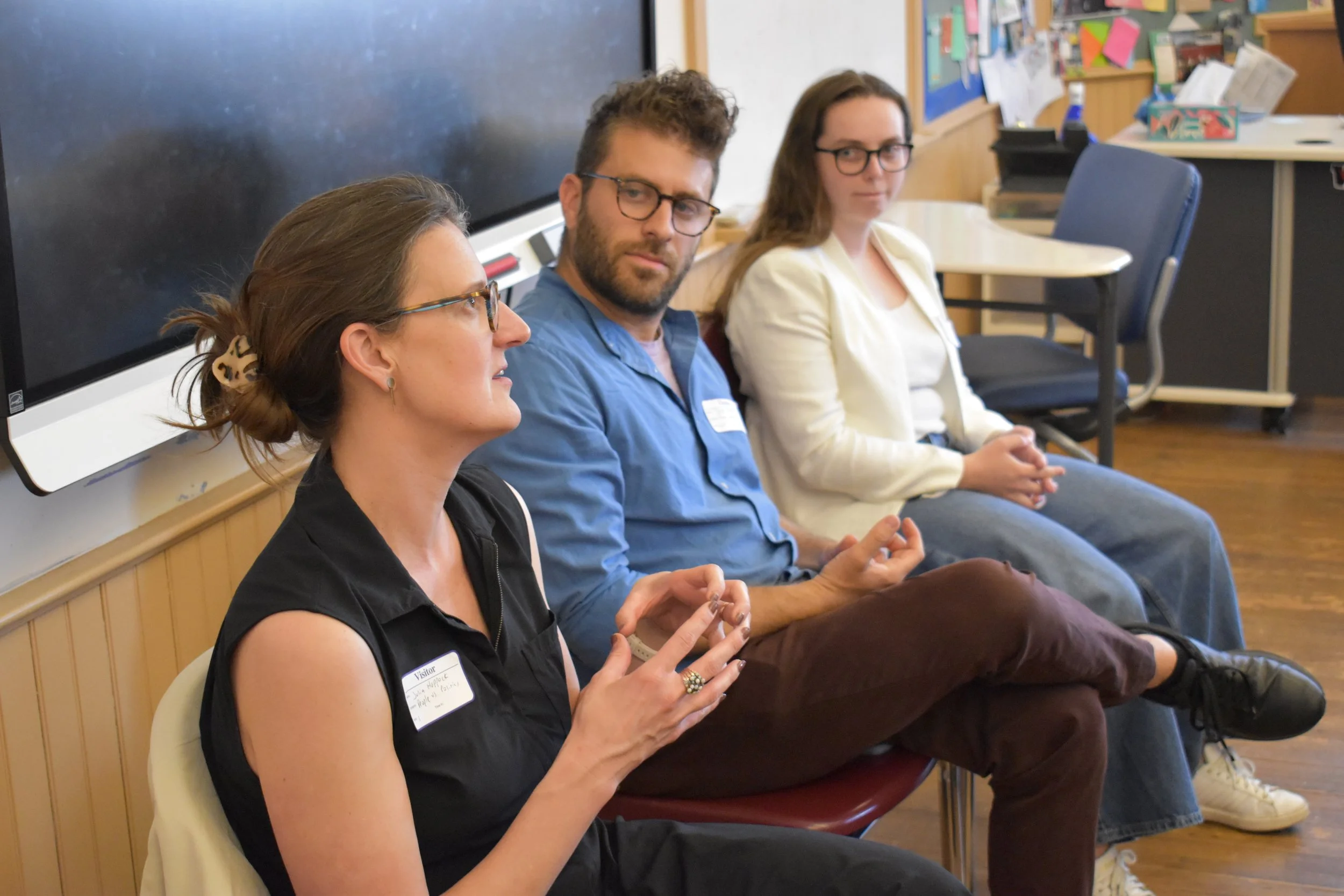
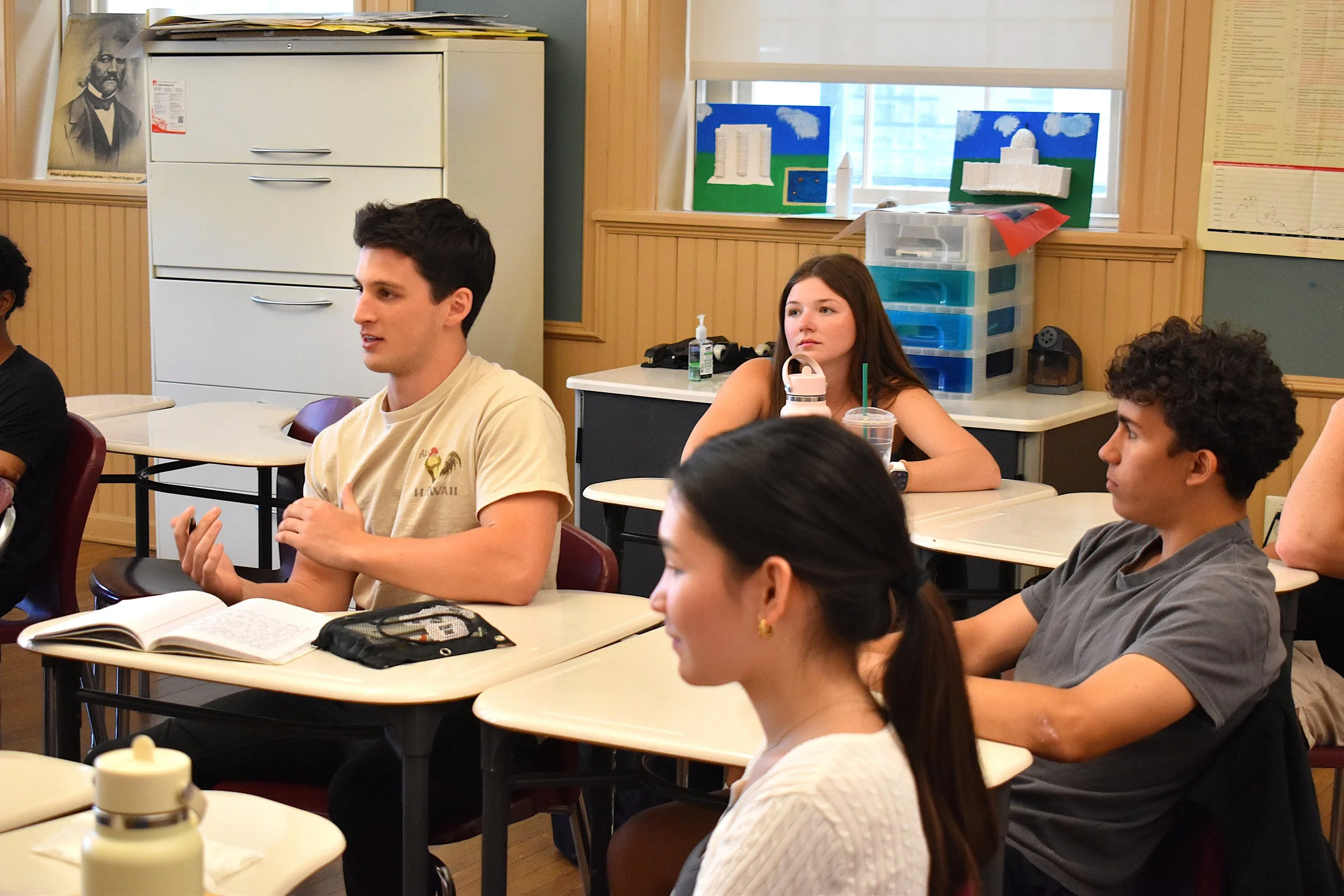
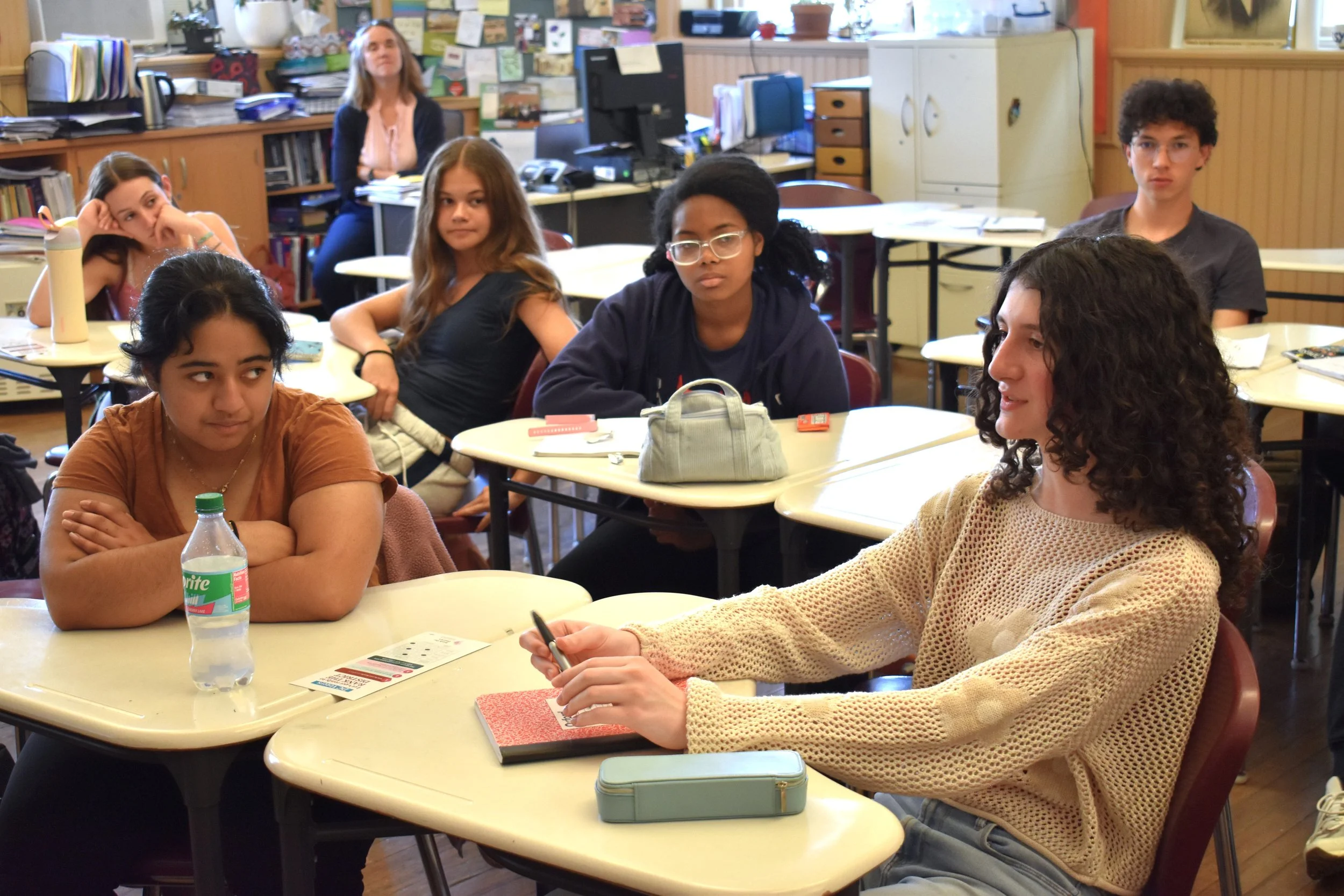
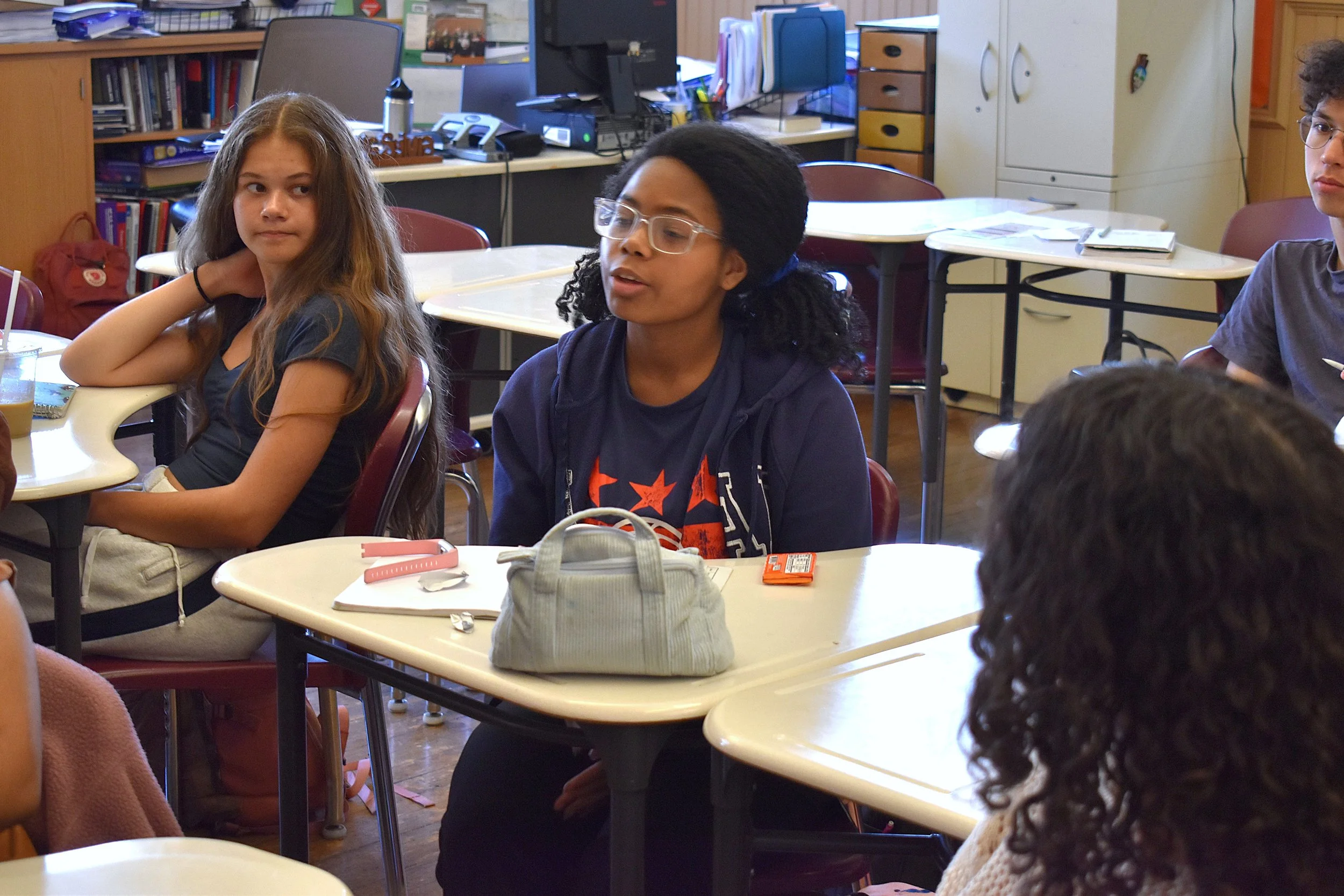
On April 23, students in Kerry Sylvia’s AP U.S. Government class were joined by People vs. Politics associate producers Julia Hoppock and Mary Claire Kogler and voting rights activist Sam Bonar, who helped organize to pass Initiative 83, which introduced ranked choice voting and created a semi-open primary system in D.C.
Students, most of whom will be 18 in time for D.C.’s next election, first asked about how ranked choice voting works. Sam Bonar passed out brochures and explained that you rank the candidates in the order you support them, but leave off candidates you don’t like. Bonar explained that although the city passed an open primary system that would allow individuals who have not declared a party to vote in the primary, the city council has yet to fund it.
Students wondered what the arguments against ranked choice voting are. The filmmakers explained that it depends on the state. Usually, the party in power opposes ranked choice voting. Some argue that ranked choice will mean it costs more money to win elections, or that making the voting process more complicated could further erode trust in the government.
A student asked whether ranked choice voting and open primaries are designed to elect more moderate candidates. The filmmakers said the goal of these reforms is not to guarantee a particular ideological outcome, but to give more voters a meaningful voice and change the incentives for candidates. Open primaries allow more voters, including unaffiliated or independent voters, to participate in primary elections, rather than limiting those contests to registered party members. Ranked choice voting can encourage candidates to reach beyond their core base, build broader coalitions, and avoid negative attacks that might alienate voters whose second-choice support they may need. Sam Bonar noted that in D.C.’s Ward 1 race, for example, two candidates have endorsed each other and encouraged voters to rank the other candidate second.
Students also asked questions about how the film was made, including how the filmmakers chose the protagonists of the film that they followed, how they chose the name of the film, how much footage they collected, and how long the filmmaking process lasted.
TCB - The Toni Cade Bambara School of Organizing at E.L. Haynes PCS
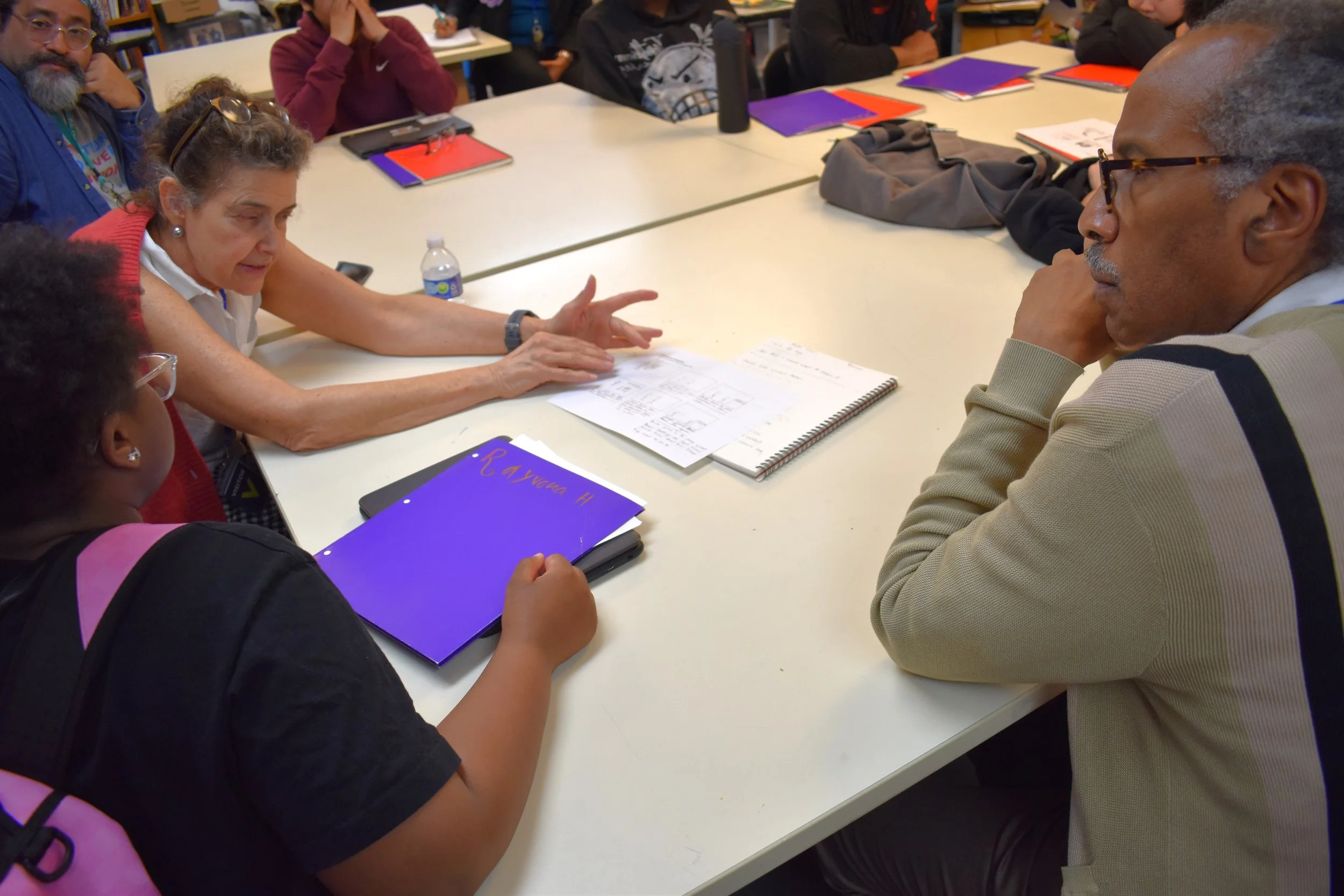
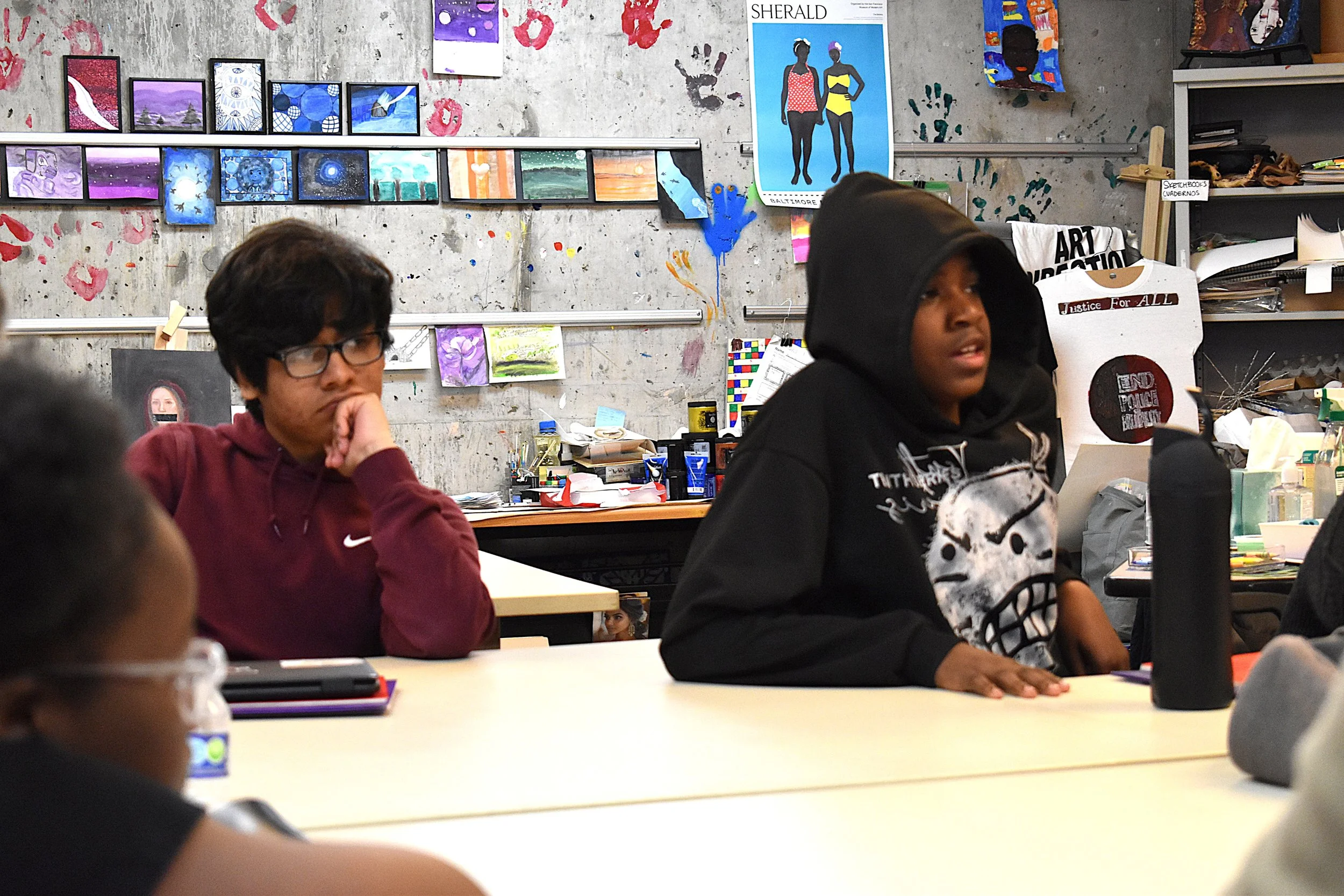
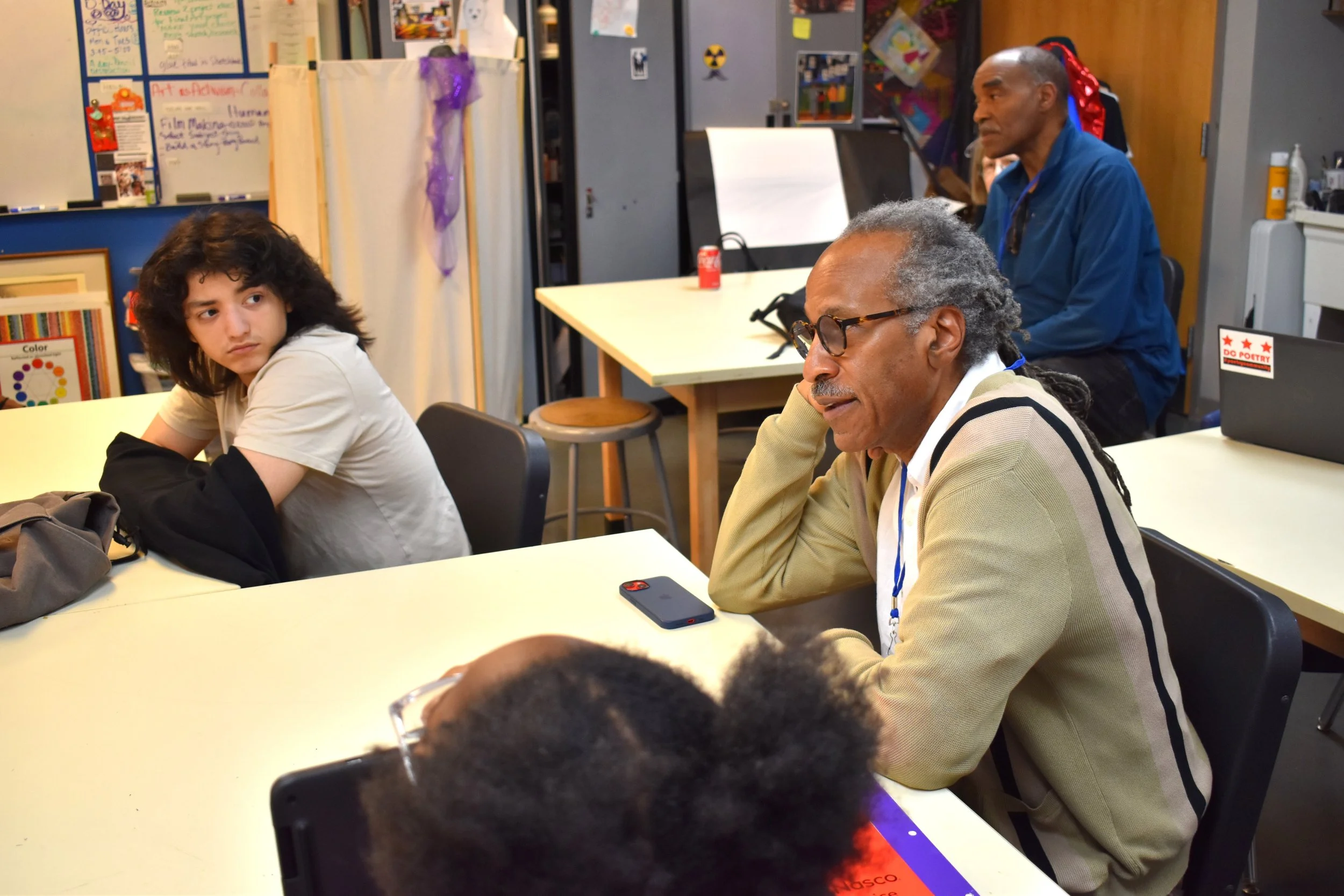
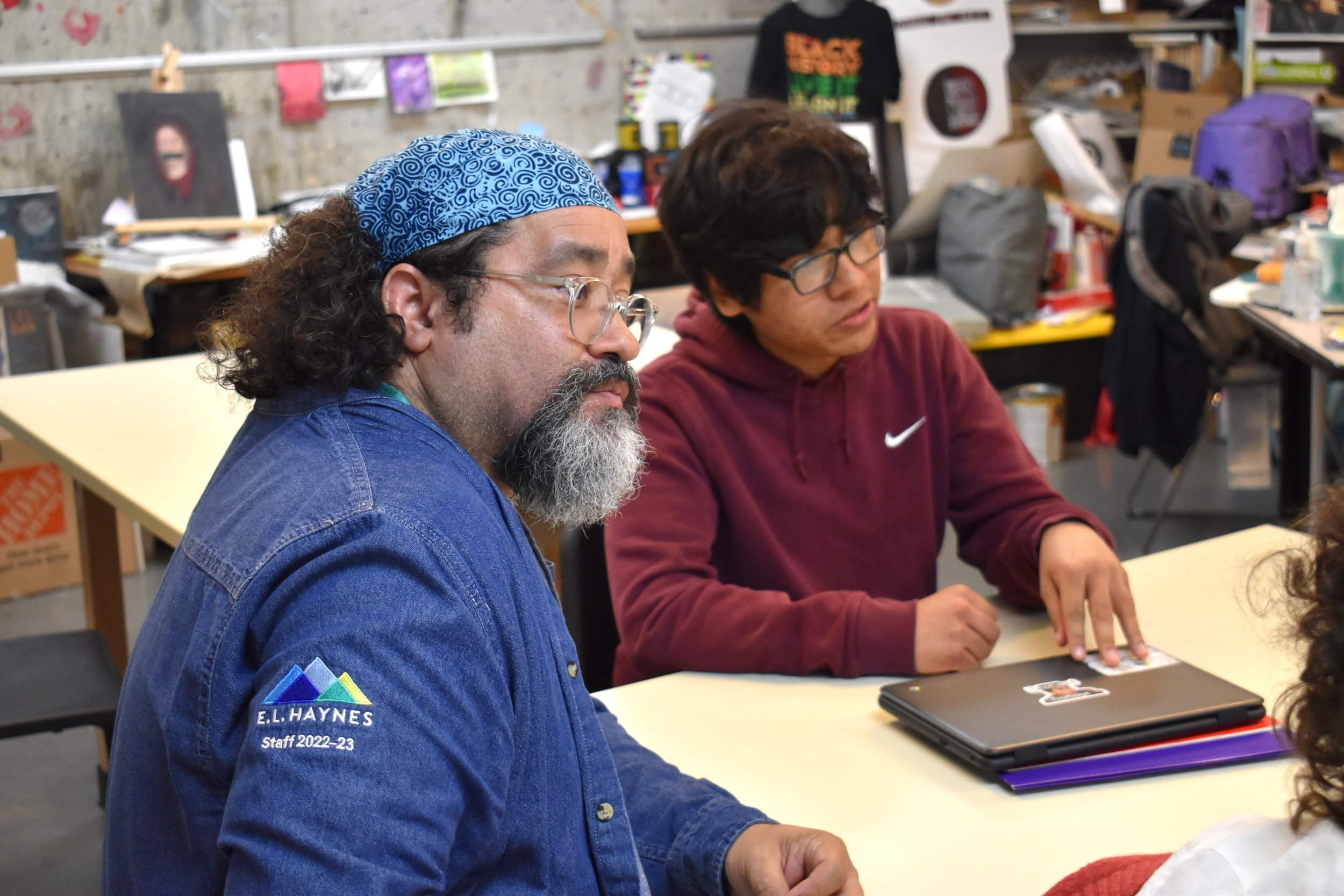
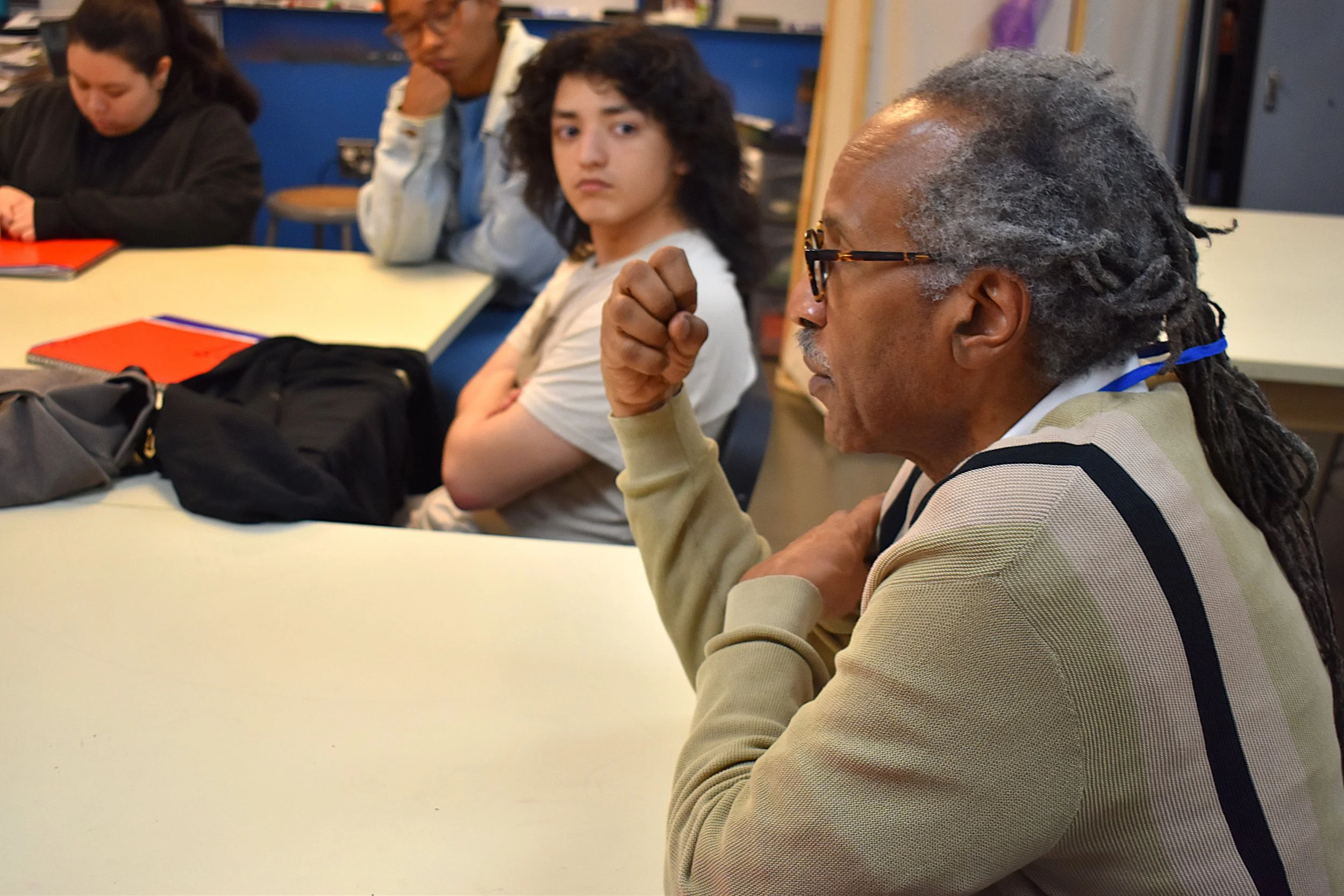
On April 23, students in Madison Dalton’s Art and Activism class welcomed TCB - The Toni Cade Bambara School of Organizing producer/director Louis Massiah and editor/director Monica Henriquez to their classroom at E.L. Haynes PCS.
The film explores the life and legacy of writer and cultural worker Toni Cade Bambara, whose works were part of her broad national and international influence even amongst people who did not know her personally. The film includes interviews with Cade’s editor, author Toni Morrison.
Students watched a portion of the film, then asked questions of the filmmakers. Students wanted to know what inspired them to make the film, why they made the film the way they did, and how they interviewed the people who contributed to the film. Massiah explained that Toni was a major influence, especially on women. He worked with her personally, but she was influential internationally. Everyone in the film was influenced by her.
Massiah told students that he made the film over a long period of time. He recorded Toni Cade Bambara’s voice that is heard throughout the film in 1994, before her death in 1995. In 2014-2015, he conducted film interviews with Toni Morrison about Bambara. It wasn’t until after the pandemic that Massiah really began working with Henriquez to put the film together, looking for archival footage and images that would help illustrate the film and conducting more interviews.
Students shared storyboard ideas for films that they are beginning to work on in class. Film ideas include interviews about how Black and Latino students see the impact of ICE, exploring the history of the Rosedale pool drowning and how it connects to the present, and a dialogue about how to improve school. Henriquez and Massiah offered advice to the students to help them hone in on and develop their ideas.
Beast of the Seine at John Francis Education Campus
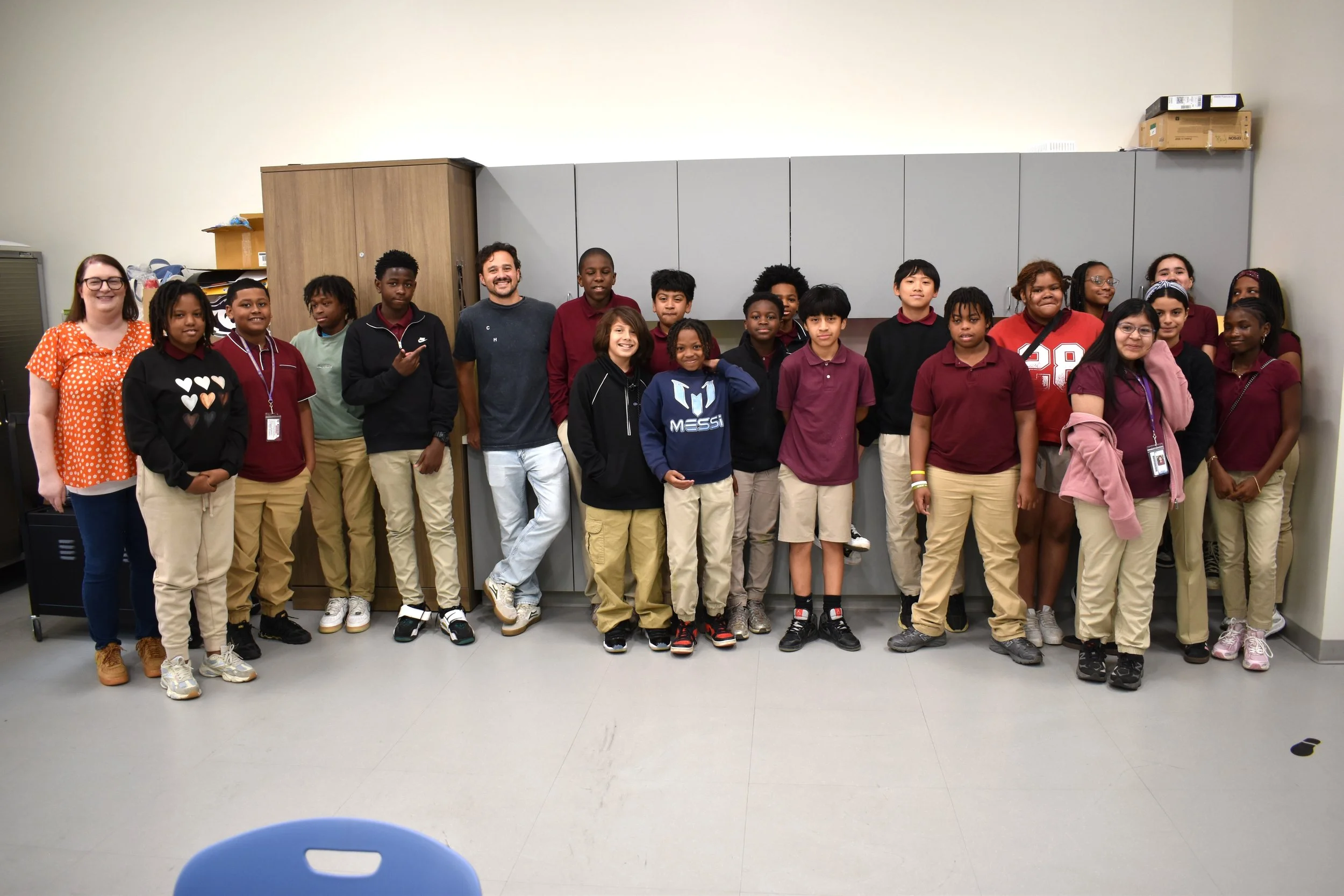
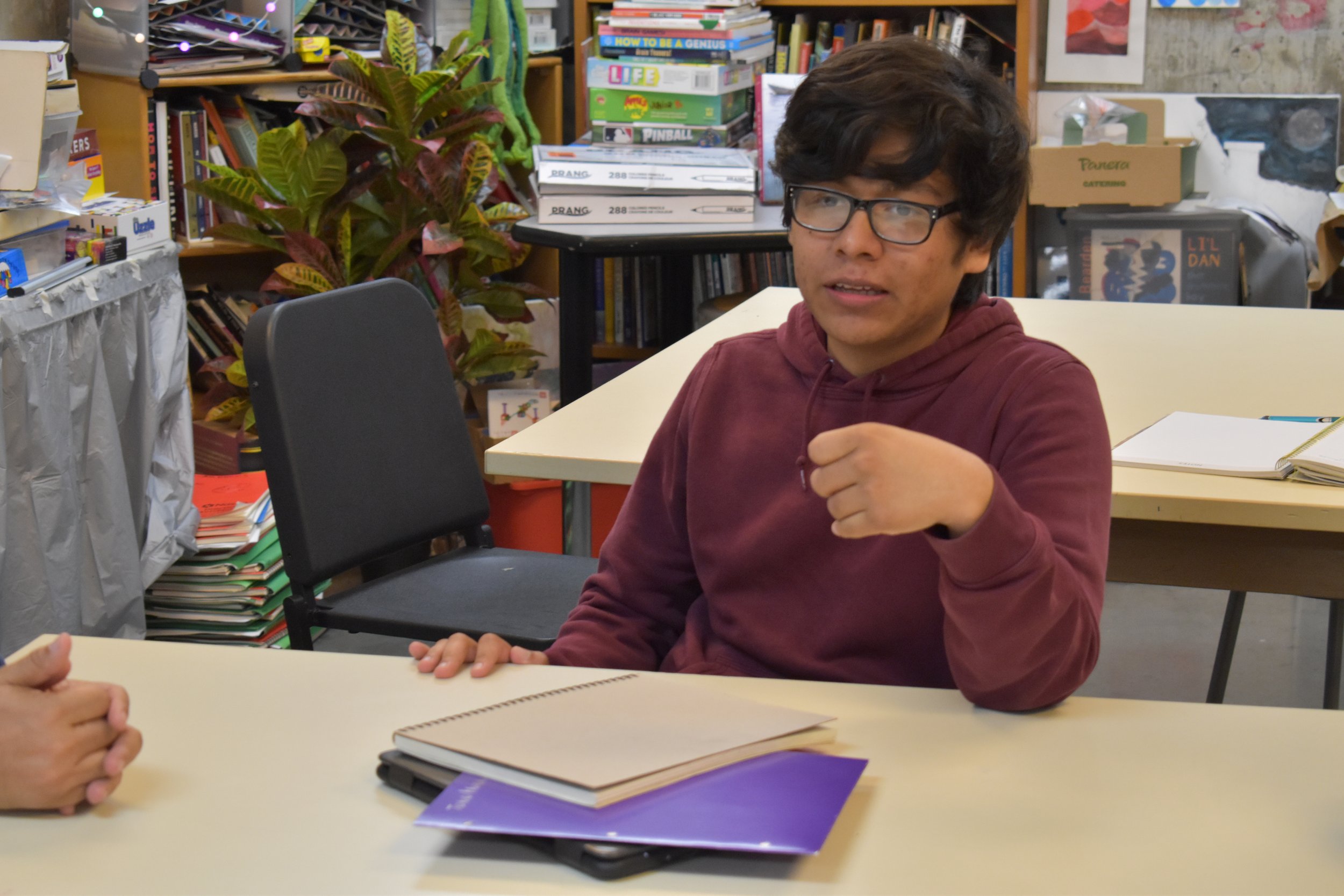
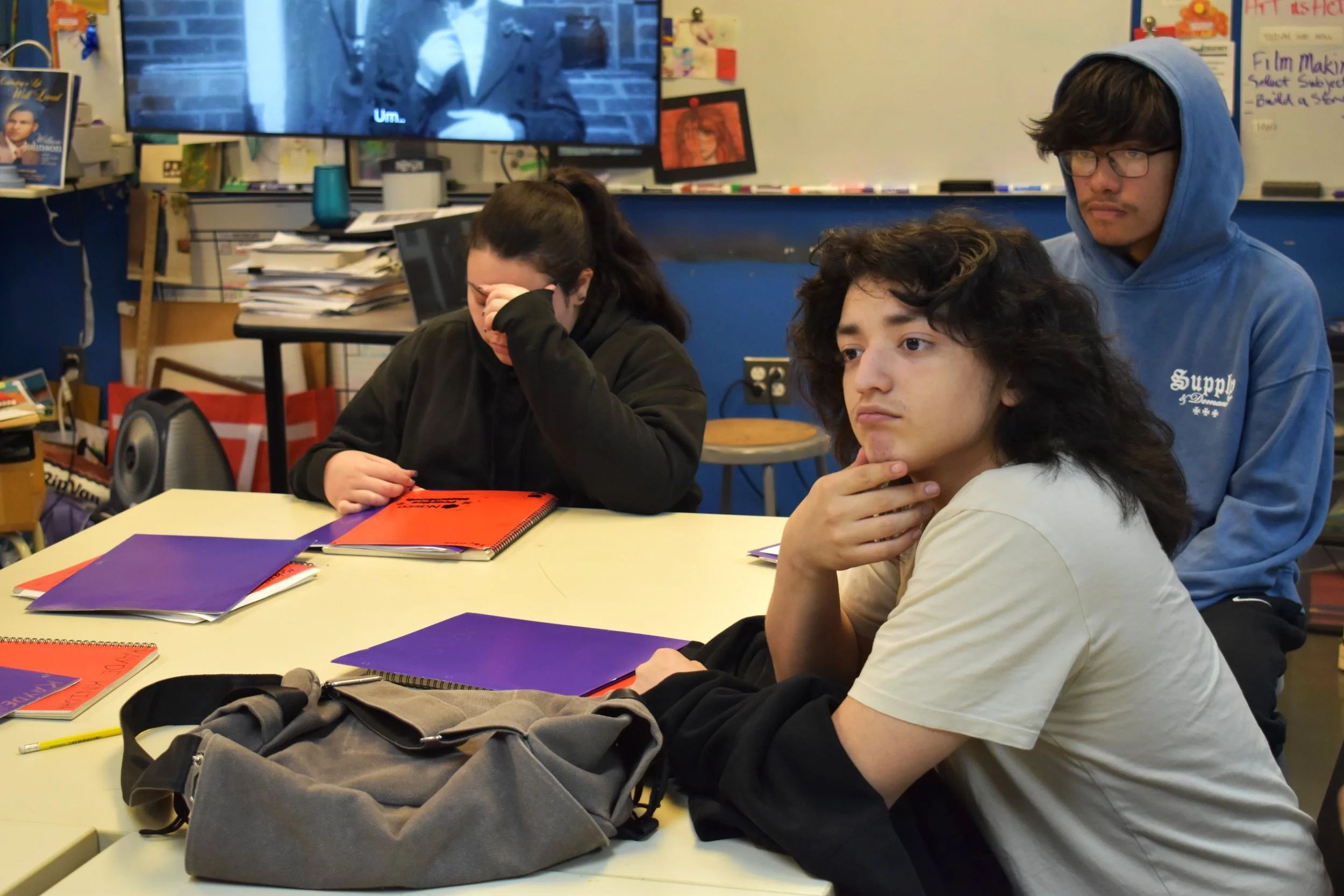
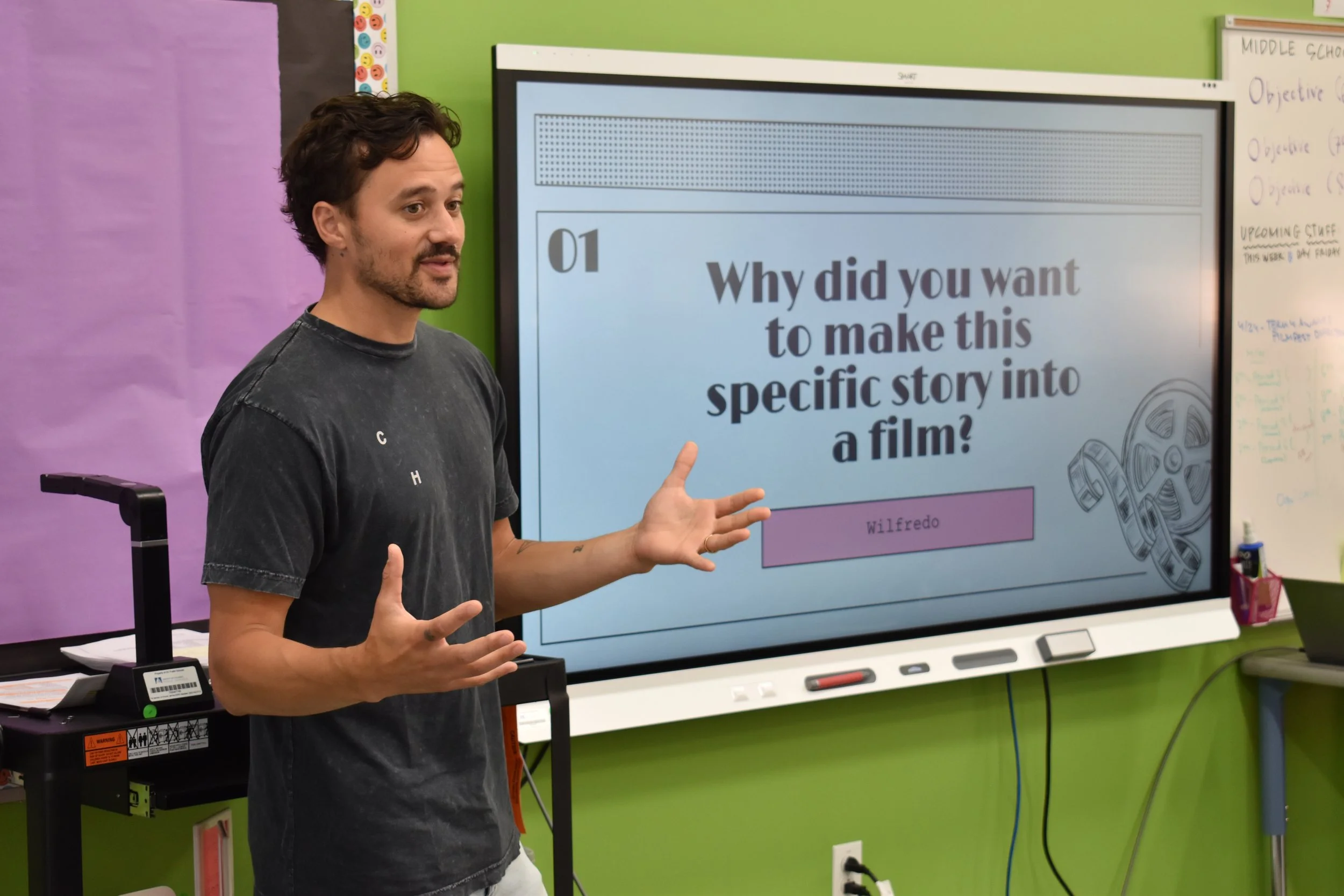
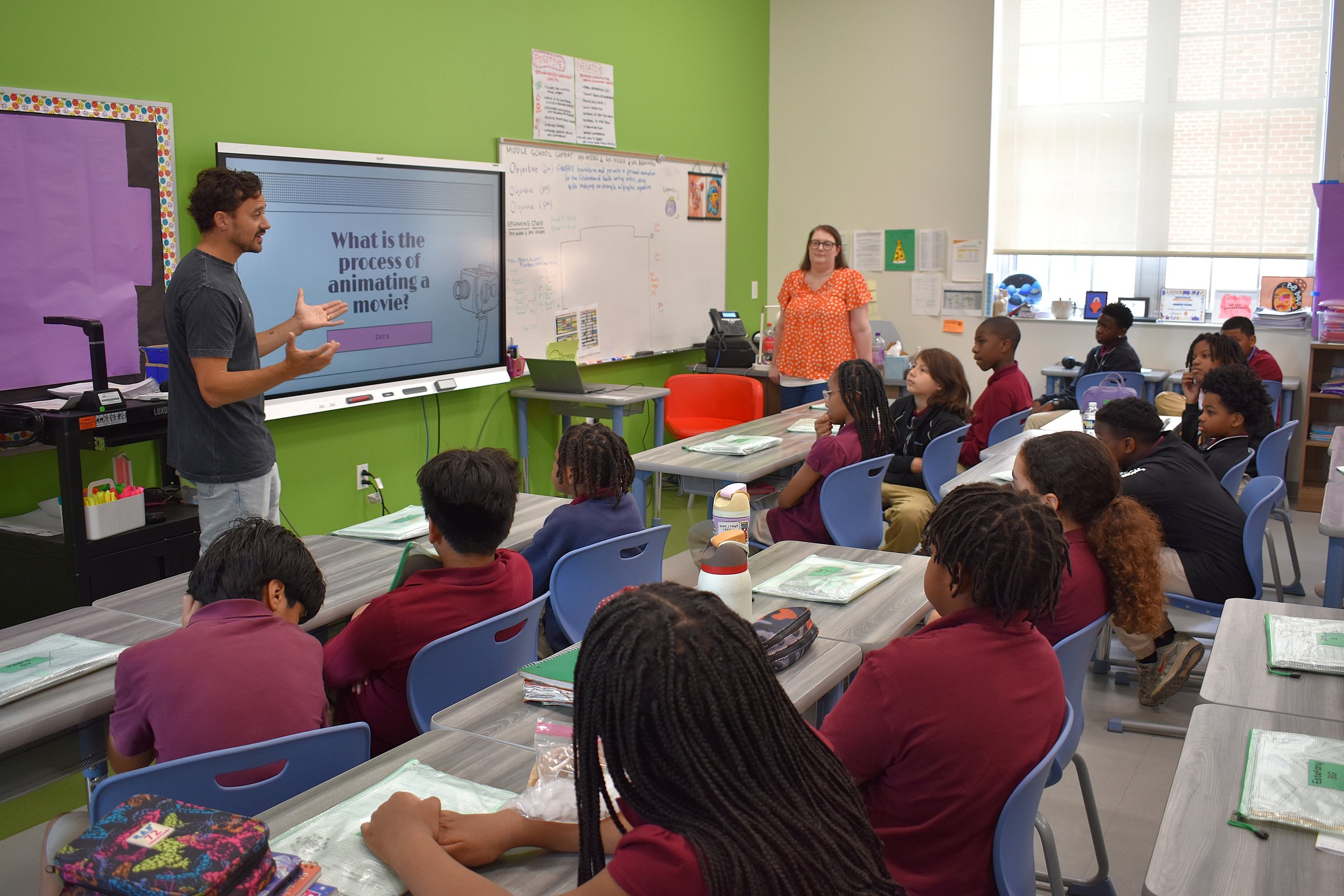
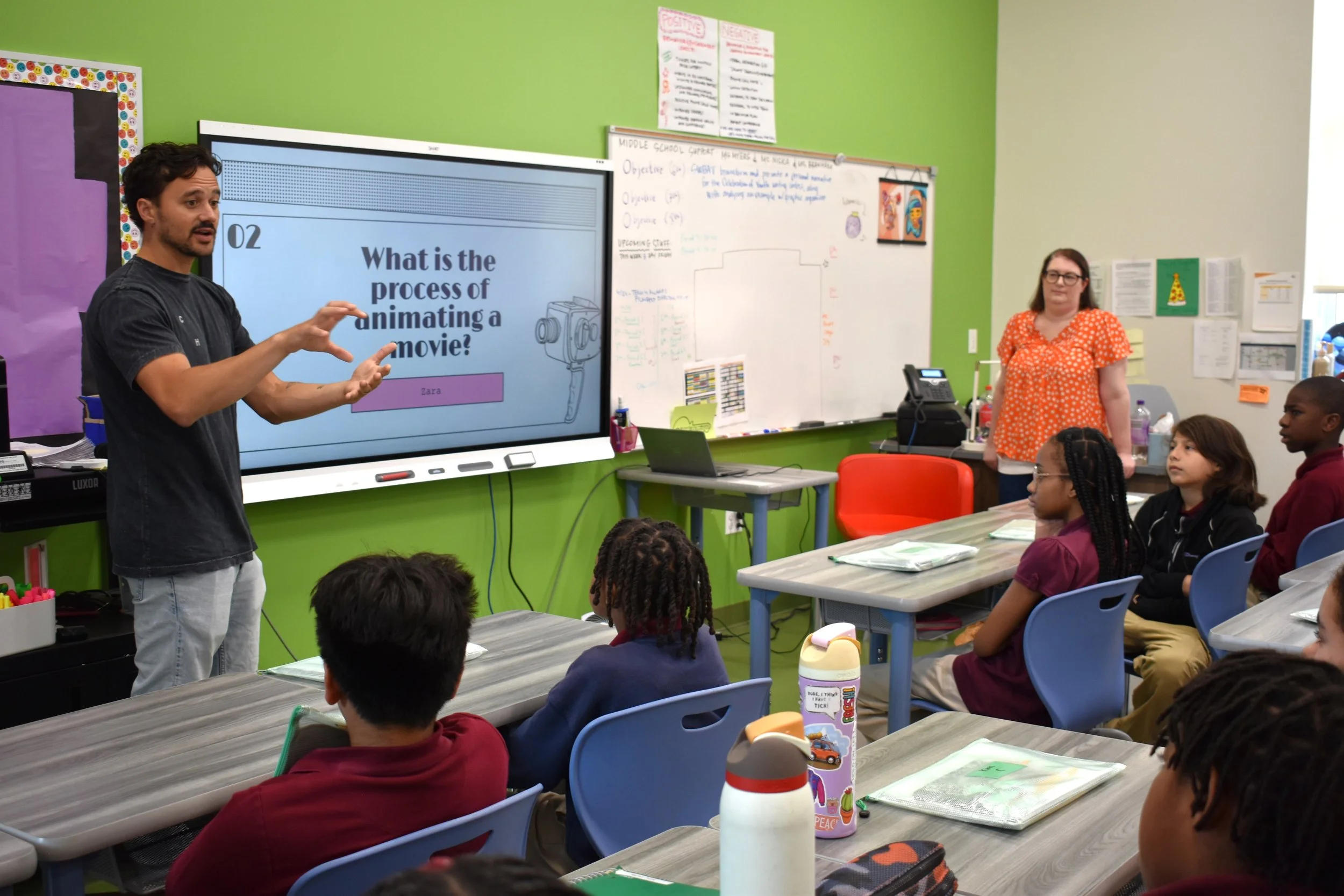
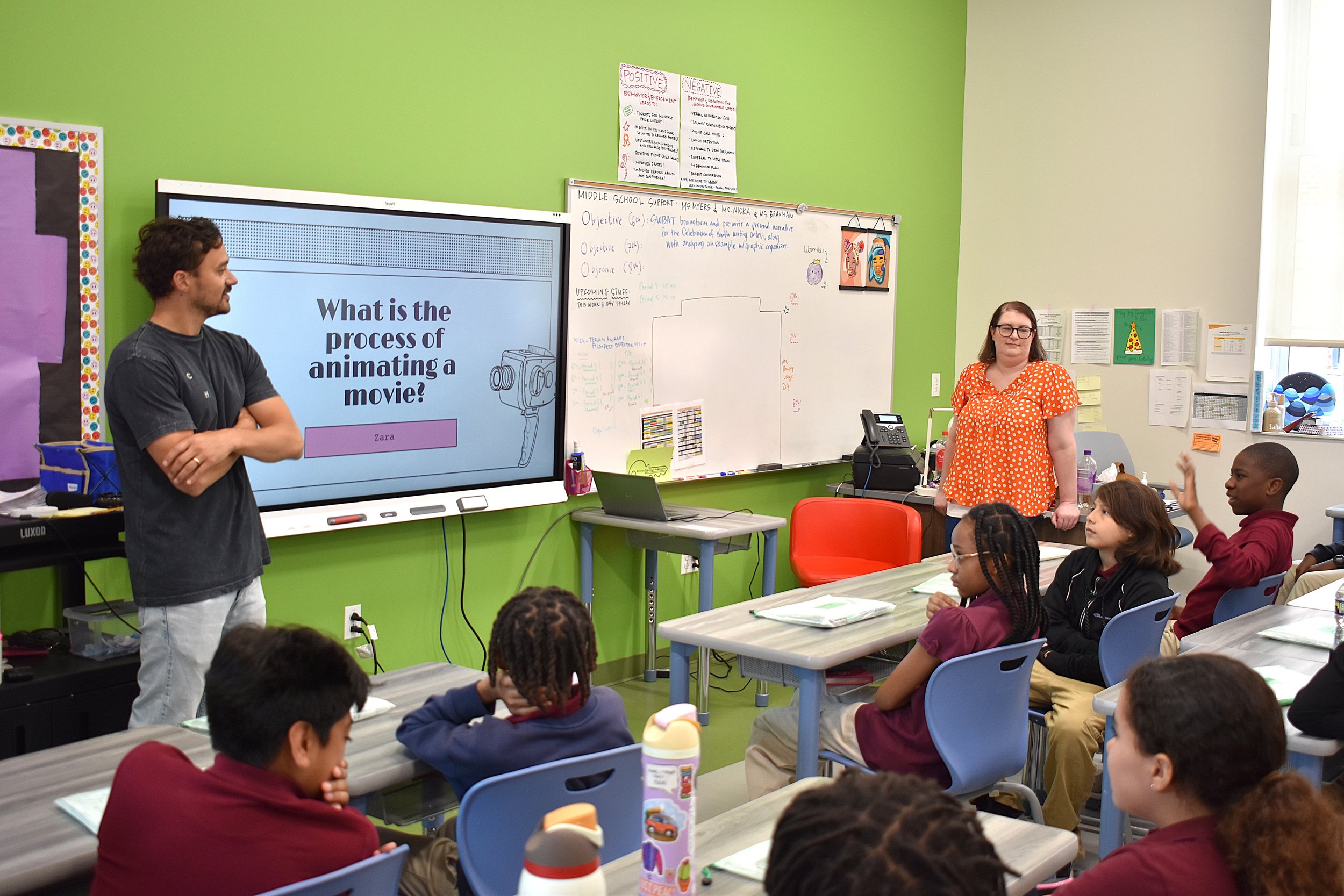
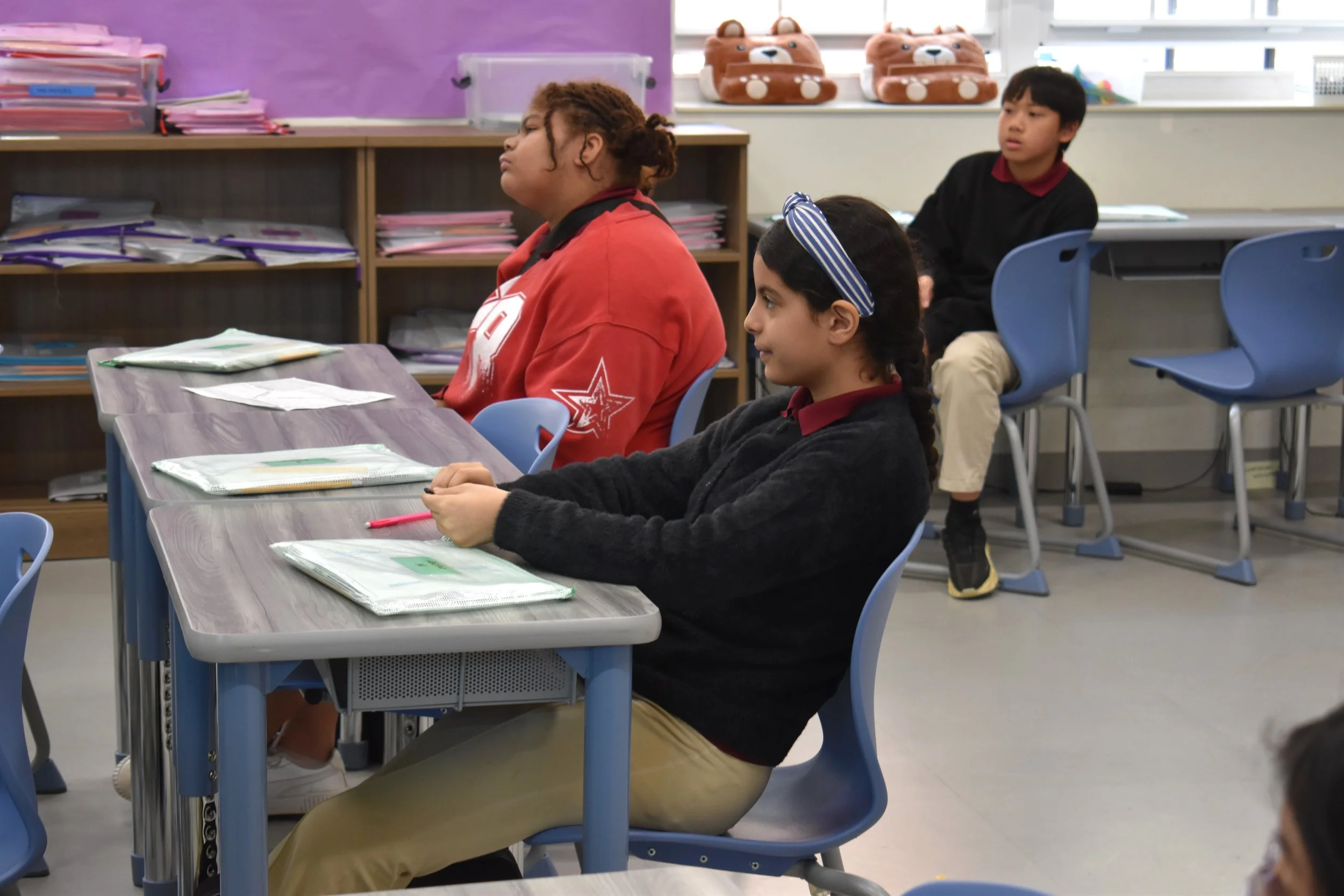
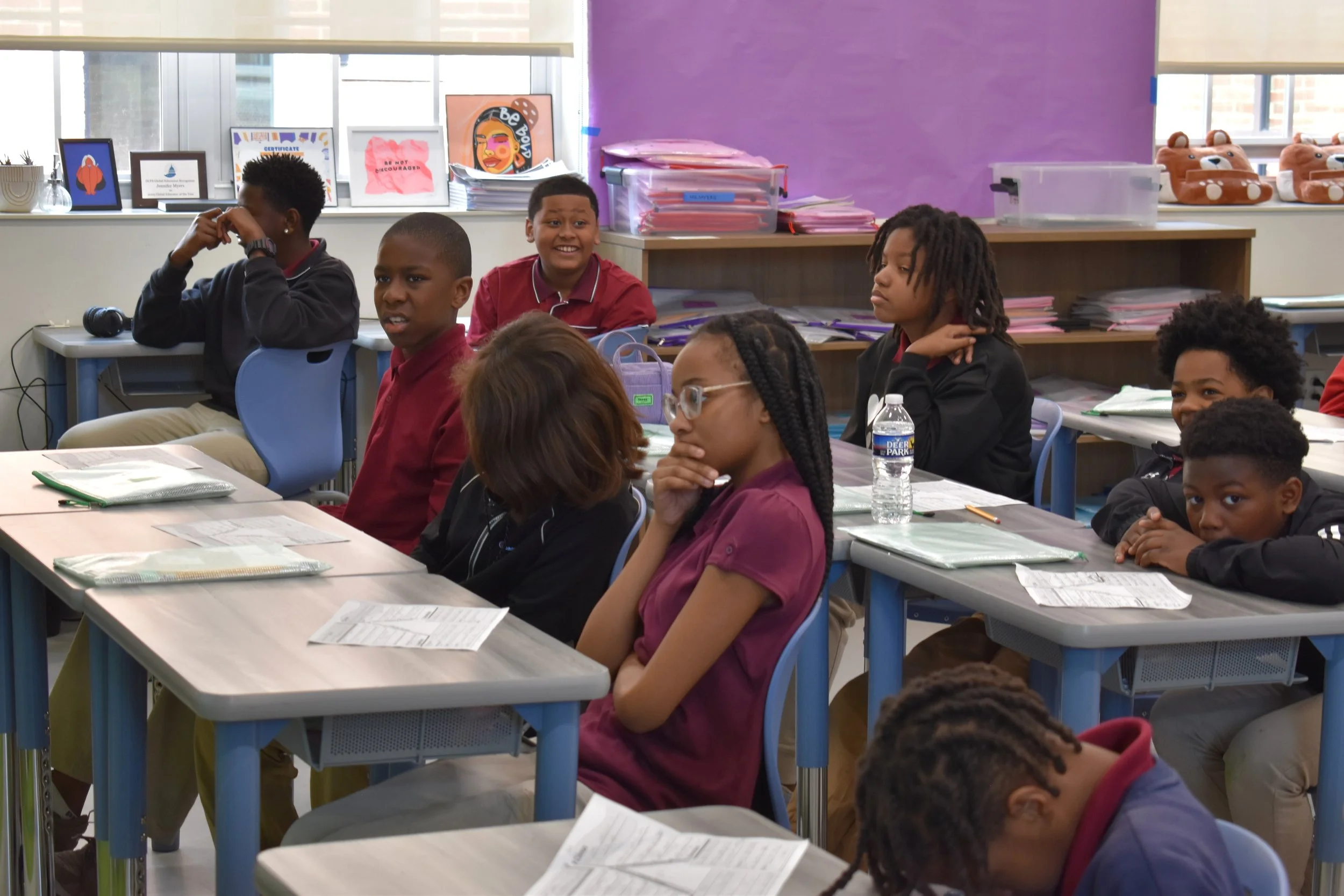
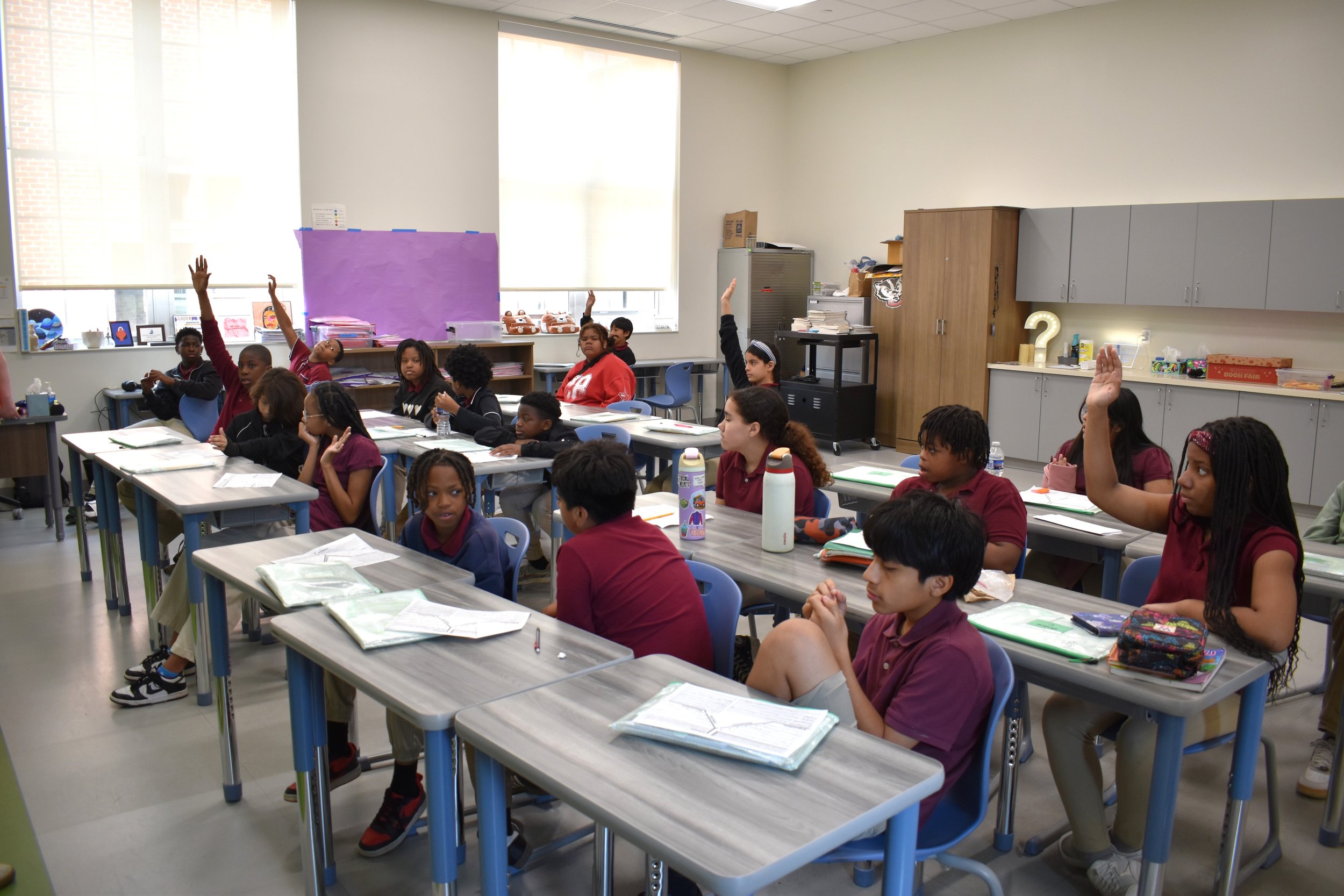
On April 24, Jennifer Myers’ ELA support class at John Francis Education Campus welcomed The Beast of the Seine director Jon Portman to discuss his animated film. Students watched the film before the visit and were prepared with questions for the director.
When asked why he made this specific story into a film, Portman explained that he has two dogs of his own, and he follows the Instagram account A History of Dogs. He saw them post a press clipping from 100 years ago and thought it would make a wonderful basis for a film about a dog that pushes children into the river and then rescues them, receiving a reward each time from the local butcher.
Students asked questions about the process of animating a film, and Portman explained that he developed a script, then worked with artists to create each character and backgrounds for the film. They created a storyboard for the film and then animated the film – over 20,000 drawings were made for the 13 minute movie! The final steps included recording the voiceovers and working with musicians to compose the music for the film. Overall the film took 2.5 years to complete.
Students wondered if the places in the film are real. Portman explained that he based the butcher shop and other places in the film on photographs he took of real places he visited in Paris. The dogs are based on real dogs in his life.
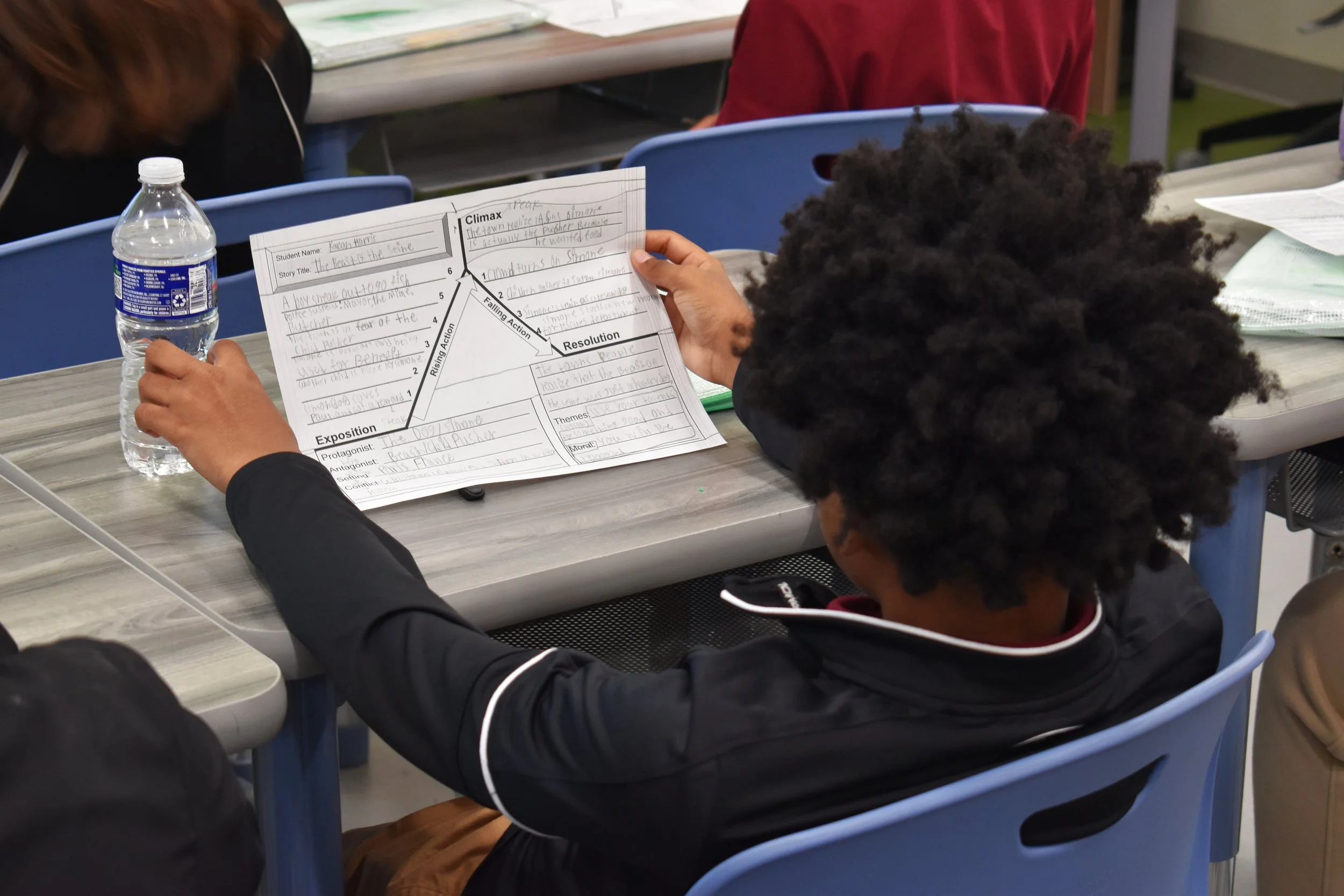
Before the filmmaker visit, students used the film to study story structure. They used their story structure worksheets to discuss the climax, falling action, and resolution of the plot. They also asked Portman whether he thinks Simone (the main character of the film) is the protagonist or antagonist of the story.
Students asked how Portman got into making animated films, and he explained that he always liked filming as a teenager. Then in college a friend taught him about animation. He worked in advertising making short animations, and has made 4-5 short films since 2019. Portman hopes to make a feature-length animation film someday.
Reading the World at Columbia Heights Education Campus
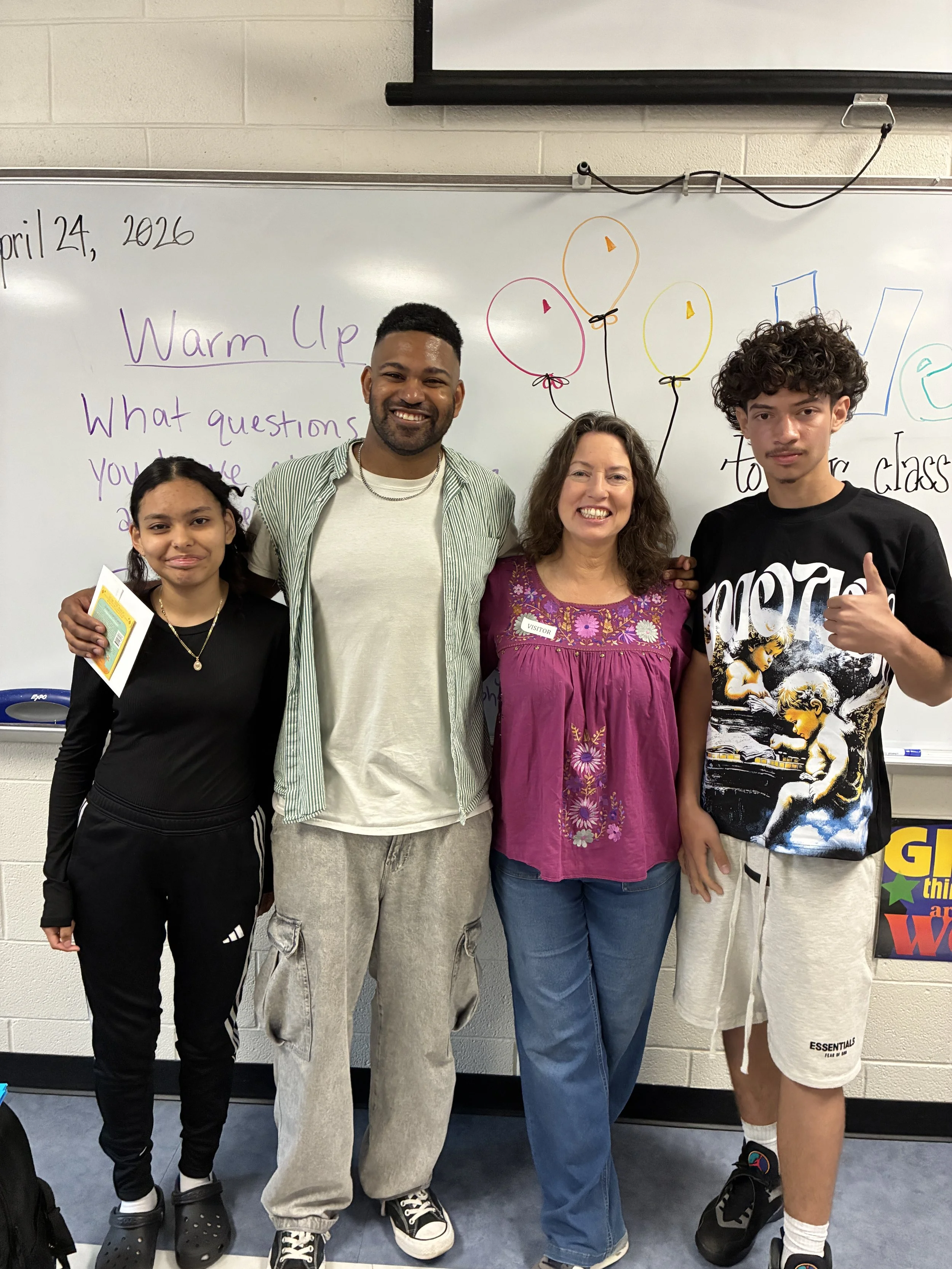
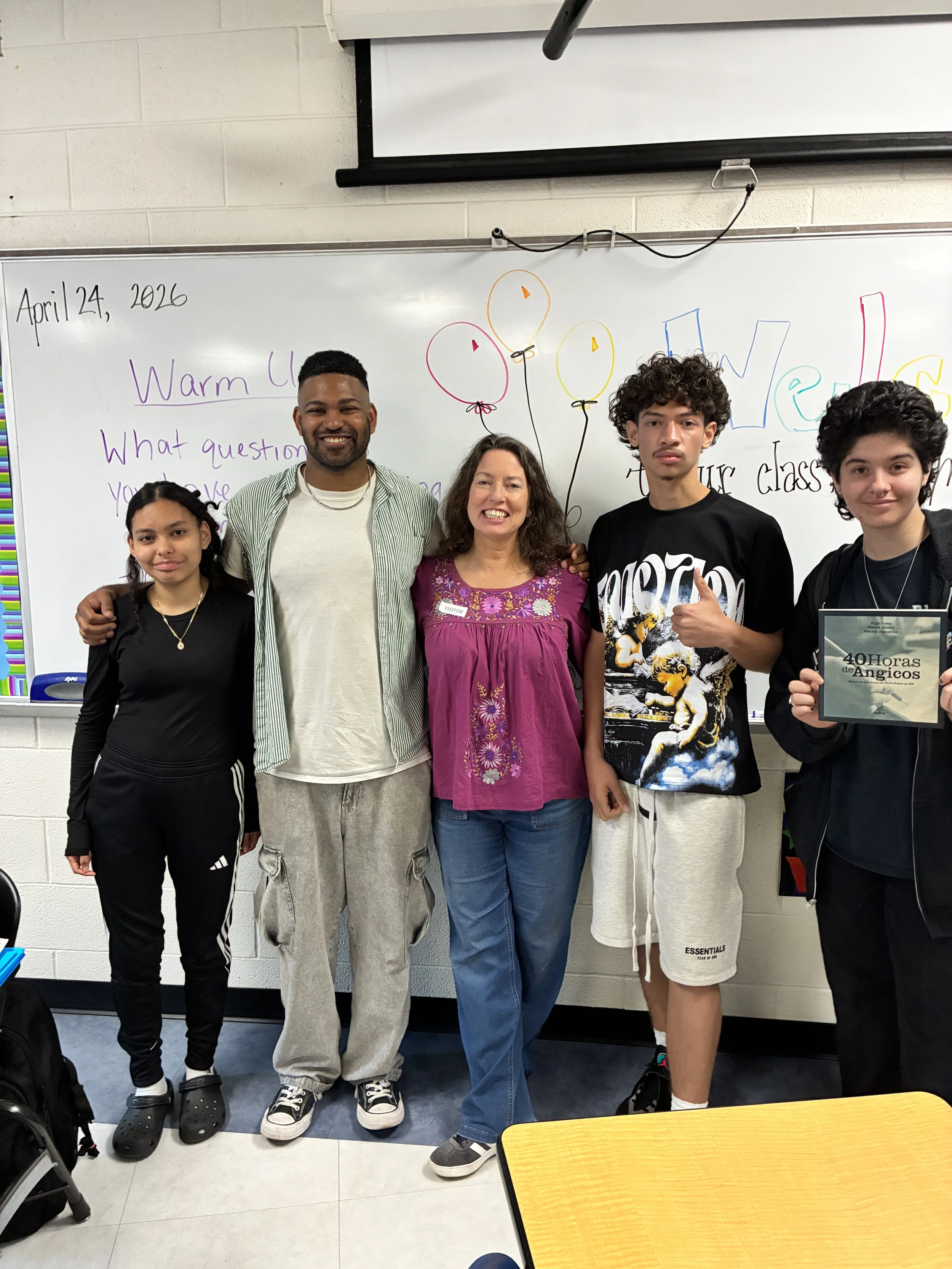
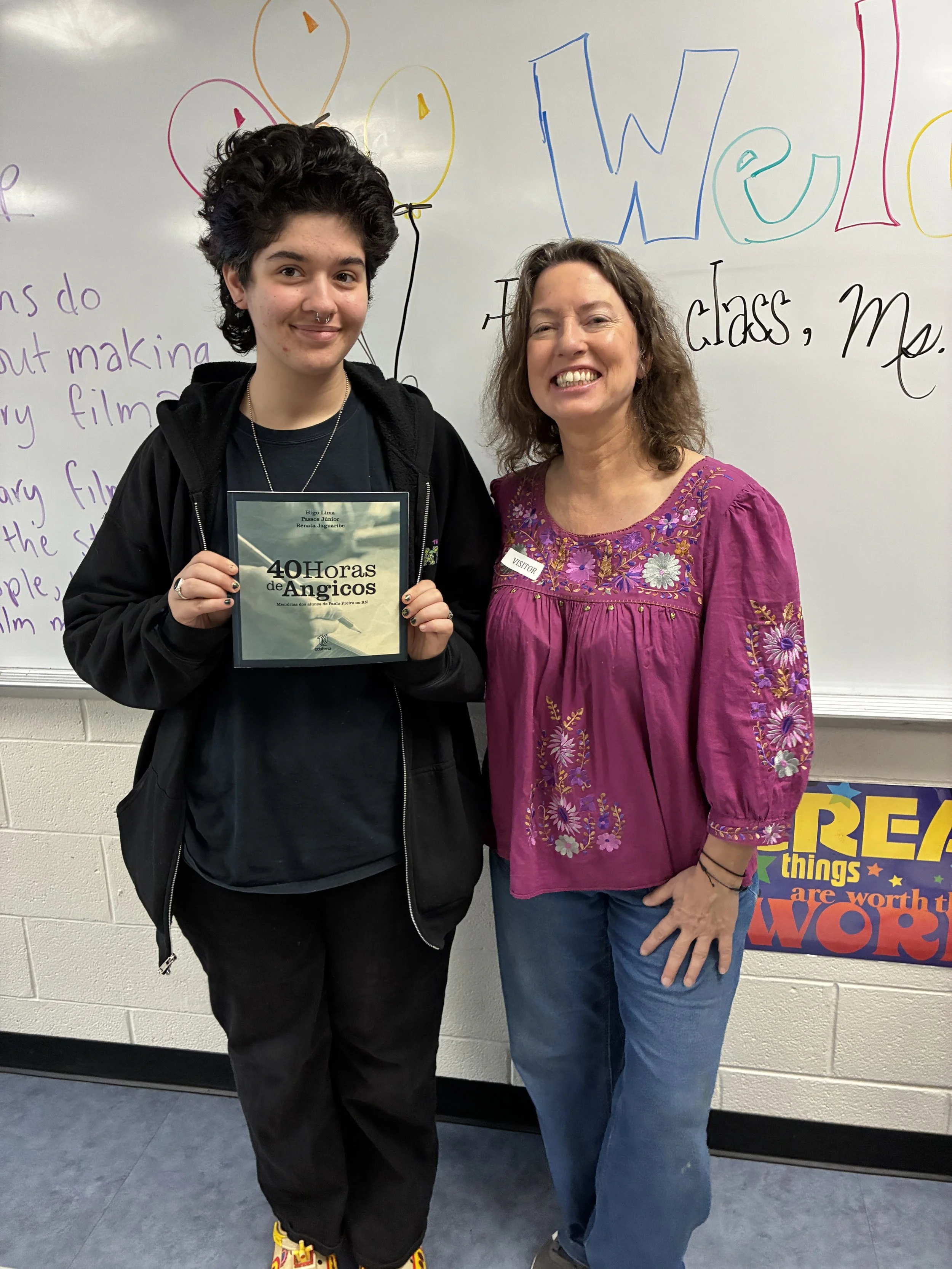
In the early 1960s, Paulo Freire led an experimental adult education project in Northeastern Brazil. This work enabled hundreds of rural adults to read, write, and begin to vote. But political upheaval at the time led to Freire’s arrest and years of exile, during which time he became an icon of advancing democracy through global education. The new documentary Reading the World is told through the collective memories of students who participated in the “Culture Circles," learning to read and write. The film contains rare archival footage of mid-twentieth century Brazil.
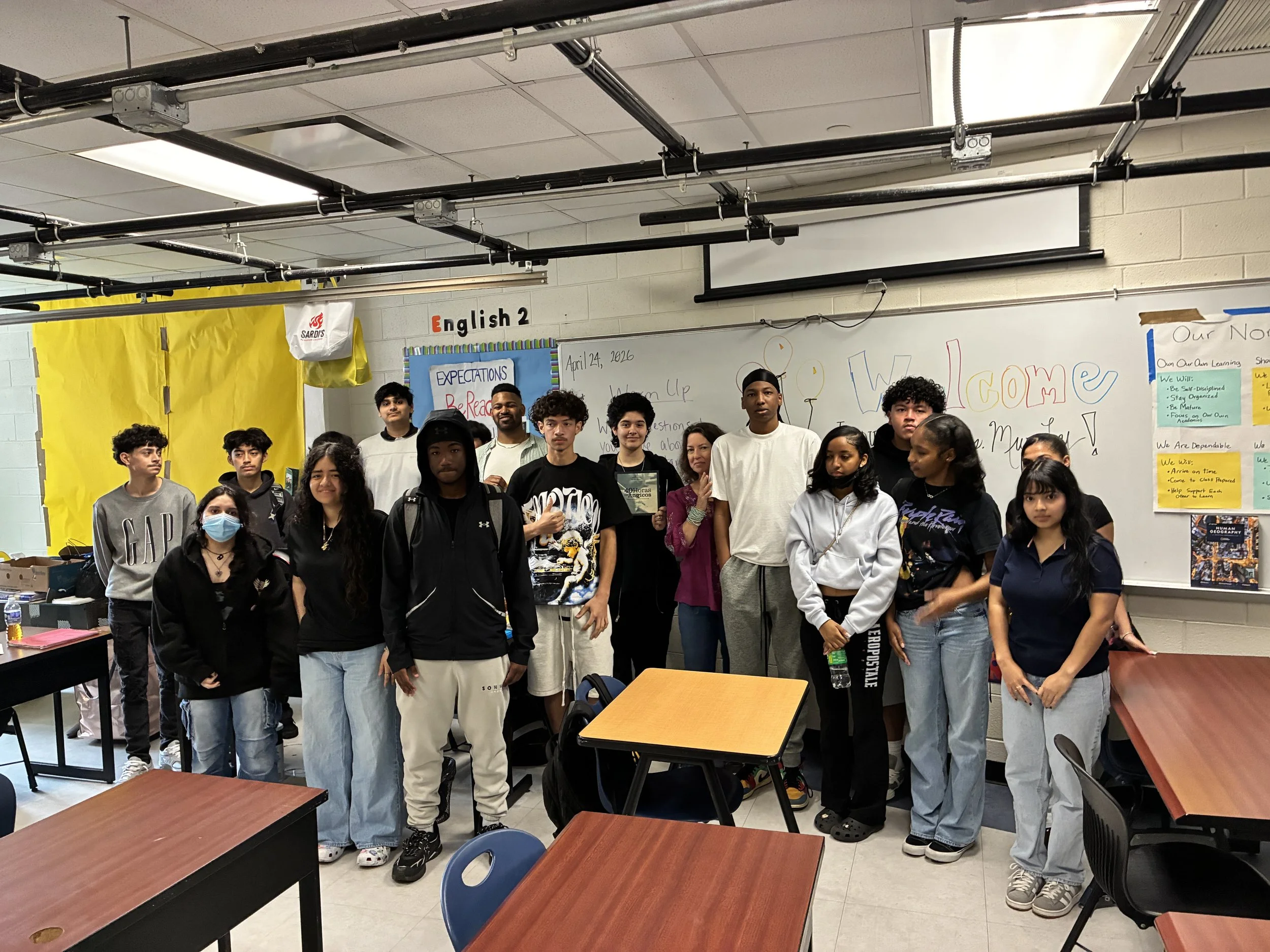
High school English teacher and Zinn Education Project Prentiss Charney fellow Zach Wilson invited the Reading the World filmmaker to his AP Human Geography class. As he explained in his request, "They are currently studying how neo-colonialism affects Indigenous peoples fighting for sovereignty. We've explicitly learned about the experiences of the Awa tribe and their efforts to maintain their way of life and language despite the actions of the Brazilian state, and so this documentary will expand on and challenge some of what we've already begun to learn together."
Wilson asked students to respond in writing to two prompts as they arrived:
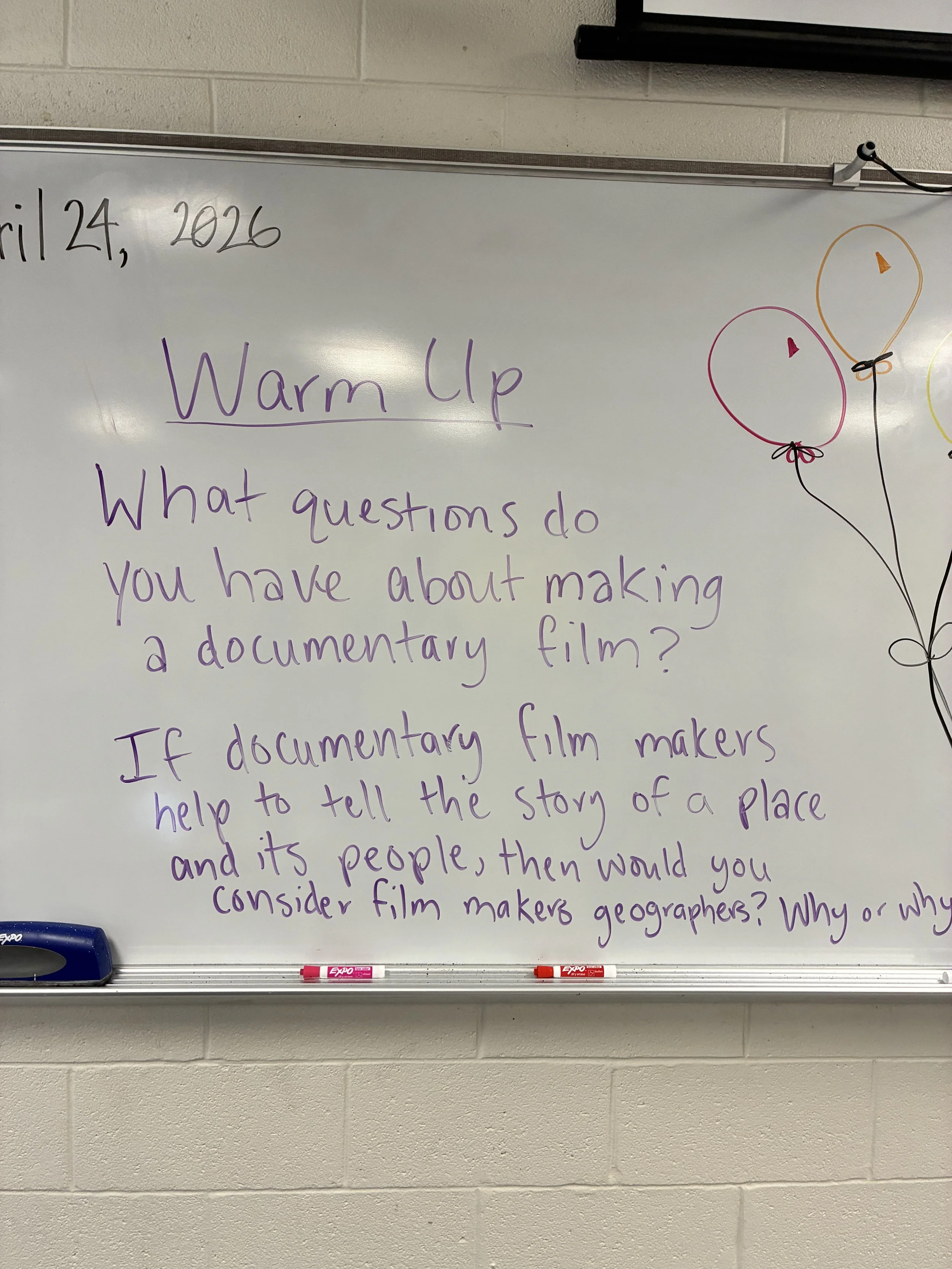
What questions do you have about making a documentary film?
If documentary filmmakers help to tell the story of a place and its people, then would you consider filmmakers geographers? Why or why not?
After inviting the students to share some of their responses, Wilson introduced filmmaker Catherine Murphy and also a representative from Filmfest DC (Linda Blackaby) and Teaching for Change (Deborah Menkart.)
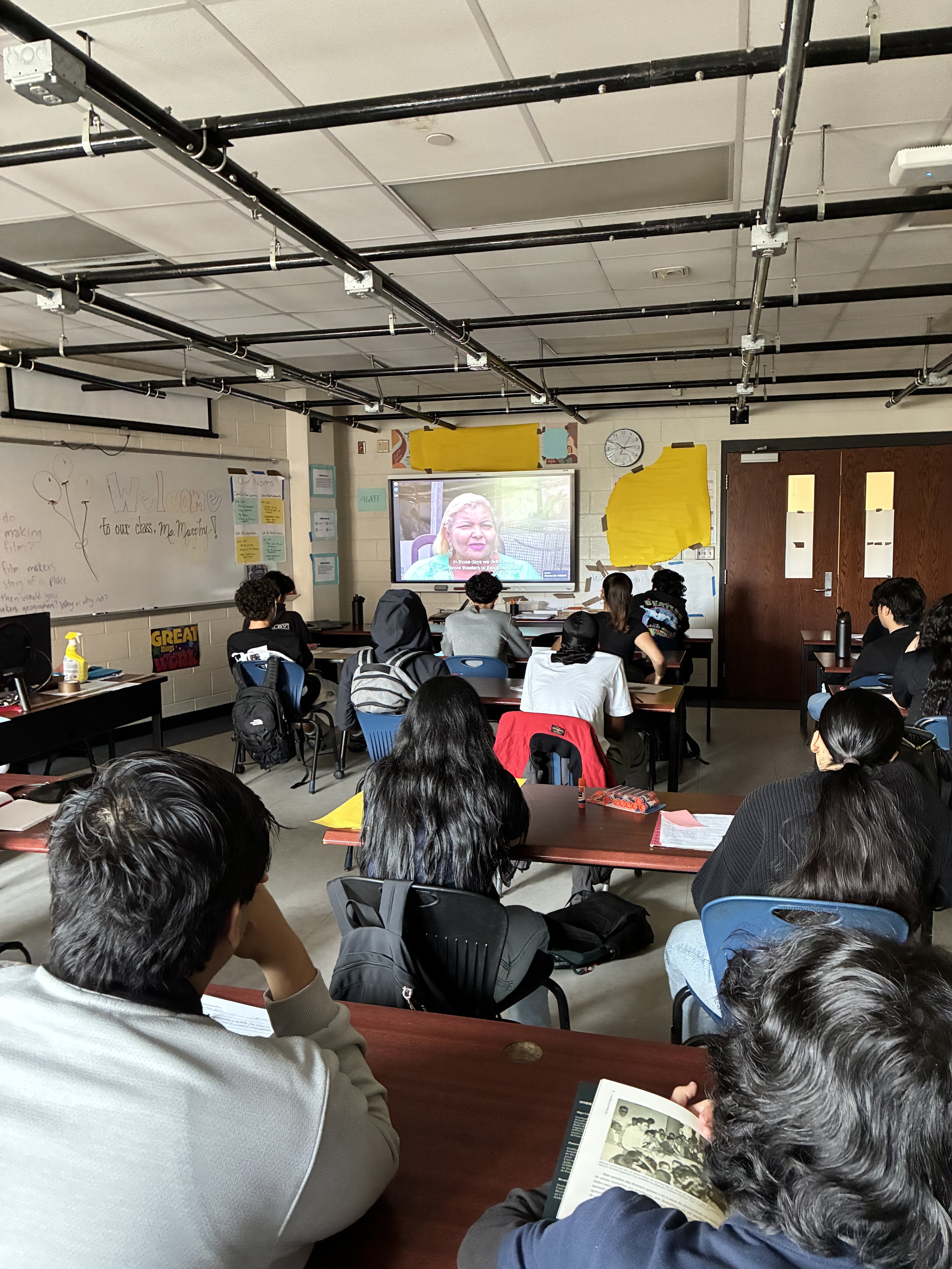
Due to schedule interruptions caused by high stakes testing, the students had only been able to watch 30 minutes of the film in the week before the filmmaker Catherine Murphy's visit. Therefore, Murphy showed sections of the film along with her conversation with students.
Murphy began with a brief overview of the history of colonialism in Brazil and how she first read Friere's book Pedagogy of the Oppressed in college. She wondered how a small book could have such major international impact.
Before showing the first clip from the film, she pointed out that the teachers in the literacy campaign were young people, such as the students in today's classes. Murphy noted that the interviews reveal that the 40 hours of literacy instruction were so meaningful that the people interviewed described it all these decades later as a transformative, beautiful experience. She also described the risk involved for some of Freire's former students to save the curriculum materials despite orders from the government to destroy them. Many of the historic clips came from 16 mm film that someone bravely buried to keep them from being discovered.
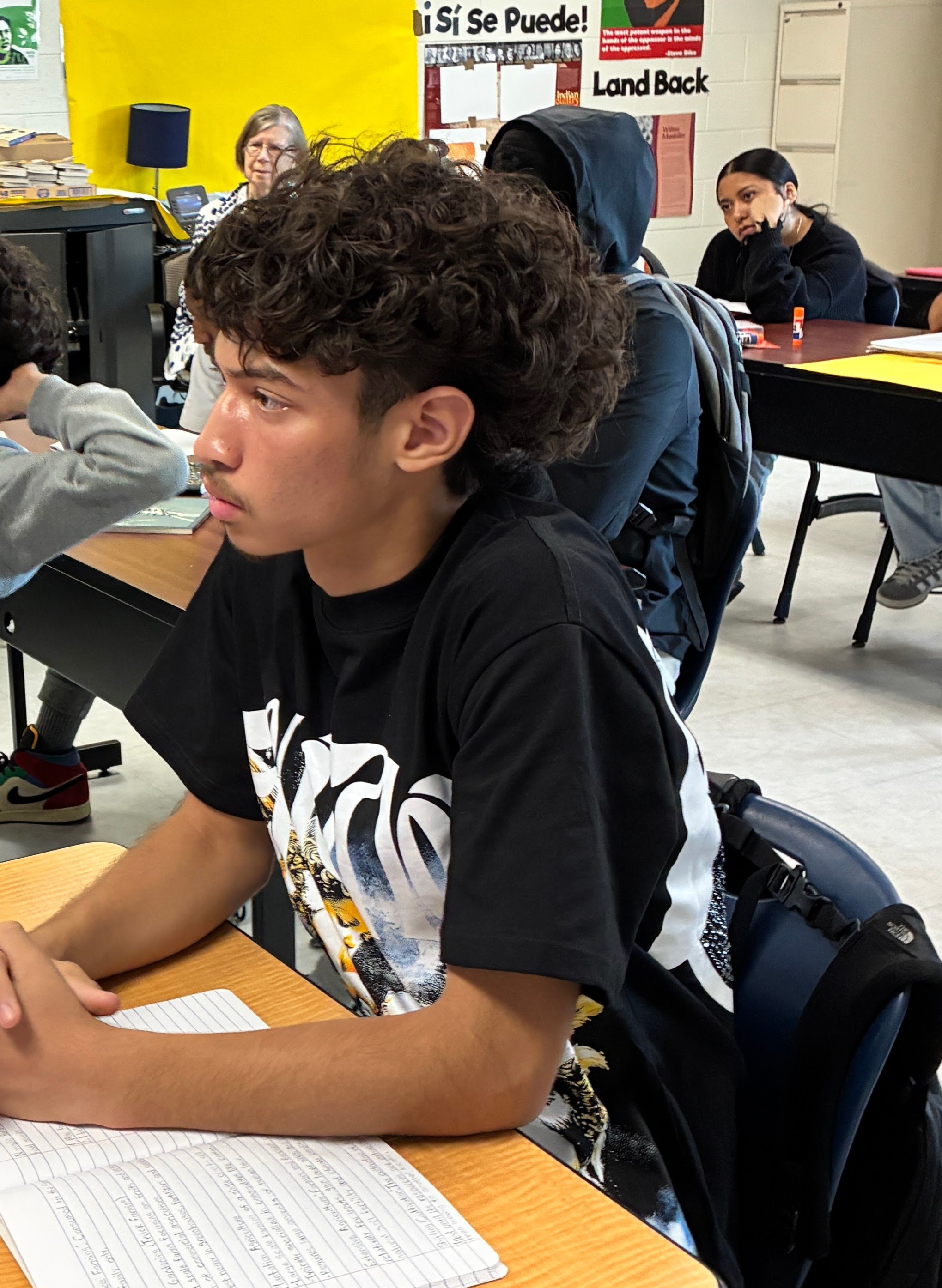
Many of the students in Wilson's class have family members who immigrated from Central and South America, so the scenes of rural Brazil were reminiscent of their communities of origin.
When asked if they would recommend the film to other high school students, everyone's arms shot up. One student noted that Reading the World reminds viewers not to take education for granted.